
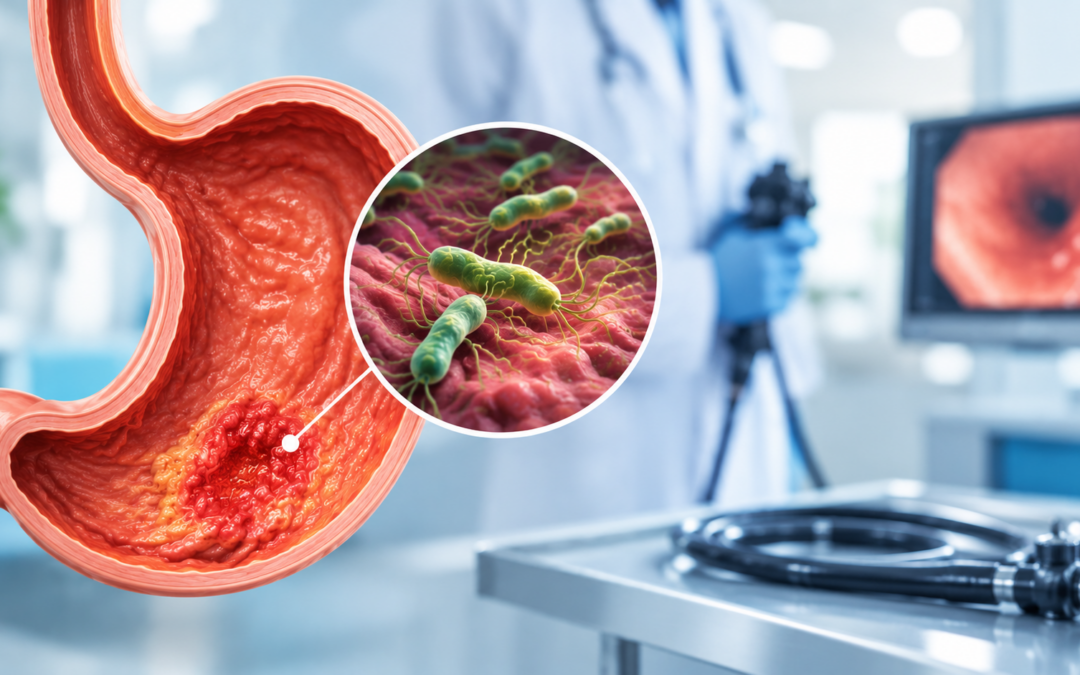
Yes, H. pylori infection can increase the risk of stomach cancer. Although most infected people never develop cancer, persistent H. pylori infection can cause chronic inflammation and progressive changes in the stomach lining that may eventually contribute to cancer in some individuals. Because H. pylori is a treatable infection, testing and appropriate eradication treatment can be an important part of reducing gastric cancer risk in people who are infected.
Prof. Dr. Sandeep Nayak, surgical oncologist in Bangalore with over 24 years of experience treating gastrointestinal cancers, puts it this way: “H. pylori doesn’t cause cancer overnight. It’s a slow burn, chronic inflammation building up in the stomach lining over years, sometimes decades, before anything turns malignant. That long runway is actually good news, because it means there’s time to catch and treat the infection before it gets that far.”
Diagnosed with H. pylori and unsure what it means long-term?
How Does H. Pylori Actually Lead to Stomach Cancer?
The connection isn’t immediate, and it isn’t automatic either. Most people carrying the bacteria never develop cancer. But in those who do, the path tends to follow a similar pattern over time.
- Persistent infection triggers chronic gastritis, ongoing inflammation of the stomach lining
- Long-term inflammation can lead to atrophic gastritis, where the stomach lining thins out
- Thinned, damaged tissue is more prone to abnormal cell changes over the years
- Those changes can eventually progress toward gastric adenocarcinoma, the most common type of stomach cancer
None of this happens on a fixed timeline, and factors like diet, smoking, and genetics all play a role alongside the infection itself. If cancer does develop, treatment often needs a team-based approach. Our stomach and esophageal cancer treatment program covers diagnosis, staging, and surgical management for exactly this kind of case.
Should Everyone With H. Pylori Get Treated?
This is where the answer gets a little less black and white. Guidelines generally lean toward treating the infection once it’s confirmed, but there’s nuance to it.
- Testing usually happens through a breath test, stool test, or endoscopic biopsy
- Treatment typically involves a combination of antibiotics plus an acid-reducing medication
- Eradicating the infection significantly lowers long-term stomach cancer risk, particularly if caught before atrophic changes set in
- Family history or a prior diagnosis of gastric cancer usually makes treatment more urgent rather than optional
This ties back to something we touched on in our post about clear surgical margins and why a clean result at one point doesn’t guarantee the story’s over. H. pylori works on a similar principle in reverse, catching and treating the root cause early changes what happens years down the line.
Why Choose Prof. Dr. Sandeep Nayak for Stomach Cancer ?
Dr. Sandeep Nayak has spent more than two decades treating gastrointestinal cancers, stomach and esophageal cancer included, using laparoscopic and robotic techniques that keep recovery as manageable as possible. As Chairman of Oncology Services, Karnataka, he sees a fair number of patients who come in after an H. pylori diagnosis wanting to understand what it actually means for them, not just a textbook explanation. That’s usually where the real conversation starts, working out what monitoring or treatment makes sense for that specific patient rather than applying a blanket answer.
If you’ve tested positive for H. pylori or have a family history of stomach cancer, it’s worth getting a proper risk assessment rather than guessing. Call +91 9482202240 to set up a consultation.
Frequently Asked Questions
Does having H. pylori mean stomach cancer is inevitable for me?
Not at all. Plenty of people carry it their whole lives and never develop stomach cancer. It pushes the risk up, but that’s a long way from a certainty.
If I treat the infection now, does that undo any damage that's already there?
Somewhat, and timing matters a lot here. Catch it before the tissue has changed much and treatment helps a great deal. Once atrophic gastritis has already developed, treatment mostly stops things from getting worse rather than reversing what’s there.
I've never had stomach symptoms. Could I still have this?
Easily, yes. A lot of people find out almost by accident, usually while being tested for something else entirely or during a general risk check.
Is this something I could pass on to someone else?
It spreads fairly easily actually, mostly through close contact or contaminated food and water. That’s a big part of why it’s so widespread globally.
References
- National Cancer Institute — Preventing Stomach Cancer: The Link to H. pylori Bacteria
- Journal of the National Cancer Institute — H. Pylori Treatment and Gastric Cancer Incidence
Disclaimer: This blog is for informational and educational purposes only and is not a substitute for professional medical advice or diagnosis.
