
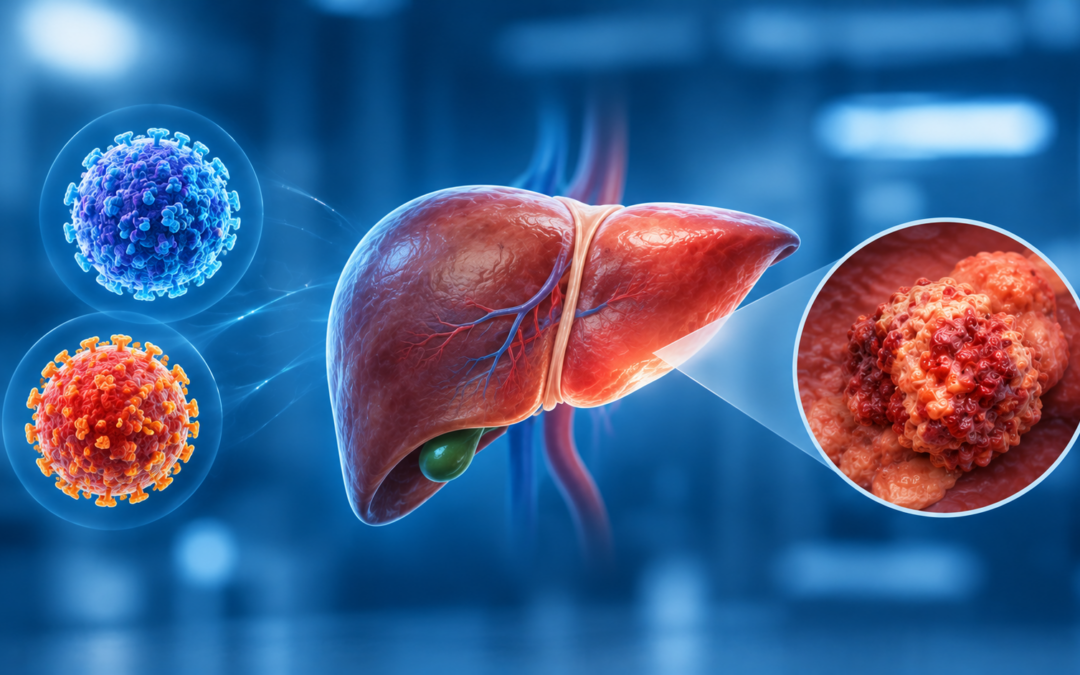
Yes, and the numbers are hard to ignore. Hepatitis B accounts for roughly 40 to 50 percent of liver cancer cases in India, hepatitis C for another 12 to 32 percent. Together, these two viruses sit behind the majority of hepatocellular carcinoma diagnosed in the country. One hospital-based study found the risk of liver cancer jumped more than fourteen-fold in hepatitis B positive men compared to the general population. Cirrhosis usually comes first. Cancer, for a lot of these patients, comes after.
According to Prof. Dr. Sandeep Nayak, Surgical Oncologist in India, “hepatitis doesn’t just damage the liver quietly for years, it rewires the risk entirely, which is why every hepatitis B or C patient needs liver cancer screening built into their routine care, not an afterthought.”
Living with hepatitis B or C and never been screened for liver cancer?
How Much Does Hepatitis Actually Raise Liver Cancer Risk?
Big numbers. Bigger than most people realize until they see them written down.
- Hepatitis B : Close to half of all liver cancer cases in India trace back to hepatitis B, somewhere between 40 and 50 percent depending on the study.
- Hepatitis C : Smaller share, still huge. 12 to 32 percent of cases, and that range keeps shifting as more data comes in.
- The Multiplier : One Tata Memorial study found hepatitis B positive men were over fourteen times more likely to get liver cancer. Fourteen times.
- Cirrhosis First : Most of these cancers don’t appear out of nowhere. Roughly 80 percent show up in a liver that’s already cirrhotic.
Regular liver cancer screening with AFP blood tests and ultrasound is what actually catches this early, while surgery is still on the table.
What Should Someone With Hepatitis Actually Do About This?
Knowing the risk is one thing. Acting on it is the part that saves lives.
- Six-Monthly Screening : AFP testing and liver ultrasound every six months, that’s the global standard for anyone with chronic hepatitis B or C.
- Antiviral Treatment : Suppressing the virus itself lowers cancer risk over time. It doesn’t erase it, but it helps, meaningfully.
- Family Screening : Hepatitis B spreads within families. So relatives of a known carrier should get tested too, not just the patient.
- Don’t Wait for Symptoms : By the time hepatitis-related liver cancer causes symptoms, it’s often already advanced. Screening exists precisely for that gap.
That screening gap is exactly what gets closed with structured surveillance, covered in more detail in early detection of liver cancer.
Why Choose Dr. Sandeep Nayak for Liver Cancer Treatment?
Prof. Dr. Sandeep Nayak brings over 24 years of surgical oncology experience to liver cancer, including laparoscopic and robotic-assisted hepatic resection at KIMS Hospital, Bangalore. Heads Oncology Services across Karnataka. Every hepatitis-positive patient gets AFP testing and imaging built into their care from the start, not added later. Every case reviewed through tumour board.
Patients with known hepatitis B or C get watched closely here, because waiting is exactly what this disease counts on. Call +91-9482202240 to book your consultation.
Frequently Asked Questions
Does hepatitis B cause liver cancer?
It’s linked to roughly 40 to 50 percent of liver cancer cases in India.
Does hepatitis C also increase liver cancer risk?
Yes, hepatitis C accounts for another 12 to 32 percent of cases in India.
How often should hepatitis patients be screened for liver cancer?
Every six months, using AFP blood tests and liver ultrasound imaging.
Can treating hepatitis lower liver cancer risk?
Yes, antiviral treatment meaningfully reduces risk, though it doesn’t eliminate it.
References
- Spectrum of Hepatitis B and Hepatitis C-Related Cancers in India, PubMed
- World Health Organization, Hepatitis B Fact Sheet
Disclaimer: This blog is for informational and educational purposes only and is not a substitute for professional medical advice or diagnosis.
