
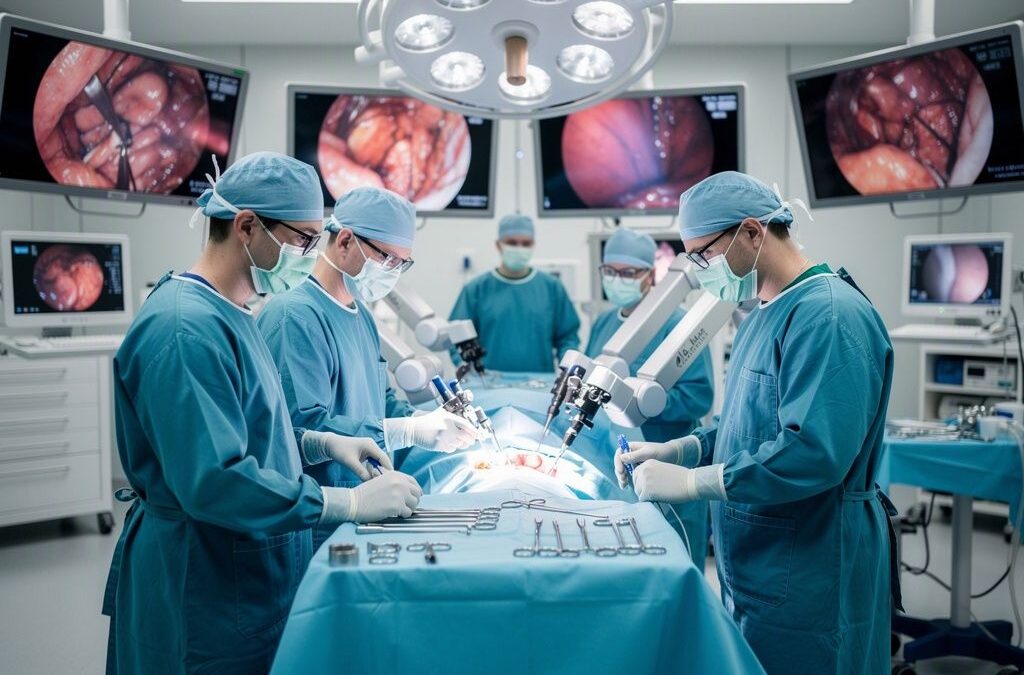
For most common cancers, minimally invasive surgery cures about as many patients as open surgery does. In colon and rectal cancer, laparoscopic vs open cancer surgery studies show the same survival and recurrence, and patients go home sooner with less pain. Early cervical cancer is the exception. Open radical hysterectomy gave better survival there. So the cancer type, its stage and the surgeon’s experience all matter.
Prof. Dr. Sandeep Nayak, Surgical Oncologist at MACS Clinic, Bangalore, explains how minimally invasive oncology and open surgery are weighed against each other. “Keyhole and robotic surgery suit many cancers. For some, open surgery is still the better operation. Newer doesn’t mean better. What counts is which approach clears that cancer best at that stage. Where results are equal, the gentler approach is usually chosen. Where they aren’t, the better approach is used.”
For information about keyhole and open surgery options for cancer, you can contact the clinic at +91 9482202240.
Where Is Minimally Invasive Surgery as Effective as Open Surgery?
For several common cancers, large studies show the two approaches control cancer equally well.
Colon and rectal cancer: Pooled reviews find no significant difference in disease free survival, local recurrence or spread. Short term recovery is better after laparoscopic and robotic surgery.
Surgeon experience: Equal results come from experienced teams. Both laparoscopic and robotic surgery have a steep learning curve, so volume matters.
Recovery: Smaller cuts mean less blood loss, less pain, fewer wound problems and a shorter hospital stay.
Complicated cases: Open surgery is still preferred when the colon is perforated, blocked or bleeding.
Case by case: Which cancers suit the keyhole route is worked out case by case. Our page on laparoscopic cancer surgery covers where it’s used.
When Is Open Surgery Still the Better Choice?
Equal results can’t be assumed for every cancer. Early cervical cancer is the clearest example.
Early cervical cancer: In the LACC trial, disease free survival at 4.5 years was 86.0% after minimally invasive radical hysterectomy and 96.5% after open surgery. Overall survival was lower too.
What changed afterwards: Open radical hysterectomy is now widely recommended for early stage cervical cancer.
Difficult tumours: Very bulky tumours, or those pressing on nearby organs, can make an open operation the safer one.
Switching mid operation: A surgeon may convert from keyhole to open if it isn’t safe to continue. That’s sound judgment, not a failed operation.
Further reading: For a wider overview of how these operations are done, see our blog on minimally invasive cancer surgery in India.
What Determines Treatment Choice?
The choice is made case by case, using a few clear points.
Stage of the cancer: The stage shapes how much has to be removed, and that decides which approach can do it safely. Our blog on cancer staging and how it determines surgery explains this.
Earlier operations: Scar tissue from previous surgery can make keyhole surgery harder. Sometimes open surgery is the safer route.
General health: Fitness for anaesthesia and a long operation affects which approach is safe.
Team review: Surgical, medical and radiation oncologists often review the case together before the plan is set.
The patient’s priorities: Once the options are explained, recovery time and scars are part of the decision too.
Key Takeaways
- Minimally invasive surgery gives comparable cure rates to open surgery for many common cancers, such as colon and rectal cancer.
- Early cervical cancer is the main exception, where open surgery gave better survival.
- The right approach depends on the cancer, its stage and the surgeon’s experience, so it’s worth asking which option the evidence supports for your case.
To discuss your case, you can contact the clinic at +91 9482202240.
Frequently Asked Questions
Which cancer does better with open surgery?
Early cervical cancer. Open radical hysterectomy gave better survival in the LACC trial.
Does minimally invasive surgery cure cancer as well as open surgery?
For many cancers, yes, with comparable survival. Cervical cancer is a key exception.
Is robotic surgery better than laparoscopic for cure rates?
Cancer outcomes look similar. Robotic surgery may lower the need to convert to open.
What do patients gain from minimally invasive cancer surgery?
Less blood loss, less pain, fewer wound problems and a shorter hospital stay.
References
- National Center for Biotechnology Information — Comparing the Perioperative and Oncological Outcomes of Open Versus Minimally Invasive Inguinal Lymphadenectomy in Penile Cancer: A Systematic Review and Meta-Analysis: https://pmc.ncbi.nlm.nih.gov/articles/PMC12468625/
- National Center for Biotechnology Information — Video Endoscopic Inguinal Lymphadenectomy for Radical Management of Inguinal Nodes in Patients With Penile Squamous Cell Carcinoma: https://pmc.ncbi.nlm.nih.gov/articles/PMC4944619/
Disclaimer: This blog is for informational and educational purposes only and is not a substitute for professional medical advice or diagnosis.
