
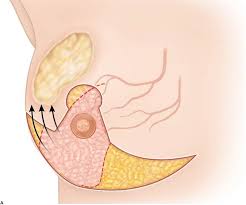
Standard lumpectomy excises the tumour and a surrounding margin of normal tissue without any breast reshaping afterward. Oncoplastic lumpectomy performs the same tumour excision and immediately rearranges remaining breast tissue using plastic surgery techniques to restore contour, correct volume loss and achieve symmetry with the opposite breast in the same operative session. The clinical advantage is wider excision capability in cosmetically sensitive locations where standard lumpectomy would leave a permanent visible defect or distortion.
According to Prof. Dr. Sandeep Nayak, Surgical Oncologist in India,
“Oncoplastic lumpectomy changed what breast conservation can offer. Tumours that once needed mastectomy purely for cosmetic reasons can now be removed with clear margins and a result the patient is comfortable living with.”
Considering lumpectomy and want to know which approach fits your case?
What Is Standard Lumpectomy and When Is It Used?
Standard lumpectomy is the simpler option and for most early breast cancer patients it works entirely well.
- Straightforward Excision: The tumour and a clear margin of normal tissue are removed, the wound is closed and the breast settles without any formal reshaping or tissue redistribution performed by the surgical team.
- Works When Volume Is Adequate: Small tumours in breasts with good volume rarely leave a visible defect after excision and breast cancer treatment teams use this approach when both the oncological and cosmetic outcomes are achievable without added surgical complexity.
- Shorter Operative Time: No rearrangement step and no contralateral procedure means faster surgery and quicker recovery compared to oncoplastic techniques for patients where reshaping simply isn’t needed.
- Radiation Follows in Every Case: All lumpectomy patients receive radiation to the remaining breast tissue afterward and the final cosmetic result reflects both the operative outcome and how the breast responds to radiation over the following months.
Standard lumpectomy remains appropriate for most early breast cancer cases where tumour size and location allow complete excision without causing visible breast distortion.
Oncoplastic vs Standard Lumpectomy: Key Differences
|
Standard Lumpectomy |
Oncoplastic Lumpectomy |
|
|
Tumour Removal |
Excision with clear margin |
Wider excision with clear margin |
|
Reshaping |
None |
Breast tissue rearranged same session |
|
Symmetry Procedure |
Not included |
Contralateral reduction possible |
|
Best For |
Small tumours, good volume ratio |
Larger tumours, ptotic or larger breasts |
|
Operative Time |
Shorter |
Longer, combined procedure |
|
Cosmetic Outcome |
Variable, depends on defect size |
Consistently better for larger defects |
- Wider Excision Without Visible Defect: Rearranging remaining tissue immediately after tumour removal lets the surgeon take a larger margin without leaving distortion and robotic cancer surgery and open oncoplastic techniques are selected based on tumour location, breast size and tissue volume removed.
- Fewer Mastectomy Conversions: Tumours that previously needed mastectomy because standard lumpectomy would have left an unacceptable cosmetic result can now be managed with breast conservation, extending who genuinely qualifies for breast-preserving surgery.
- Symmetry Done in the Same Session: When significant volume is removed from one breast, the opposite side is reduced or lifted simultaneously rather than leaving the patient with visible asymmetry requiring a separate procedure later.
- Not Right for Every Patient: Oncoplastic surgery adds complexity, operative time and a second surgical site and the decision over standard lumpectomy is based on tumour-to-breast ratio, location, skin involvement and patient preference discussed at tumour board.
The choice between approaches is made before surgery and for more on what oncoplastic breast surgery involves, our blog on oncoplastic surgery covers this in detail.
Why Choose Dr. Sandeep Nayak for Breast Cancer Treatment ?
Dr. Sandeep Nayak brings 24 years of surgical oncology experience, DNB qualifications in Surgical Oncology and General Surgery and a fellowship in Laparoscopic and Robotic Onco-Surgery to every breast conservation decision including standard and oncoplastic lumpectomy across all tumour sizes and locations. He heads Oncology Services across Karnataka and leads breast cancer surgery at KIMS Hospital, Bangalore, with originator credits for RABIT and over 25 published clinical studies. Patients wanting clarity on which lumpectomy approach is right for their case are seen here with every decision going through tumour board review. Call +91 8104310753 to book your consultation.
Frequently Asked Questions
Who qualifies for oncoplastic lumpectomy over standard lumpectomy?
Patients with larger tumours relative to breast size, unfavourable location or those at risk of visible defect after standard excision are the most suitable candidates.
Does oncoplastic lumpectomy have better survival outcomes than standard lumpectomy?
Oncological outcomes are equivalent when clear margins are achieved and the difference lies in cosmetic result and the ability to excise wider margins safely.
Is oncoplastic lumpectomy more resource-intensive than standard lumpectomy?
Oncoplastic procedures take longer and involve additional surgical steps making them more complex though the benefit of avoiding mastectomy is clinically significant.
Does radiation change after oncoplastic lumpectomy?
Radiation to the remaining breast tissue follows oncoplastic lumpectomy in the same way it follows standard lumpectomy with no meaningful difference in the radiation protocol.
Reference Links-
- National Cancer Institute — Breast Cancer Surgery
- National Institutes of Health — Oncoplastic Breast Surgery
- Disclaimer: The information shared in this content is for educational purposes and not for promotional use.
