
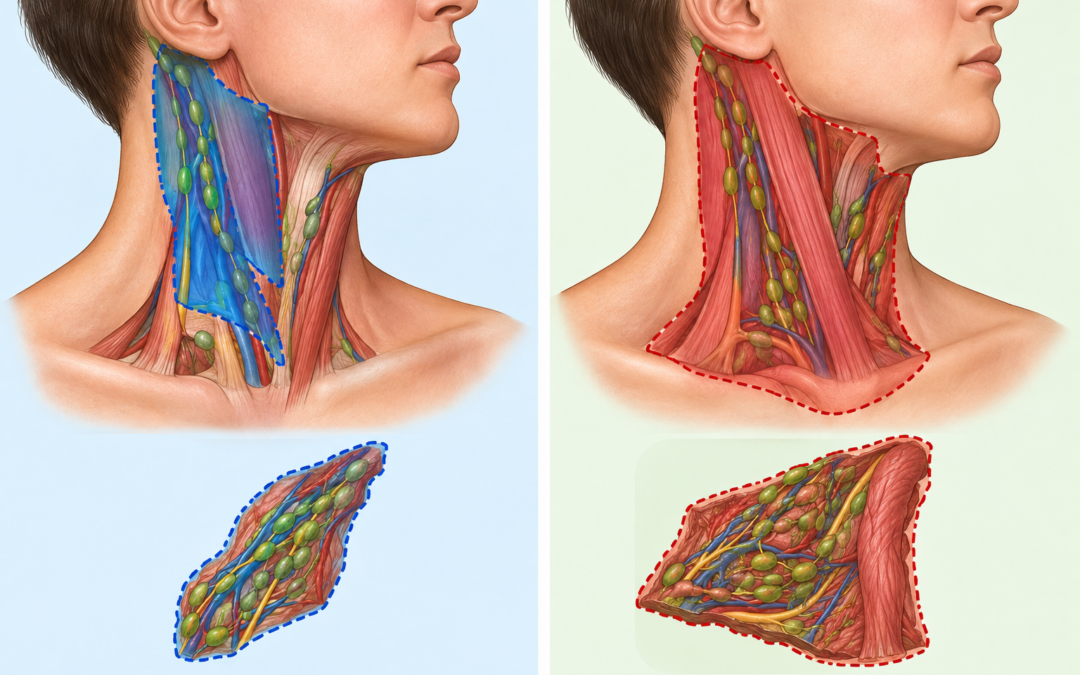
The main difference is how many lymph node groups and surrounding structures are removed. Selective neck dissection removes only the lymph node levels most likely to contain cancer, while modified radical neck dissection removes lymph nodes from levels I to V while preserving key structures when possible. The choice depends on the tumour location, lymph node involvement, and extent of disease.
According to Prof. Dr. Sandeep Nayak, a surgical oncologist with extensive experience across different types of neck dissection, “Patients often assume more extensive surgery means safer surgery. That’s not quite how it works here. Selective dissection, done on the right case, achieves the same oncological goal with far less impact on shoulder function. Modified radical becomes necessary only when the disease genuinely demands clearing every level.”
Been told you need a neck dissection and want to know what that actually involves?
What Is a Selective Neck Dissection?
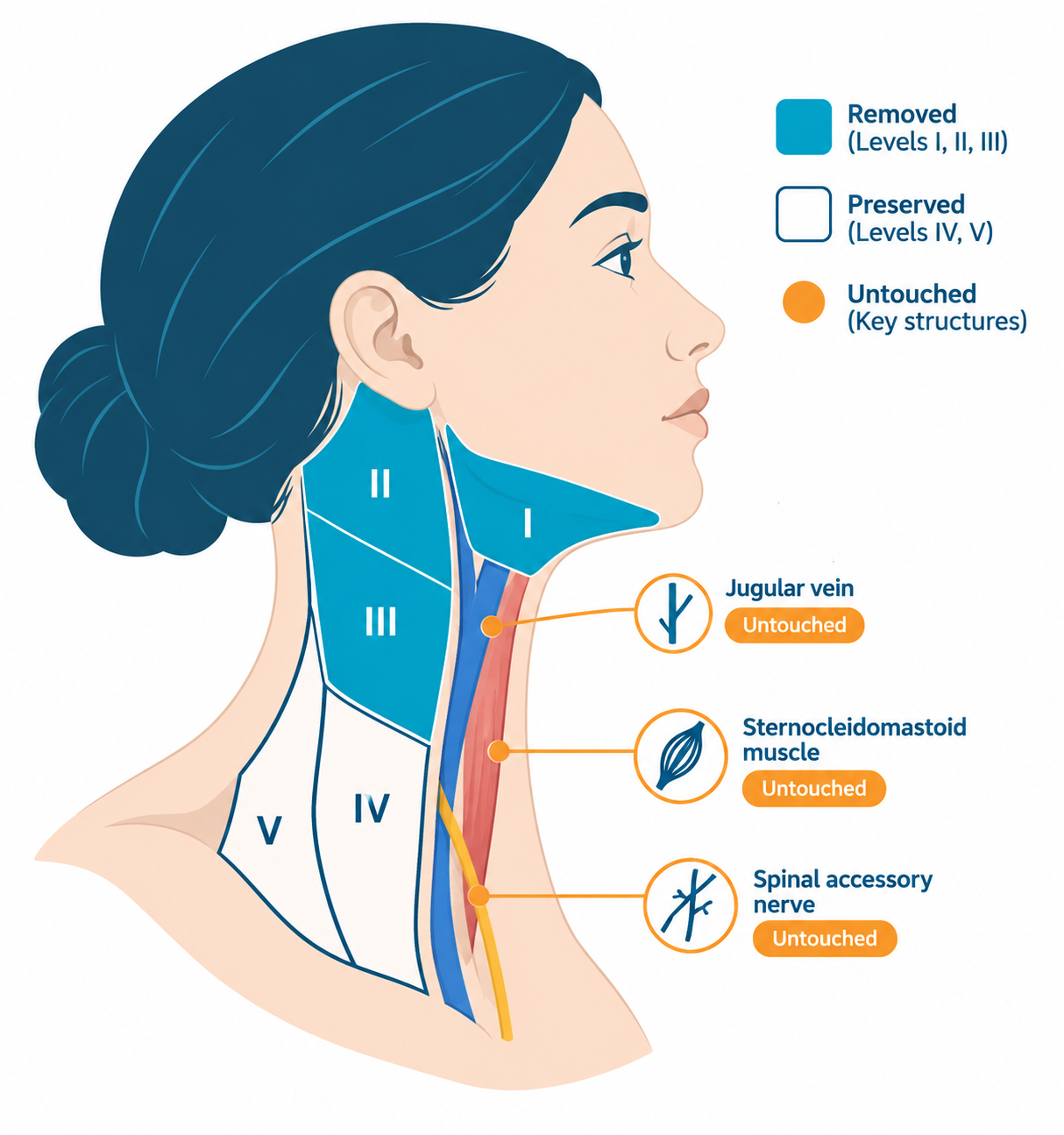
Selective neck dissection targets only the node groups most likely to harbour disease, based on where the primary tumour sits.
Node levels removed. Only the specific levels at risk, often I through III for oral cavity cancer, rather than the full five-level spread.
Structures preserved. The jugular vein, accessory nerve and sternocleidomastoid muscle all stay intact, since the procedure never touches them to begin with.
Shoulder function. Recovery tends to be faster and more complete here, though some degree of dysfunction can still occur from nerve retraction during surgery.
Typical use. Most often used for early stage disease with no confirmed spread, sometimes as a staging procedure to guide further treatment.
Choosing the right extent of dissection depends heavily on accurate pre-operative staging and imaging. Our page on head and neck cancer treatment covers how that evaluation feeds into the surgical plan.
What Is a Modified Radical Neck Dissection?
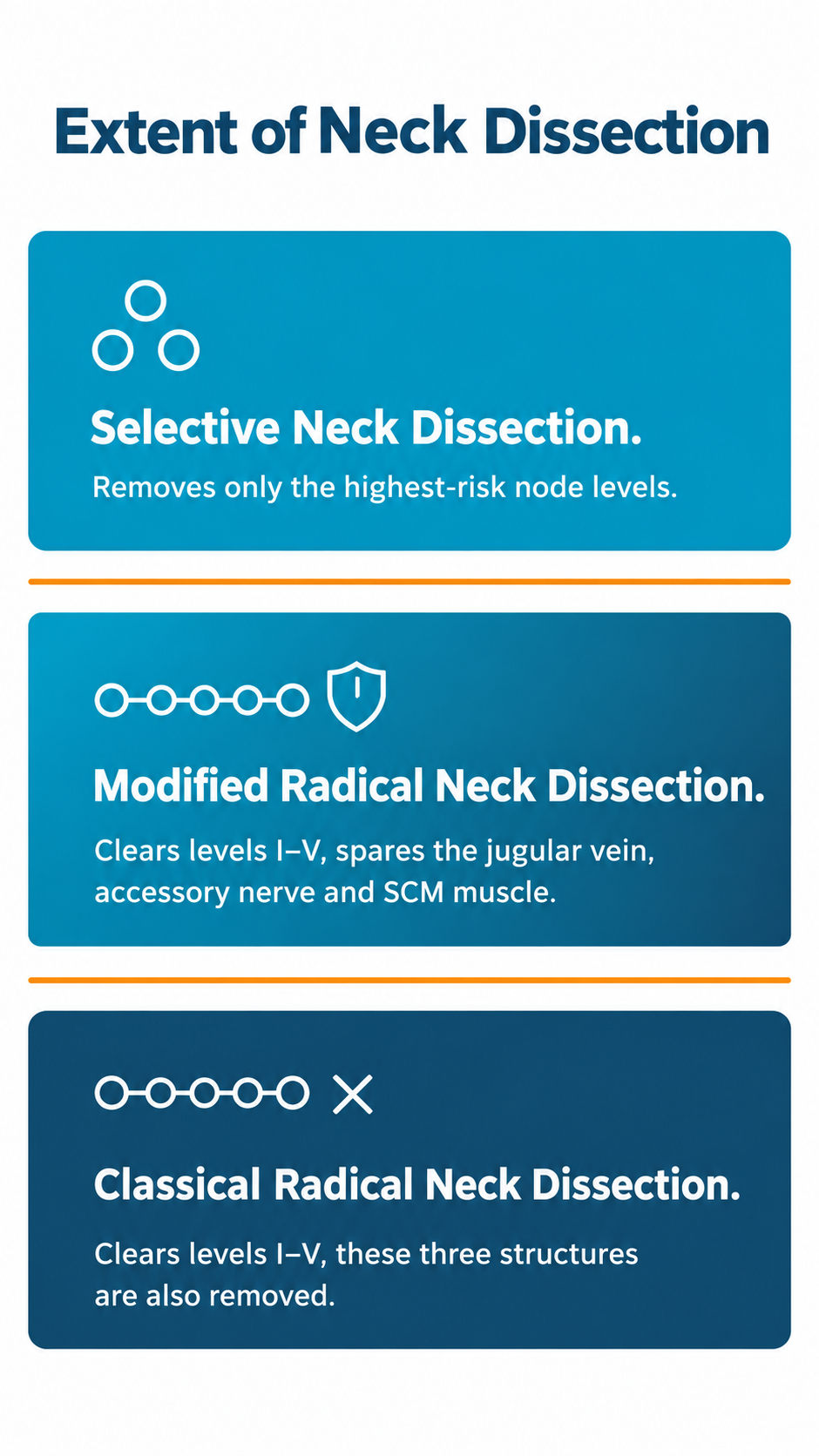
Modified radical neck dissection clears every lymph node level in the lateral neck while sparing structures a classical radical dissection would remove.
Node levels removed. All five levels, I through V, come out, a far broader clearance than a selective approach.
Structures preserved. One or more of the jugular vein, accessory nerve and sternocleidomastoid muscle are spared, depending on how the disease has spread.
Shoulder function. Dysfunction is more common and more pronounced here, largely because level V dissection affects the nerve more directly.
Typical use. Reserved for confirmed or extensive nodal disease, where the risk of leaving untreated nodes outweighs the added surgical impact.
Deciding between these approaches isn’t something patients work out from a diagnosis alone. Our blog on neck dissection surgery for cancer covers the broader picture of when neck dissection gets recommended in the first place.
Why Choose Prof. Dr. Sandeep Nayak for Neck Dissection Surgery in Bangalore?
Dr. Sandeep Nayak has spent over 24 years in robotic and minimally invasive cancer surgery, head and neck tumors included. His training in robotic technique means he can reach and remove tumors through the mouth without disturbing much of the surrounding muscle or tissue. That precision is the whole point.
Patients under his care generally get back to normal swallowing and speech faster than with open surgery. Less visible scarring too, and a shorter hospital stay. Recovery still depends on tumor size and where exactly it sits, but the outcomes hold up. No exaggeration needed here.
Frequently Asked Questions
What's the main difference between selective and modified radical neck dissection?
Selective dissection removes specific node levels, modified radical clears all five with structures spared.
Is shoulder dysfunction the same after both procedures?
No, shoulder dysfunction is more common and more severe after modified radical dissection.
What decides which type of neck dissection a patient needs?
Tumour location, nodal involvement on imaging, and disease extent decide which one applies.
Does modified radical dissection work as well as classical radical dissection?
Yes, studies show comparable oncological outcomes between modified radical and classical radical dissection.
References
- National Center for Biotechnology Information — Shoulder Dysfunction and Quality of Life Following Modified Radical and Selective Neck Dissection: A Prospective Comparative Study: https://pmc.ncbi.nlm.nih.gov/articles/PMC11306493/
- National Center for Biotechnology Information — Impact of Modified Radical Neck Dissections on the Number of Retrieved Nodes, Recurrence and Survival: https://pmc.ncbi.nlm.nih.gov/articles/PMC9442232/
Disclaimer: This blog is for informational and educational purposes only and is not a substitute for professional medical advice or diagnosis.
