

A thyroid cancer diagnosis does not always mean immediate surgery is necessary. While thyroidectomy remains an important treatment for many patients, selected cases of small, low-risk papillary thyroid cancer may be managed through active surveillance. This approach involves closely monitoring the tumour for changes and considering surgery only if signs of progression appear.
“However, not all thyroid cancers need to be operated on immediately. Active surveillance can be considered as a safe approach in some well-selected patients with small low-risk tumours, depending on the size, location and behaviour of the tumour and the ability of the patient to undergo regular follow-up,” says Dr. Sandeep Nayak, an ace surgical oncologist in Bangalore.
Dr. Sandeep Nayak has vast experience in managing thyroid cancers. He is well experienced in the area of thyroid surgery & complex neck surgeries. His expertise in thyroid tumour evaluation and patient management at different stages of thyroid cancer enables him to guide whether active surveillance or surgical treatment is needed.
What Is Active Surveillance for Thyroid Cancer?
Active surveillance is a structured monitoring approach in which selected thyroid cancers are observed closely instead of being removed immediately. The aim is to identify any tumour growth or signs of disease progression while avoiding unnecessary surgery.
This approach is primarily considered for selected patients with papillary thyroid microcarcinoma, generally defined as a papillary thyroid cancer measuring 1 cm or less.
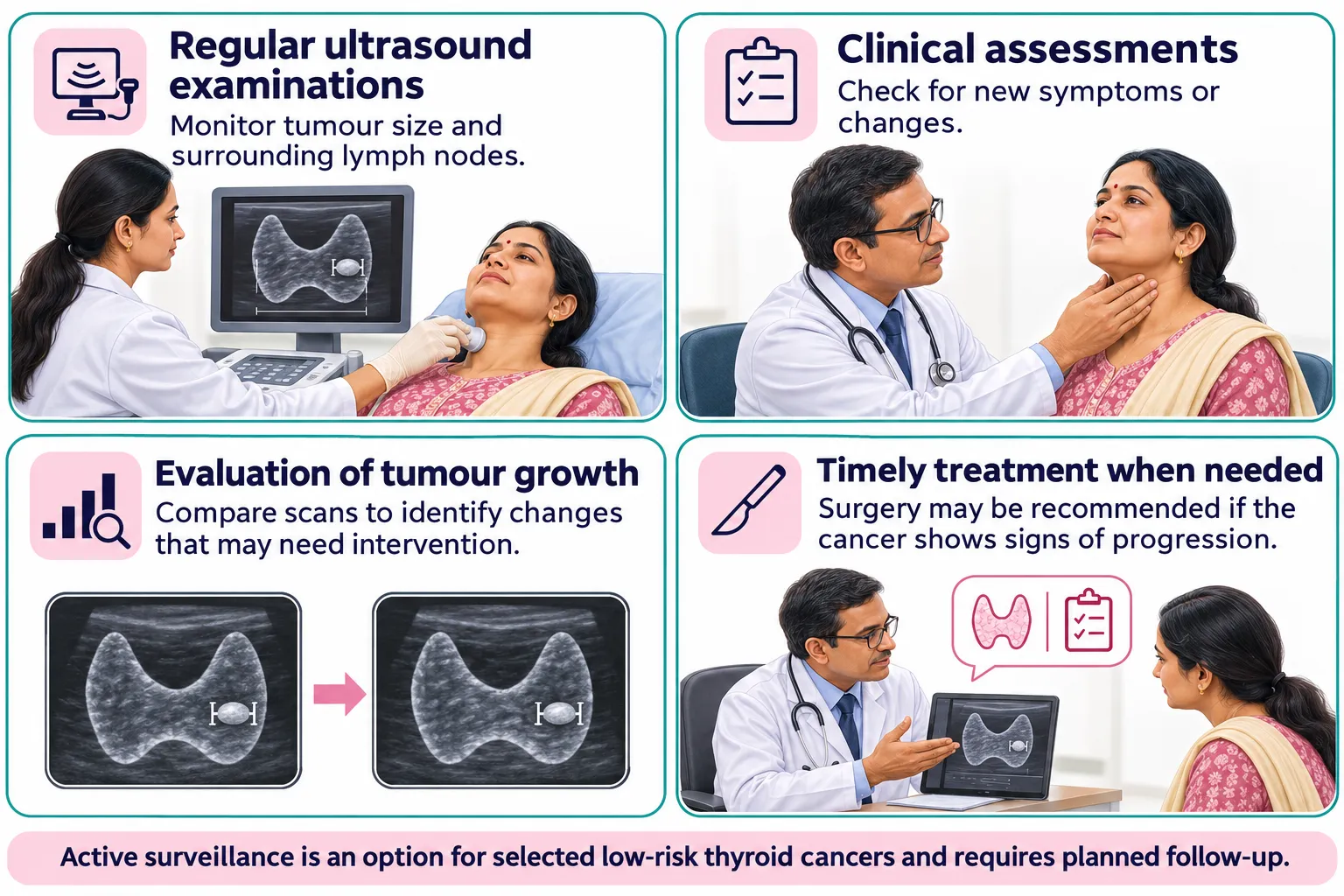
Active surveillance does not mean ignoring the cancer or avoiding medical care. It involves:
Who Is Eligible for Active Surveillance Instead of Thyroid Surgery?
Active surveillance is generally considered for patients with small, low-risk papillary thyroid cancers that have favourable clinical and imaging findings.
Patients who may be suitable include:
- Small tumours: Particularly papillary thyroid microcarcinomas measuring 1 cm or less.
- No evidence of lymph node spread: Imaging should not indicate suspicious cervical lymph node involvement.
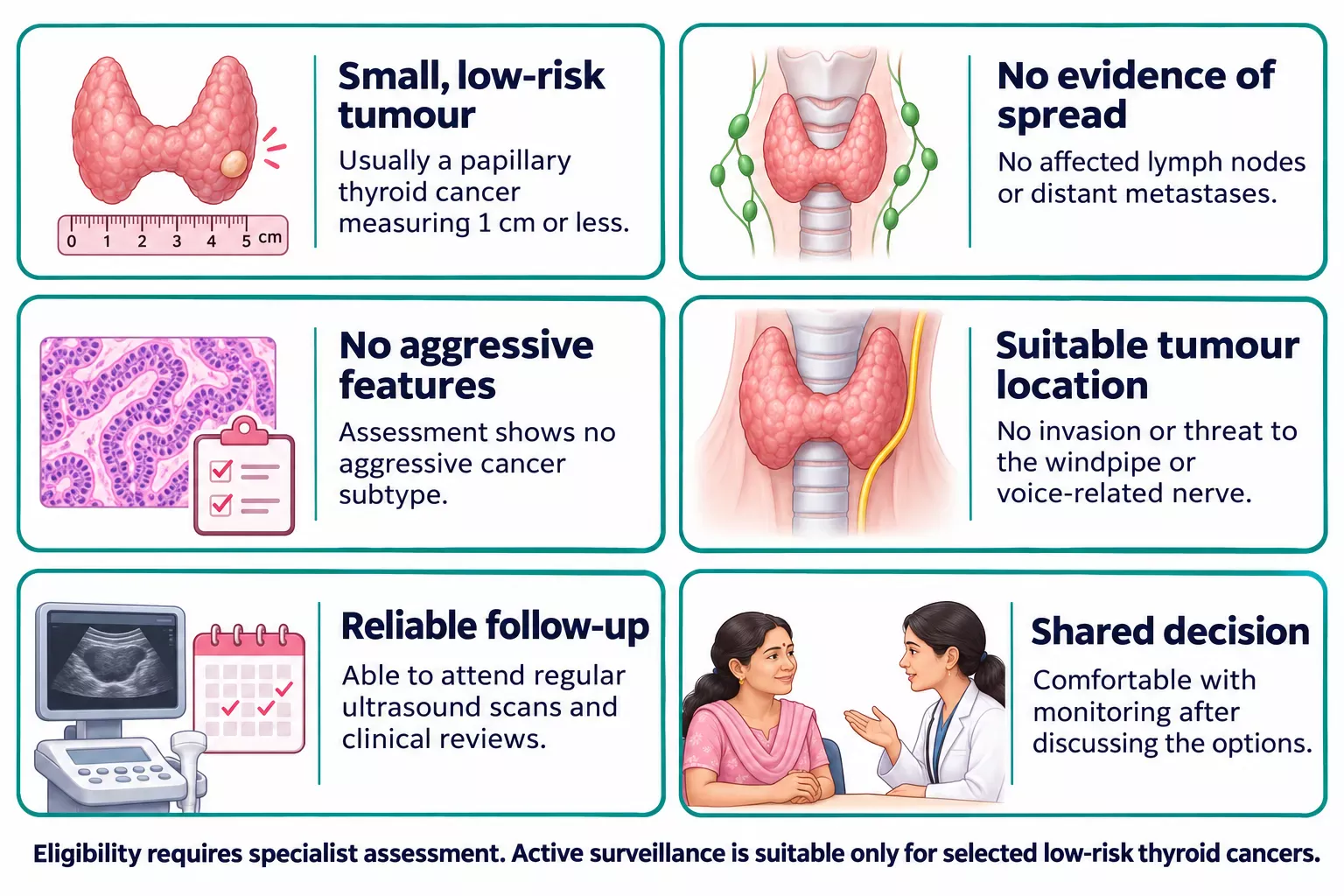
- No local invasion: The tumour should not show concerning involvement of surrounding structures.
- Favourable tumour location: Tumours close to critical structures, such as the trachea or recurrent laryngeal nerve, may require a different approach.
- Reliable follow-up: Patients should be able to attend regular ultrasound examinations and clinical assessments.
The age of the patient, health status, ability to maintain long-term monitoring, and personal preferences influence the decision.
According to Dr. Sandeep Nayak, an experienced oncologist in Bangalore, “Active surveillance would not be suitable in all instances, especially aggressive types of thyroid cancer, palpable lymph nodes or those with local invasion and progression”.
Benefits of Active Surveillance for Thyroid Cancer
For patients with suitable low-risk thyroid cancers, active surveillance may help avoid or delay surgery without compromising appropriate follow-up.
These could include:
- Avoiding unnecessary surgery
Those who have stable tumours may not need to undergo surgery immediately.
- Natural thyroid function maintenance
Without undergoing total thyroidectomy, there is an opportunity to maintain natural hormone production, based on the extent of the illness and the method used.
- Reducing surgical risks
Active surveillance does not entail exposure to the risk of complications, including bleeding and changes in the voice.
- Avoiding lifelong medication in some patients
Patients who do not undergo total thyroidectomy may retain sufficient thyroid function and may not require lifelong thyroid hormone replacement.
- Maintaining quality of life
This could help maintain the quality of life of the suitable patients who would otherwise not need any surgery at all.
However, these will be based on proper patient selection and regular monitoring.
What Are the Risks of Choosing Active Surveillance?
While some small papillary thyroid cancers have a relatively stable course, others may progress or become complicated with a need for treatment.
These risks might consist of the following:

When Is Surgery Necessary for Thyroid Cancer?
Thyroid surgery remains an important treatment for many patients with thyroid cancer. Even during active surveillance, certain findings may indicate the need for surgical intervention.
These indications include:
- Tumour growth is detected: When a significant growth of the tumour occurs; usually defined by an increase of 3 mm in the size of the tumour as defined in surveillance protocols.
- Lymph node involvement: Presence of suspicious or metastatic lymph nodes is another indication for surgery.
- Local extension: Local infiltration of the tumour may need surgery.
- Aggressive features are identified: Certain tumour characteristics may make surveillance unsuitable.
- Patient preference changes: In some cases, the patient might choose surgery.
The nature of the surgery performed will depend on the size of tumour and other factors such as its location and clinical findings.
How Is Thyroid Cancer Monitored During Active Surveillance?
Active surveillance follows a structured schedule designed to identify tumour growth and signs of disease progression.
Monitoring generally includes:
- Baseline ultrasound: Establishes the tumour’s size, location, and relationship with nearby structures.
- Neck ultrasound follow-up: Evaluates changes in the thyroid nodule and surrounding lymph nodes.

- Clinical consultations: Review symptoms, medical history, and any new concerns.
- Assessment of tumour progression: Compares imaging findings over time to identify significant changes.
- Treatment review: Determines whether continued surveillance or surgery is more appropriate.
Frequency of ultrasonography examinations is determined by the patient’s risk factors and by the clinician’s evaluation. Follow-ups are usually done more frequently and can be changed based on the stability of the tumor.
Some other blood investigations, like thyroid function tests, may be performed where necessary. Testing thyroglobulin levels alone is an unreliable means of surveillance for the thyroid.
Conclusion
All patients who have been diagnosed with thyroid cancer need not necessarily require surgery immediately. Patients with small and low-risk cases of papillary thyroid cancer could benefit from the practice of active surveillance, if there are no concerning indications of tumour development.
With his background in thyroid cancer surgery and complex neck procedures, Dr. Sandeep Nayak helps patients understand different options open to them after an evaluation of their case. Patients seeking thyroid cancer treatment in Bangalore can get expert advice on the best method for their condition.
Frequently Asked Questions
1. Can thyroid cancer be treated without surgery?
2. What is active surveillance for thyroid cancer?
3. Which patients may not need surgery?
4. Can all thyroid cancers be put on active surveillance?
5. Can thyroid cancer spread during active surveillance?
6. When should thyroid cancer surgery not be delayed?
7. Does avoiding thyroid surgery mean avoiding medication?
References
- American Thyroid Association – Active Surveillance for Papillary Thyroid Microcarcinoma
- National Cancer Institute – Thyroid Cancer Treatment
Disclaimer: The information shared on this page is for educational purposes and not for promotional use.
