
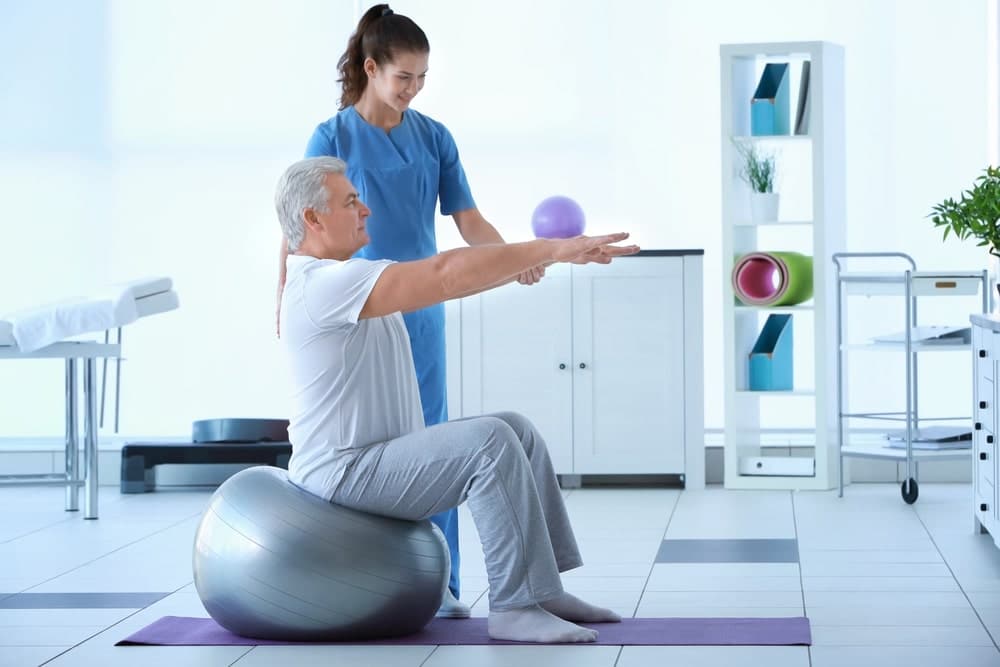
Cancer rehabilitation helps patients rebuild strength, function and daily life during and after treatment. Cancer and its treatment take a real toll, on the body, on energy, on the ability to do ordinary things. Rehab is the structured work of getting those back. It isn’t an afterthought to treatment. It’s part of recovering properly from it.
According to Dr. Sandeep Nayak, Surgical Oncologist in India, “We focus so hard on removing the cancer that recovery sometimes gets treated as something that just happens on its own. It doesn’t. Surgery, chemo and radiation leave patients weak, fatigued, sometimes with lasting effects. Rehabilitation is how we help them get back to their lives, not just survive the treatment. It’s a real part of the plan, not a bonus.”
Struggling to regain strength after cancer treatment?
What Does Cancer Rehabilitation Involve?
It’s a coordinated effort across several areas, matched to what each patient actually needs.
- Physiotherapy : Targeted exercises rebuild strength and mobility lost to surgery or long treatment. Often the backbone of the whole programme.
- Managing fatigue : Cancer fatigue is brutal and doesn’t lift with rest alone. Structured activity, oddly enough, is what helps most.
- Nutrition : Treatment wrecks appetite and weight. A dietitian helps rebuild the nourishment the body needs to actually repair itself.
- Emotional support : The mental load is real. Counselling and psychological support are as much a part of rehab as any physical exercise.
Rehab is lighter when the surgery itself was gentler, and minimally invasive robotic cancer surgery means less to recover from in the first place.
Why Does It Matter So Much?
Rehabilitation shapes not just whether someone recovers, but how well they live afterward.
- Faster return : Structured rehab gets people back to work, family and normal life sooner than leaving recovery to chance.
- Fewer lasting effects : Issues like lymphoedema, stiffness or weakness are far easier to manage when rehab catches them early.
- Tolerating treatment : A stronger, better nourished patient handles chemotherapy and further treatment better. Rehab feeds back into the cancer care itself.
- Quality of life : Beyond survival, rehab is about living well after cancer. That distinction matters enormously to patients.
This is the same principle behind faster recovery after surgery, where active, structured recovery beats simply waiting to heal.
Why Choose Dr. Sandeep Nayak for Cancer Care?
Dr. Sandeep Nayak is a surgical oncologist with 24 years behind him and a fellowship in laparoscopic and robotic onco-surgery. His approach treats recovery as part of cancer care, not an afterthought, so patients are supported through rehabilitation alongside their surgical treatment. Minimally invasive surgery is the foundation, since less surgical trauma means a far easier path back to strength. That whole-journey view is what sets good cancer care apart.
Recovery is where the quality of the surgery shows itself. A patient who had a small incision, walked the next day and avoided complications has a far shorter road through rehab than one who didn’t. Building the recovery in from the start, through gentler surgery and structured support, is what gets people back to their lives. Surviving cancer is the goal. Living well afterward is the point.
Frequently Asked Questions
What is cancer rehabilitation?
It helps patients rebuild strength, function and quality of life during and after treatment.
Who needs cancer rehabilitation?
Anyone recovering from surgery, chemotherapy or radiation who has lingering physical or functional problems.
What does cancer rehabilitation involve?
Physiotherapy, exercise, nutrition, pain management and emotional support tailored to the patient.
When should cancer rehabilitation start?
It can begin before treatment and continue through recovery, the earlier the better.
References
- Cancer rehabilitation expert recommendations — National Library of Medicine
- Oncologic rehabilitation and quality of life — National Library of Medicine
Disclaimer: This blog is for informational and educational purposes only and is not a substitute for professional medical advice or diagnosis.
