

Recovery after transoral robotic surgery moves faster than most people expect. Most patients are eating normally and speaking clearly again within two to four weeks. There’s no external incision here, so healing stays confined to the throat and mouth rather than skin or muscle. Hospital stay usually runs two to four days, and then a structured swallowing and speech plan takes over. Full functional recovery, real stamina, can take six to eight weeks. It depends on tumor size. It depends on how much tissue was removed. Not an exact science, just a fairly reliable range.
According to Dr. Sandeep Nayak, transoral robotic surgery protects swallowing function in a way open surgery just can’t match, because the robotic arms work through the mouth itself, no cutting through jaw or neck muscle needed.
Wondering how soon you’ll be eating and talking normally again?
What Happens in the First Few Days After Surgery?
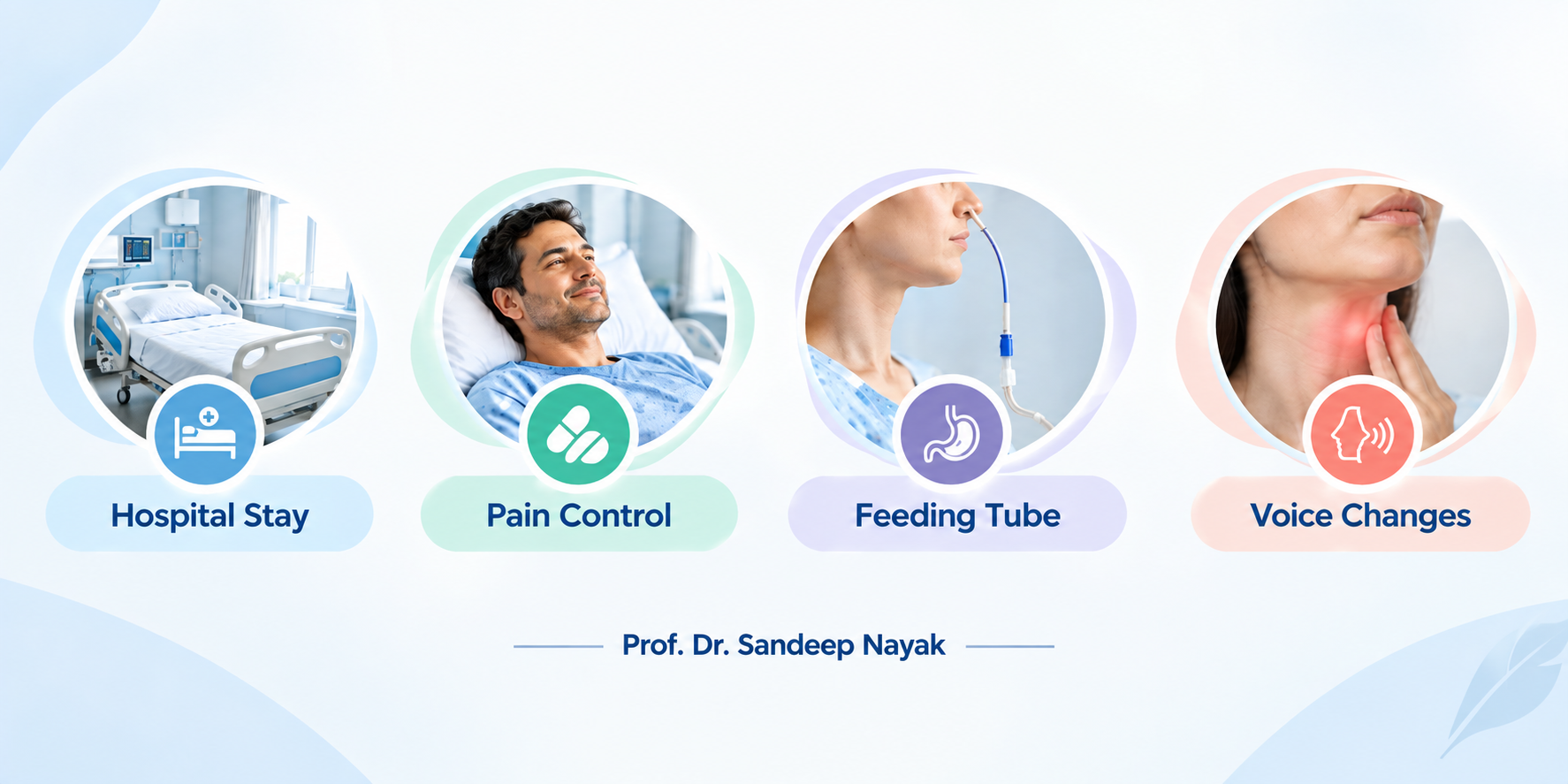
The first few days after surgery focus on managing discomfort, monitoring swelling, and gradually returning to safe swallowing. Patients may begin with liquids before moving to soft foods. Temporary hoarseness or mild swallowing difficulty can improve as swelling settles.
By the end of the first week, many people are eating soft foods and speaking more comfortably. Recovery varies, but the minimally invasive robotic approach can support a smoother recovery compared with open neck surgery.
What Does the Longer Recovery Timeline Look Like?
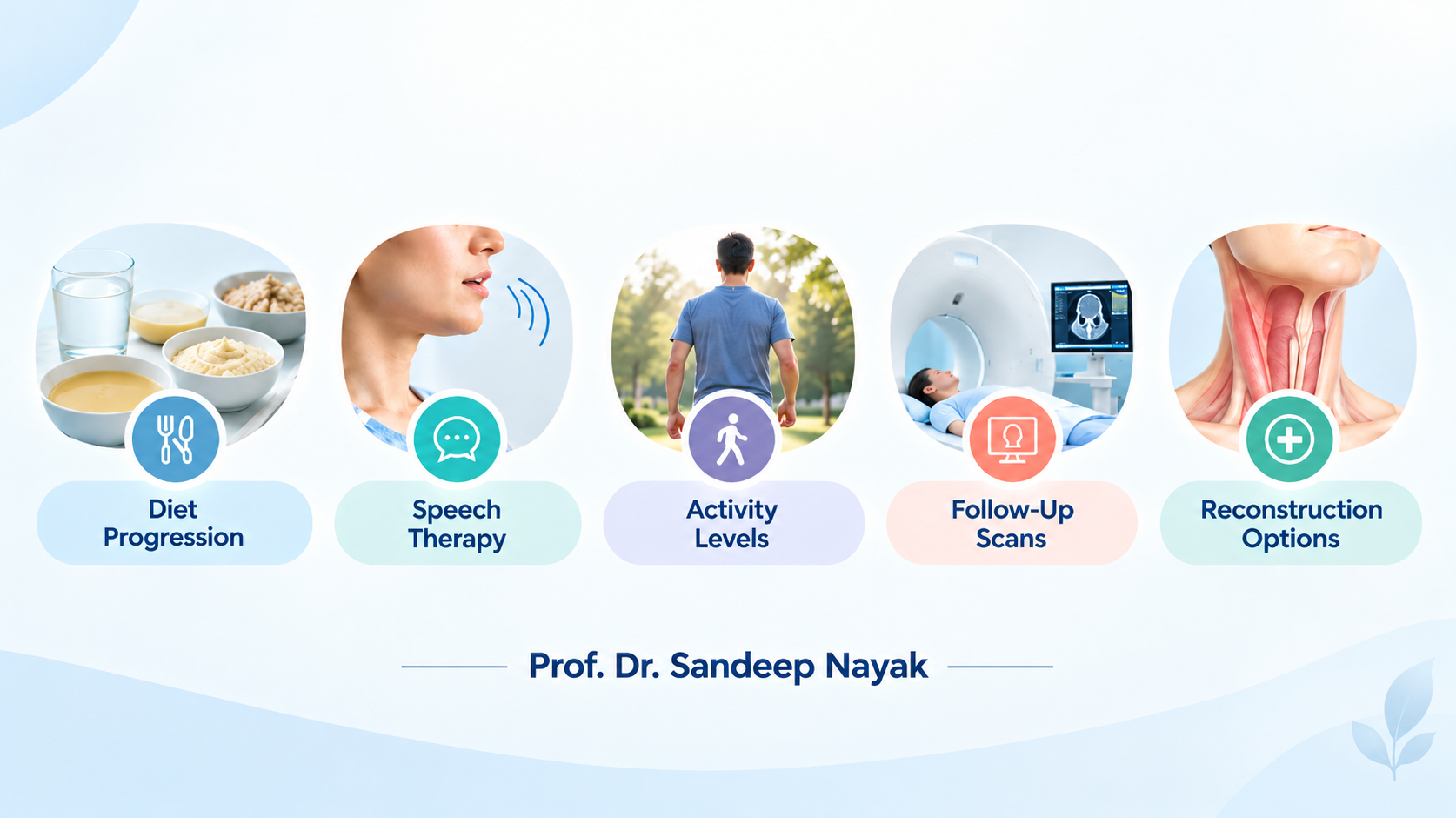
Recovery after surgery continues gradually beyond the first week, with swallowing, diet, speech, activity, and follow-up care improving over the following weeks. The pace of recovery can vary depending on the procedure and individual healing.
For anyone recovering from a bigger head and neck procedure, reconstruction options are worth a read too, covering how tissue healing and long-term function are managed once surgery is done. It offers useful context for understanding what recovery may look like after a major procedure.
Why Choose Dr. Sandeep Nayak for TORS?
Dr. Sandeep Nayak has spent over 24 years in robotic and minimally invasive cancer surgery, head and neck tumors included. His training in robotic technique means he can reach and remove tumors through the mouth without disturbing much of the surrounding muscle or tissue. That precision is the whole point.
Patients under his care generally get back to normal swallowing and speech faster than with open surgery. Less visible scarring too, and a shorter hospital stay. Recovery still depends on tumor size and where exactly it sits, but the outcomes hold up. No exaggeration needed here.
Frequently Asked Questions
Is transoral robotic surgery painful during recovery?
Mild to moderate at most, and oral medication controls it well.
How long is the hospital stay after TORS?
Two to four days typically, depending on swelling and healing progress.
When can normal eating resume after TORS?
Most patients return to a regular diet within two to four weeks.
Does TORS require a permanent feeding tube?
No. Feeding tubes are temporary, removed once swallowing feels safe again
References
- Transoral Robotic Surgery for Oropharyngeal and Hypopharyngeal Squamous Cell Carcinoma – NCBI
- Enhanced Recovery After Surgery Protocol in Transoral Robotic Surgery – PubMed
Disclaimer: This blog is for informational and educational purposes only and is not a substitute for professional medical advice or diagnosis.
