

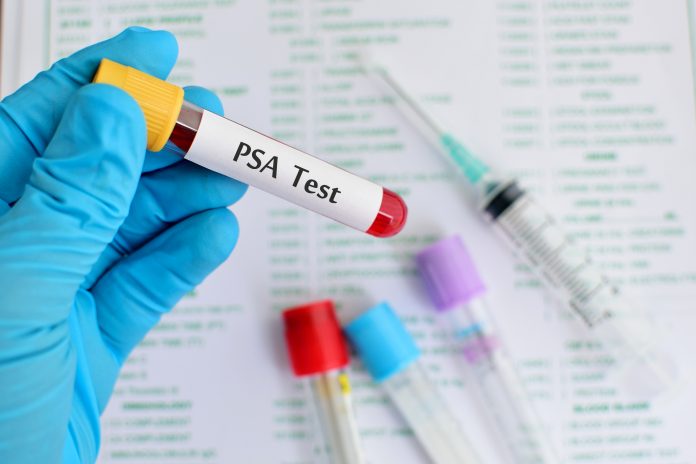
A PSA test is a blood test measuring prostate specific antigen, a protein produced by the prostate gland. Elevated levels can point to prostate cancer, but also to benign enlargement or inflammation, the test does not distinguish between these on its own. Testing is generally considered from around age 50 for average risk men, and earlier, from roughly 40 to 45, for men at higher risk. An abnormal result leads to further evaluation, not an automatic diagnosis.
According to Dr. Sandeep Nayak, Surgical Oncologist in India, “The PSA test is useful, but it is not a cancer specific test in the way people assume. A raised level can mean cancer, but it can equally mean an enlarged prostate or inflammation. What matters is not the number in isolation but what happens next, further imaging or a biopsy to clarify the picture. I encourage men to have this conversation with their doctor around age 50, or earlier if their risk profile warrants it.”
Considering PSA testing and unsure when to start?
What Does the PSA Test Actually Measure?
Understanding what this test reflects clarifies why a result needs proper interpretation.
- Prostate specific antigen : This protein is produced by prostate cells and normally present in the blood at low levels, rising when the prostate is disturbed.
- Not cancer specific : Elevated PSA can result from prostate cancer, but also from benign prostatic hyperplasia or infection, which limits its specificity.
- A starting point, not an answer : A raised result prompts further evaluation. It does not confirm cancer on its own.
- Often paired with DRE : A digital rectal exam is commonly performed alongside PSA testing to assess the prostate directly.
Understanding this test properly is central to informed prostate cancer treatment decisions, since the workup that follows depends on interpreting the result correctly.
When Should Men Actually Get Tested?
Deciding when to start PSA testing depends on individual risk factors, not a single fixed age.
- Average risk men : Testing is generally considered from around age 50, discussed as a shared decision with a doctor rather than automatic screening.
- Higher risk men : Those with a family history of prostate cancer or of African ancestry are generally advised to consider testing earlier, around 40 to 45.
- A shared decision : Because PSA testing carries a risk of detecting clinically insignificant disease, the decision to test is made jointly with a doctor.
- Ongoing conversation, not a one time test : For men who begin testing, the frequency and next steps depend on the initial result and personal risk profile.
This individualised approach builds directly on the guidance covered in our prostate cancer screening overview, which addresses screening more broadly.
Why Choose Dr. Sandeep Nayak for Prostate Cancer Care?
Dr. Sandeep Nayak is a surgical oncologist with 24 years of experience and a fellowship in laparoscopic and robotic onco-surgery. His approach to PSA testing involves discussing individual risk factors before recommending testing, and interpreting an elevated result within the context of imaging and clinical assessment rather than in isolation. This reflects an understanding that PSA is one part of a broader evaluation, not a stand alone diagnostic answer.
The value of the PSA test lies less in the number itself and more in how it is used. A raised result should prompt a considered next step, not alarm, and a normal result should not replace ongoing risk based discussion for men at higher risk. Approaching PSA testing as part of an informed conversation with a doctor, rather than a simple pass or fail test, is what allows this tool to be genuinely useful.
Frequently Asked Questions
What is a PSA test?
A blood test measuring prostate specific antigen, a protein produced by the prostate.
When should men get a PSA test?
Around age 50 for average risk men, earlier for those at higher risk.
Does a high PSA always mean cancer?
No. Enlargement or inflammation of the prostate can also raise PSA levels.
What happens after an abnormal PSA result?
Further evaluation such as MRI or biopsy follows, not an automatic diagnosis.
References
- PSA testing sensitivity and specificity in prostate cancer detection — Systematic review
- PSA screening outcomes in a population based study — National Library of Medicine
Disclaimer: This blog is for informational and educational purposes only and is not a substitute for professional medical advice or diagnosis.

