
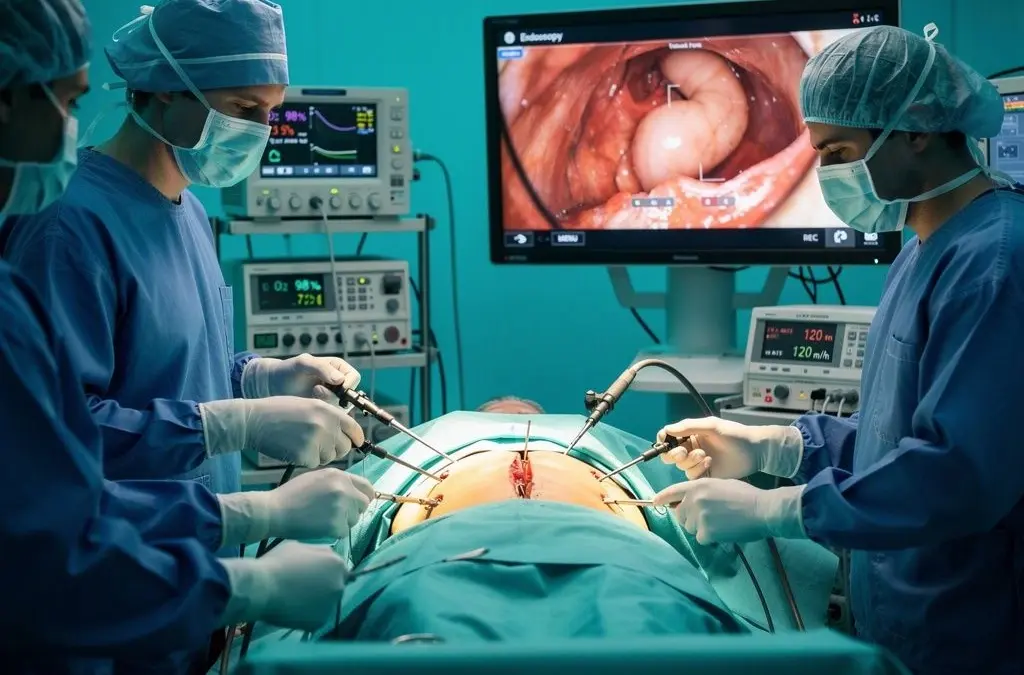
Rectal cancer surgery can be done robotically, laparoscopically or through an open incision, and the right choice turns on where the tumour sits, how narrow the pelvis is and what kind of recovery the patient is aiming for. All three can cure the cancer in experienced hands, which is why the decision is about what fits the individual patient and not about which technology is newest.
According to Prof. Dr. Sandeep Nayak, Surgical Oncologist at Clinic, Bangalore, explains how the three approaches are weighed in rectal cancer surgery. “Patients often come asking which of the three is best. The rectum is hard to reach, down in a narrow pelvis, so how we operate matters a little more here than in other cancers. Whatever the route, the plan is the same: take the whole tumour out, save the nerves and the sphincter if the cancer allows it, and get the patient back on their feet. If one route does that better for you, that’s the one we use.”
If you’d like to talk through your own options, the clinic can be reached at +91 9482202240.
How Do Robotic, Laparoscopic and Open Rectal Cancer Surgery Differ?
The aim is the same in all three. What changes is how the surgeon gets down to a tumour sitting low in the pelvis.
Open surgery: One longer cut in the abdomen. The surgeon can put their hands in and see the area directly.
Laparoscopic surgery: Several short cuts take its place. A camera and thin instruments go through them, and the surgeon works by hand while watching a monitor.
Robotic surgery: The cuts are small here too. The surgeon sits at a console a few feet from the patient, the screen is magnified and in 3D, and the instrument tips can turn in ways a straight laparoscopic instrument can’t. The robot decides nothing. Every movement is the surgeon’s own.
What stays constant: In all three, the central step is total mesorectal excision, where the rectum comes out together with the fat and lymph nodes around it as a single package. How cleanly that is done matters more than which instrument did it. Our page on robotic cancer surgery explains how the system works.
Is Minimally Invasive Surgery as Effective as Open Surgery for Rectal Cancer?
For laparoscopic surgery, the evidence is reasonably firm.
The COLOR II trial: Roughly a thousand patients were randomly placed into laparoscopic or open surgery groups. Three years later the cancer had returned in the pelvis in 5% of each group, and survival was close.
Recovery: People who had keyhole surgery tended to bleed less, have less pain and go home sooner.
A caution: Rectal surgery by keyhole is demanding, and the trial results came from surgeons who did it regularly.
For a wider look across other cancers, see our blog on whether minimally invasive cancer surgery gives the same cure rate as open surgery.
What Determines Treatment Choice?
Every patient is assessed individually, and a handful of points steer the decision.
Where the tumour is: Upper, middle or low rectum, and how far it lies from the anal opening.
Stage and what comes before surgery: Many patients have chemotherapy or radiation first, and how the tumour responds can change the plan.
Pelvic anatomy and build: A narrow pelvis, a heavier build or a bulky tumour can make one approach harder than another.
Sphincter and stoma: Whether the sphincter can be saved, and whether a temporary or a permanent stoma will be needed.
General health and old scars: Fitness for a long operation, and what earlier surgery has left behind.
The team’s experience: How often they do this operation, and by which route.
What matters to you: Recovery time, scars and everyday life all count once the options have been laid out. A case study on advanced rectal cancer care shows how that works in practice.
Key Takeaways
- Any of the three approaches can remove a rectal cancer completely. How cleanly the mesorectum is taken out matters more than which instrument is used.
- In the large COLOR II trial, laparoscopic and open surgery gave similar recurrence and survival at three years, and keyhole patients recovered faster.
- Randomised trials haven’t shown that robotic surgery cuts the need to convert to open surgery. It may still help with a narrow pelvis or a low tumour.
- Open surgery remains the safer route for some tumours, for emergencies and for a pelvis scarred by earlier operations.
- Tumour position, stage, earlier treatment, pelvic anatomy and the surgeon’s experience decide the approach.
- To talk through your own case, you can book an appointment or call the clinic on +91 9482202240.
Frequently Asked Questions
Is robotic surgery better than laparoscopic surgery for rectal cancer?
In the trials so far the cancer results look alike, so the surgeon’s skill counts for more than the machine.
Is laparoscopic surgery as good as open surgery for rectal cancer?
In the COLOR II trial, recurrence and survival at three years were alike, and keyhole patients recovered faster.
Will I need a stoma after rectal cancer surgery?
Sometimes, and it may be temporary or permanent, depending on how low the tumour is and how close it comes to the sphincter.
When is open surgery still preferred for rectal cancer?
When the tumour has grown into nearby organs, in an emergency, or when old scar tissue makes keyhole risky.
References
Robotic vs Laparoscopic Surgery for Rectal Cancer: ROLARR Randomized Clinical Trial Compares robotic and laparoscopic rectal cancer surgery, including conversion to open surgery, complications and cancer-related outcomes. Read the study – JAMA / PubMed Central
Robotic-Assisted vs Laparoscopic Resection for Rectal Cancer Reviews clinical outcomes, quality of life and costs associated with robotic and laparoscopic surgery. Read the study – NIHR Journals Library
Disclaimer: This blog is for informational and educational purposes only and is not a substitute for professional medical advice or diagnosis.
