
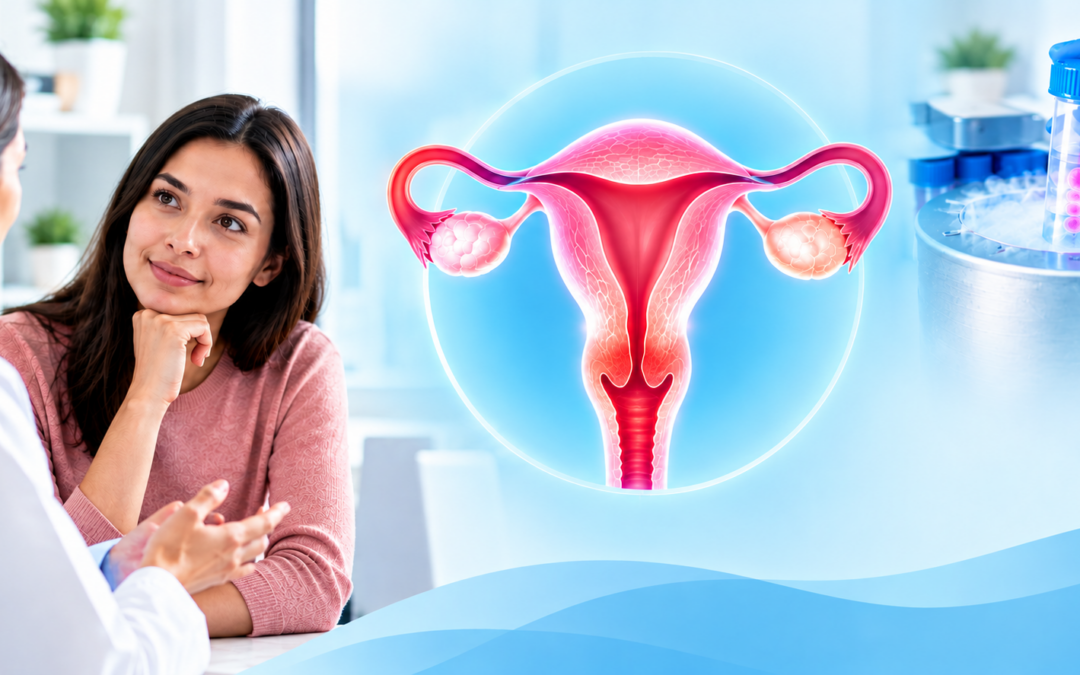
Yes, fertility can often be preserved in early-stage cervical cancer, through specific surgical techniques and, in some cases, additional preservation options considered before treatment even begins. This isn’t possible for every patient or every stage, but for the right candidates, keeping the ability to conceive is a genuine, achievable goal, not just a hopeful afterthought.
According to Dr. Sandeep Nayak, surgical oncologist in Bangalore with over 24 years of experience treating solid tumors, “Young women diagnosed with cervical cancer often assume a hysterectomy is their only option, and that fear shapes how they experience the whole diagnosis. For carefully selected early-stage cases, that’s simply not true anymore. Fertility-sparing surgery is a real, established option, it just needs the right case and the right planning from the start.”
Diagnosed with early cervical cancer and hoping to preserve fertility?
Fertility-Sparing vs. Standard Surgery for Cervical Cancer
|
Radical Trachelectomy |
Radical Hysterectomy |
|
|
What’s removed |
Cervix and surrounding tissue, uterus preserved |
Cervix, uterus, and surrounding tissue |
|
Fertility afterward |
Pregnancy remains possible for many patients |
Not possible, uterus is removed |
|
Who qualifies |
Very early-stage, smaller tumours, specific criteria |
Broader range of early to locally advanced stages |
|
Approach |
Often laparoscopic or robotic-assisted |
Open, laparoscopic, or robotic, depending on case |
|
Recurrence risk |
Comparable to hysterectomy in properly selected cases |
Standard, well-established outcomes |
This kind of decision runs through the same evaluation covered on our Uterus/Cervical Cancer treatment page, where staging determines which surgical path actually applies.
What Decides If Fertility Preservation Is Possible?
Tumour size and stage come first, really. This kind of surgery generally only works for very early-stage disease, small tumours that haven’t gone anywhere beyond the cervix.
- Lymph nodes get checked too, and they need to come back clear. If cancer’s already reached them, fertility-sparing surgery stops being a safe route.
- Not every subtype of cervical cancer fits this approach equally well either, your surgical team will look at the actual pathology before confirming either way.
- Pregnancy after a trachelectomy does carry somewhat higher risk, preterm birth mainly, so closer monitoring becomes part of the picture for any pregnancy that follows.
If fertility preservation more broadly, not just the surgical side, is something you’re weighing, we’ve gone into that separately in Egg or Sperm Freezing Before Cancer Treatment?, worth a read alongside this one.
Why Choose Dr. Sandeep Nayak for Cancer Care in Bangalore?
Dr. Sandeep Nayak has spent more than two decades in surgical oncology, and cervical cancer cases in younger women, where fertility genuinely factors into the treatment conversation, have been a consistent part of that work throughout. He currently serves as Chairman of Oncology Services for Karnataka and heads Surgical Oncology and Robotic Surgery at KIMS Hospital, Bangalore. What tends to matter most to patients isn’t the title though, it’s that fertility gets raised as a real option early on, not treated as an afterthought once a hysterectomy’s already been decided. That early conversation is often where things get missed elsewhere.
Diagnosed early and hoping to preserve your ability to have children? Ask before assuming it’s off the table. Call +91 9482202240 and get someone to actually walk you through it.
Frequently Asked Questions
Is fertility-sparing surgery available for every stage of cervical cancer?
No, not every stage qualifies. Really only works for very early disease, small tumours, clear lymph nodes, your care team will tell you where you actually stand.
Does a radical trachelectomy carry a higher recurrence risk than a hysterectomy?
Not when the candidate’s genuinely right for it. In well-selected early cases, the recurrence numbers hold up about the same either way.
Can I get pregnant naturally after a radical trachelectomy?
For a lot of women, yes. Pregnancy afterward does need closer watching though, preterm delivery risk goes up a bit compared to the general population.
What happens if I'm not a candidate for fertility-sparing surgery?
Standard treatment still works well, radical hysterectomy or a combined approach gives strong cancer control either way. And options like egg freezing beforehand can still be on the table.
References
- National Cancer Institute — Cervical Cancer Treatment
- American Cancer Society — Fertility-Sparing Surgery for Cervical Cancer
Disclaimer: This blog is for informational and educational purposes only and is not a substitute for professional medical advice or diagnosis.
