
Can Kidney Cancer Spread to the Liver or Lungs?

Can Kidney Cancer Spread to the Liver or Lungs?

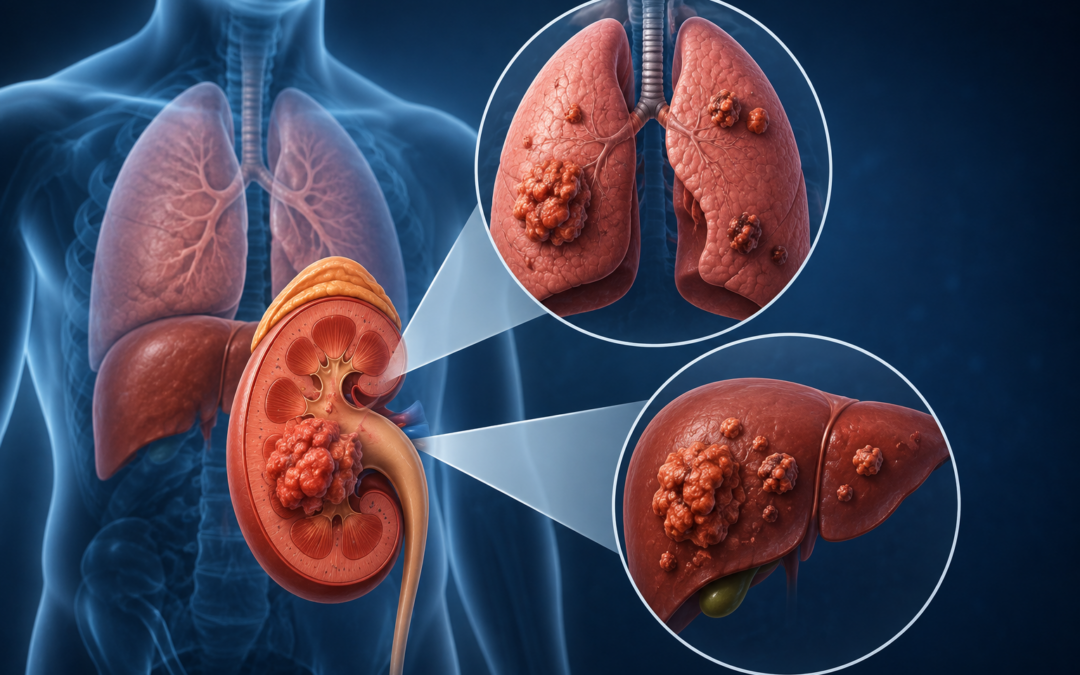
Kidney cancer can spread to both the liver and the lungs, and the lungs are actually the most common site of spread. It also frequently reaches bone, regional lymph nodes and the adrenal glands, and occasionally the brain. Renal cell carcinoma is a highly vascular cancer, which contributes to this bloodstream pattern of spread. Some cases of lung involvement are found incidentally, on a chest scan done for an entirely unrelated reason.

According to Dr. Sandeep Nayak, Surgical Oncologist in India, “Kidney cancer’s tendency to spread to the lungs surprises many patients, since they associate it purely with the kidney itself. It’s actually the most common site we see. This cancer is rich in blood supply, and that vascularity is exactly why it travels through the bloodstream so readily. Sometimes we discover lung spread before we even know about the kidney tumour, from a chest X-ray done for a completely different reason. That pattern is worth understanding.”

Newly diagnosed and want to understand how kidney cancer can spread?

Where Does Kidney Cancer Spread Most Often?

Recognising the typical pattern of spread clarifies how this disease is monitored and staged.

  • The lungs : This is the single most common site kidney cancer spreads to, and lung nodules are sometimes the first clue to the disease.
  • The liver : Also a frequent site, often assessed alongside the lungs during staging and follow up imaging after diagnosis.
  • Bone and lymph nodes : Regional lymph nodes and bone are additional common sites, adding to the overall picture assessed at diagnosis.
  • Highly vascular tumour biology : Renal cell carcinoma’s rich blood supply is directly linked to how readily it spreads through the bloodstream to distant organs.

Recognising this spread pattern is central to comprehensive kidney cancer treatment, where staging shapes the entire treatment approach.

How Is Spread Detected and Managed?

Once spread is suspected or confirmed, a defined pathway of evaluation and treatment follows.

  • CT imaging : CT scans of the chest and abdomen are the standard tool for detecting spread and monitoring disease over time.
  • Incidental detection : Lung involvement is sometimes found on imaging done for an unrelated reason, before any kidney symptoms have appeared.
  • Systemic therapy : Targeted therapy and immunotherapy are the mainstay of treatment once kidney cancer has spread beyond the kidney.
  • Selective surgery : Cytoreductive nephrectomy, removing the kidney tumour itself, is still considered in select symptomatic cases even with metastatic disease.

Understanding this fits within the broader context of metastatic renal cell carcinoma, where treatment and prognosis depend heavily on where and how extensively the disease has spread.

Why Choose Dr. Sandeep Nayak for Kidney Cancer Care?

Dr. Sandeep Nayak is a surgical oncologist with over 15 years of experience treating kidney cancer, including cases with spread to the lungs, liver and other sites. His approach includes thorough staging imaging to understand the full extent of disease before deciding on surgery, systemic therapy, or a combination of both. This means treating the pattern of spread as central information that shapes the entire treatment plan.

Understanding where kidney cancer tends to spread helps explain why staging imaging looks specifically at the lungs and liver, not just the kidney itself. A cancer with this cancer’s blood supply and tendency to travel readily calls for thorough evaluation at diagnosis and consistent monitoring afterward. Matching treatment intensity and modality to the actual extent of spread is what gives patients with metastatic kidney cancer the most appropriate care for their specific situation.

Frequently Asked Questions

Can kidney cancer spread to the liver or lungs?

Yes. The lungs are the most common site, with liver also frequently affected.

How is lung spread from kidney cancer often found?

Sometimes incidentally on a chest X-ray done for unrelated reasons.

What other sites does kidney cancer spread to?

Bone, regional lymph nodes, the adrenal glands and occasionally the brain.

How is metastatic kidney cancer treated?

Systemic therapy such as targeted therapy or immunotherapy is the mainstay.

References

  1. Patterns of metastasis in renal cell carcinoma — National Library of Medicine
  2. Systemic treatment advances for metastatic renal cell carcinoma — National Library of Medicine

Disclaimer: This blog is for informational and educational purposes only and is not a substitute for professional medical advice or diagnosis.

Can a Kidney Tumour Be Removed Without Full Removal?

Can a Kidney Tumour Be Removed Without Full Removal?

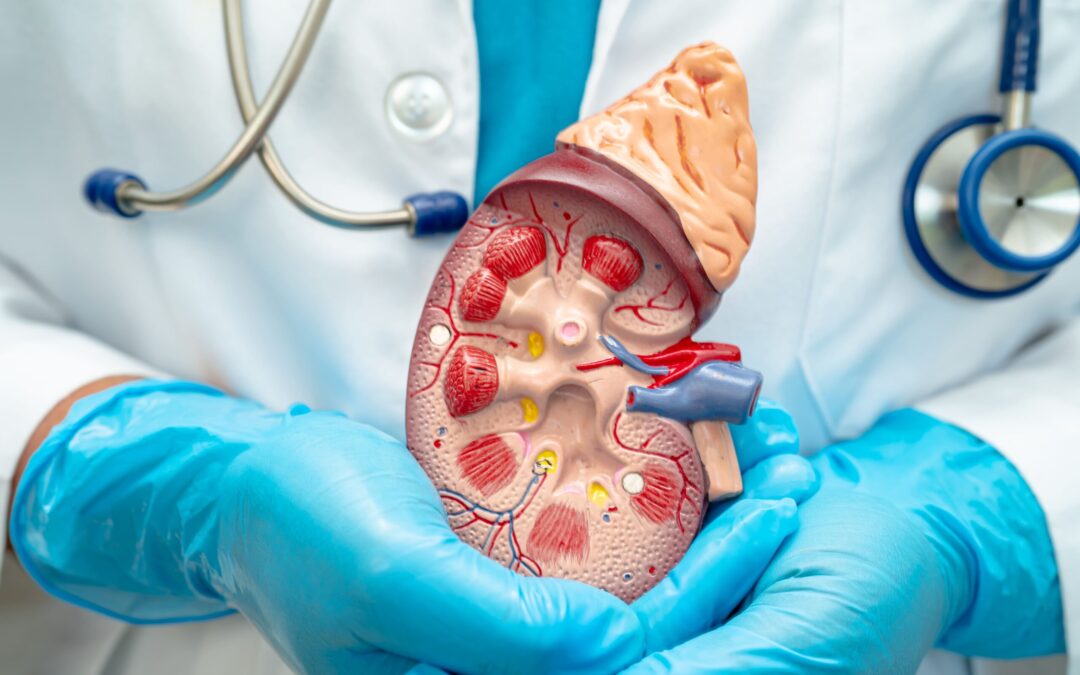
A kidney tumour can often be removed without removing the entire kidney, through a procedure called partial nephrectomy. This removes the tumour along with a margin of healthy tissue, while preserving the rest of the functioning kidney. It is generally suited to smaller tumours confined to the kidney, and is preferred over full removal whenever it is technically feasible, since preserving kidney tissue reduces long term risk to overall kidney health.

According to Dr. Sandeep Nayak, Surgical Oncologist in India, “Many patients assume a kidney tumour always means losing the whole kidney, and that is often not the case. For a suitable smaller tumour, partial nephrectomy removes just the affected portion and leaves the rest of the kidney working. This matters enormously for long term kidney health, particularly if someone already has reduced kidney function or only one working kidney. The cancer control is just as effective as full removal for the right tumour.”

Diagnosed with a kidney tumour and want to know your surgical options?

When Is Partial Removal Possible?

Suitability for kidney preservation depends on specific tumour characteristics.

  • Tumour size : Smaller tumours confined to the kidney are generally the best candidates for a nephron sparing approach.
  • Tumour location : A tumour positioned favourably, away from major blood vessels or the kidney’s collecting system, is easier to remove while preserving the organ.
  • Overall kidney health : Patients with a solitary kidney, bilateral tumours, or pre-existing kidney disease benefit most from preserving every possible bit of function.
  • Complexity of the tumour : Larger, deeply embedded or more complex tumours may still require complete removal for safe, thorough clearance.

Assessing this suitability properly is central to good kidney cancer treatment, since the right surgical plan depends entirely on the tumour’s specific characteristics.

Why Does Preserving Kidney Function Matter So Much?

Keeping as much healthy kidney tissue as possible has consequences well beyond the immediate surgery.

  • Long term kidney health : Losing an entire kidney raises long term risk of reduced kidney function and chronic kidney disease, even with a normal remaining kidney.
  • Equivalent cancer control : For appropriately selected tumours, partial nephrectomy achieves cancer control equivalent to full removal, with no compromise on outcome.
  • Protects future options : Preserving kidney function protects against complications that could limit future treatment options if health changes over time.
  • Not always possible : Where the tumour is too large, complex or centrally located, full removal remains the safer, more appropriate choice.

Recognising kidney tumours early, as covered in our guide to early symptoms of kidney cancer, often means catching them while they are still small enough for this kidney sparing approach.

Why Choose Dr. Sandeep Nayak for Kidney Cancer Surgery?

Dr. Sandeep Nayak is a surgical oncologist with 24 years of experience and a fellowship in laparoscopic and robotic onco-surgery. He performs both partial and radical nephrectomy, assessing each tumour honestly to determine whether kidney preservation is genuinely achievable without compromising cancer control. This means prioritising nephron sparing surgery wherever it is safely possible, rather than defaulting to complete removal.

Preserving kidney function while removing cancer completely is the goal that defines good kidney cancer surgery. A surgeon who assesses tumour size, location and complexity carefully can offer partial nephrectomy to many patients who might otherwise assume full removal is inevitable. Matching the extent of surgery precisely to what the tumour requires, no more and no less, is what protects both cancer control and long term kidney health.

Frequently Asked Questions

Can a kidney tumour be removed without full removal?

Yes, through partial nephrectomy, which removes the tumour while preserving the kidney.

Which tumours qualify for partial nephrectomy?

Generally smaller tumours confined to the kidney, favourably positioned for removal.

Why is preserving kidney function important?

It reduces long term risk of chronic kidney disease, especially with reduced kidney reserve.

Does partial nephrectomy control cancer as well as full removal?

Yes, oncological outcomes are equivalent for appropriately selected small tumours.

References

  1. Partial versus radical nephrectomy outcomes for small renal masses — National Library of Medicine
  2. Nephron sparing surgery and long term renal function — National Library of Medicine

Disclaimer: This blog is for informational and educational purposes only and is not a substitute for professional medical advice or diagnosis.
Cost of Robotic Prostatectomy in India?

Cost of Robotic Prostatectomy in India?

There is no single figure, because the cost tracks with what the surgery involves and where it is performed. A straightforward prostatectomy without lymph node dissection sits at one end. Adding pelvic lymph node removal for higher risk disease, along with any extended hospital stay, moves the figure up. Hospital facility, surgical extent and follow up care all shape the final number. An accurate figure comes only from a proper consultation.

According to Dr. Sandeep Nayak, Surgical Oncologist in India, “Patients want a single number, and I understand why, but robotic prostatectomy varies with what the case actually needs. A straightforward procedure for low risk, localised disease is one scenario. Adding lymph node dissection for higher risk disease is a bigger undertaking with a different cost. I would rather walk someone through what their specific case requires than quote a figure that does not reflect it.”

Want a clear estimate for your specific case?

What Shapes the Cost?

Several factors decide where a particular case lands, and they vary between patients.

  • Extent of surgery : A prostatectomy alone differs from one that includes pelvic lymph node dissection, which adds procedure time and cost for higher risk disease.
  • Hospital and facility : A dedicated surgical oncology setup with robotic infrastructure differs in cost from a general hospital offering the same technology.
  • Hospital stay : A straightforward case typically means a shorter stay, while any complication or more extensive surgery extends it, adding to the total.
  • Follow up care : Catheter management, continence monitoring visits and PSA surveillance are part of the overall treatment cost, not a separate consideration.

The full range of what this surgery involves is set out under prostate cancer surgery, and which elements a patient needs is what drives their particular cost.

Why No Fixed Price for Robotic Prostatectomy?

Prostate cancer surgery is rarely one size fits all, which is why a flat figure misleads.

  • Every case differs : Two men with the same diagnosis can need different extents of surgery depending on risk category and staging findings.
  • Pre-op workup matters : Imaging, biopsy and PSA testing are part of the diagnostic pathway before surgery is even planned, adding to the overall cost.
  • Recovery care continues : Follow up visits for continence and function recovery, along with ongoing PSA monitoring, extend well beyond the operation itself.
  • An estimate beats a guess : A consultation maps out exactly what is needed, giving a realistic figure rather than a number that may not apply.

Understanding this procedure fully is central to prostate cancer treatment planning, where cost follows directly from what the surgery actually requires.

Why Choose Dr. Sandeep Nayak for Robotic Prostatectomy?

Dr. Sandeep Nayak is a surgical oncologist with 24 years of experience and a fellowship in laparoscopic and robotic onco-surgery. He performs robotic prostatectomy across the full range of localised prostate cancer cases, from straightforward procedures to those requiring lymph node dissection. The approach begins with accurate staging, since knowing exactly what a patient needs is what allows an honest cost estimate rather than a vague range that helps no one plan.

Value in prostate cancer surgery is not about the lowest quote, it is about the right operation performed thoroughly with attention to functional outcomes as well as cancer control. A clear consultation that maps the surgical plan and its cost allows a patient and family to prepare properly, without surprises that come from comparing incomplete numbers between centres.

Frequently Asked Questions

What decides the cost of robotic prostatectomy?

Hospital facility, extent of surgery, hospital stay and follow up care needs.

Does lymph node removal affect the cost?

Yes. Adding lymph node dissection for higher risk disease increases procedure time and cost.

Is robotic surgery more expensive than open surgery?

Often the procedure fee is higher, though shorter stay can offset some cost.

Why get a personalised cost estimate?

Because the surgical plan varies by patient, only a consultation gives an accurate figure.

References

  1. Cost analysis of robotic versus open prostatectomy — National Library of Medicine
  2. Economic considerations in prostate cancer surgical care — National Library of Medicine

Disclaimer: This blog is for informational and educational purposes only and is not a substitute for professional medical advice or diagnosis.

Best Prostate Cancer Surgeon in Bangalore? 

Best Prostate Cancer Surgeon in Bangalore? 

Continence and potency recovery rates, not reputation, are what genuinely separate an experienced prostate cancer surgeon from an occasional one. These outcomes reflect the surgeon’s actual nerve sparing skill more directly than any credential. The right surgeon offers both robotic and open technique, has high prostatectomy specific volume, and stages the disease honestly enough to know when surgery, rather than radiation or active surveillance, is genuinely the right path.

According to Dr. Sandeep Nayak, Surgical Oncologist in India, “Patients ask how to identify the right surgeon, and the honest answer is to ask about specific outcomes, continence recovery at a defined point after surgery, and potency preservation rates where nerve sparing applies. Those numbers tell you far more than years of general experience. A surgeon confident enough to share that data, honestly, is usually the one worth trusting. Credentials matter, but the actual outcomes are what should decide it.”

Looking for experienced prostate cancer surgery in Bangalore?

What Makes a Good Prostate Cancer Surgeon?

A handful of specific measures separate genuine prostatectomy expertise from general surgical experience.

  • Continence recovery rate : How quickly and reliably patients regain urinary control after surgery is one of the clearest reflections of surgical skill.
  • Potency preservation : Where nerve sparing is oncologically appropriate, the rate of preserved erectile function speaks directly to surgical precision.
  • Prostatectomy specific volume : General cancer surgery experience differs from focused, high volume experience with this specific operation and its nuances.
  • Range of technique : Offering both robotic and open surgery ensures the approach fits the case, rather than the case being fitted to one available technique.

These standards define serious prostate cancer treatment, where the surgeon’s specific track record matters more than general oncology credentials alone.

How Do You Judge This in Practice?

A few direct questions reveal whether a surgeon genuinely specialises in prostate cancer surgery.

  • Ask for continence data : A specific figure, such as continence rate at twelve months, says more than a general claim of good outcomes.
  • Ask about potency outcomes : Where nerve sparing applies to your case, a confident, specific answer about function preservation reflects real experience.
  • Ask about surgical range : Confirm the surgeon performs both robotic and open surgery, not only the technique that happens to be available.
  • Ask how surgery was decided : A surgeon who explains why surgery, rather than radiation or surveillance, suits your specific case demonstrates honest staging.

This mirrors the wider principle in our guide on choosing a cancer surgeon, applied here to the specific demands of prostate cancer surgery.

Why Choose Dr. Sandeep Nayak for Prostate Cancer Surgery?

Dr. Sandeep Nayak is a surgical oncologist with 24 years of experience and a fellowship in laparoscopic and robotic onco-surgery. He performs radical prostatectomy across both robotic and open technique, with attention to nerve sparing and reconstruction that directly shapes continence and potency outcomes. Every case begins with honest staging to confirm surgery is genuinely the appropriate treatment rather than a default choice.

Prostate cancer surgery rewards a surgeon who treats functional outcomes as seriously as cancer control from the first consultation. Achieving that consistently, continence recovered reliably, potency preserved where appropriate, is what genuine specialisation in this operation looks like. For a patient in Bangalore weighing where to go, continence and potency figures, alongside honest staging, are the questions worth asking, not general reputation alone.

Frequently Asked Questions

What makes a good prostate cancer surgeon?

High prostatectomy volume and strong continence and potency recovery outcomes.

Why do continence and potency rates matter most?

They reflect the surgeon’s actual nerve sparing skill, not just credentials.

Should the surgeon offer both robotic and open surgery?

Yes. Some cases still need open surgery, so range matters.

Why does honest staging matter before surgery?

Because surgery is not always the right choice over radiation or surveillance.

References

  1. Surgeon volume and functional outcomes in radical prostatectomy — National Library of Medicine
  2. Continence and potency recovery after nerve sparing prostatectomy — National Library of Medicine

Disclaimer: This blog is for informational and educational purposes only and is not a substitute for professional medical advice or diagnosis.

Call Now Button