
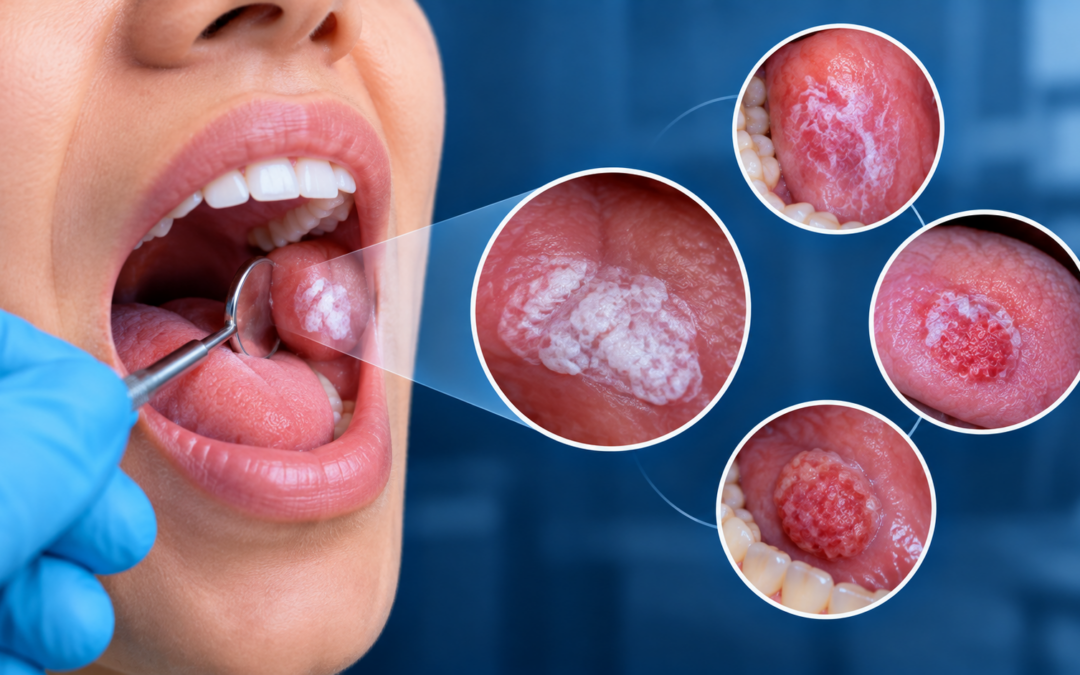
Leukoplakia isn’t the precancerous patch worth worrying about. There’s a family of these called oral potentially malignant disorders and some carry far more risk than leukoplakia ever does. Erythroplakia, the version transforms into cancer in roughly 20 to 33 percent of cases. Oral submucous fibrosis, tied closely to gutka and areca nut chewing sits around 6 to 8 percent in populations. Lichen planus is milder usually. Still needs watching. Different lesions. Different risk. Same underlying message: get it checked.
According to Prof. Dr. Sandeep Nayak, Surgical Oncologist in India “erythroplakia gets less attention than leukoplakia and thats backwards it’s actually the more dangerous lesion of the two and its exactly the kind of thing patients dismiss as just a red patch.”
Noticed a patch stiffness in your cheek or lacy white lines that won’t go away?
What Are the Other Precancerous Lesions Besides Leukoplakia?
Leukoplakia gets most of the attention. It’s not actually the dangerous one.
- Erythroplakia : A red patch, not white on the soft palate or floor of the mouth. Malignant transformation runs 20 to 33 percent, times higher than leukoplakia.
- Oral Submucous Fibrosis : Tied entirely to gutka and areca nut chewing. Mouth opening gets progressively tighter. It doesn’t reverse even after quitting.
- Oral Lichen Planus : Lacy lines sometimes painful an autoimmune condition rather than a tobacco-driven one. Lower risk still needs monitoring.
- Actinic Cheilitis : Sun-damaged lips, dry and scaly the lower lip. Common in workers easy to miss for years.
Getting any of these properly assessed is a job for oral cancer specialists, not a wait-and-see approach at home.
Which of These Lesions Actually Needs the Concern?
Risk isn’t equal across these four. Not even close.
- Highest Risk : Erythroplakia. One in three eventually becomes cancer. It’s the one most likely to already be cancer at biopsy.
- India-Specific Risk : Oral submucous fibrosis, because of how common gutka and areca nut use actually is here. Some regional data pushes transformation risk higher than the global average.
- Lower But Real Risk : Lichen planus sits lowest of the group, around 1 to 2 percent but zero risk it is not.
- The Overlap Problem : Having than one of these at once say fibrosis alongside leukoplakia pushes risk higher than either alone.
Leukoplakia itself the common of these is covered in detail separately alongside the other causes of white patches worth ruling out first.
Why Choose Dr. Sandeep Nayak for Oral Cancer Treatment?
Prof. Dr. Sandeep Nayak treats the spectrum of oral and head and neck cancers including cases that start as precancerous lesions like these. Trans-oral robotic surgery available for base of tongue and oropharyngeal tumours. Neck dissection built into the plan when needed not added later. Heads Oncology Services across Karnataka.
Catching erythroplakia or fibrosis before it turns is a different conversation than treating it after. Call +91-9482202240 to book your consultation.
Frequently Asked Questions
Is Erythroplakia more dangerous than Leukoplakia?
Yes, its malignant transformation rate runs higher around 20 to 33 percent.
What causes submucous fibrosis?
Chewing Gutka, Areca nut or Betel quid over a period.
Can oral submucous fibrosis be reversed by quitting?
No the fibrosis itself doesn’t reverse, though quitting still lowers risk.
Is lichen planus caused by tobacco?
No it’s a condition unrelated, to tobacco or alcohol use.
References
- PubMed, Malignant Transformation Rates of Oral Potentially Malignant Disorders
- PMC, Malignant Transformation Rate of Oral Submucous Fibrosis: A Systematic Review and Meta-Analysis
Disclaimer: This blog is for informational and educational purposes only and is not a substitute for professional medical advice or diagnosis.
