
Can rectal cancer be treated without undergoing surgery? With advances in immunotherapy, some patients can now be treated without surgery. Although surgery is still an important part of the treatment of rectal cancer, some patients respond clinically to immunotherapy and could avoid immediate surgery.
Immunotherapy for rectal cancer is a method in which the body’s immune system recognizes and attacks cancer cells. There have been promising results from clinical studies of patients who had mismatch repair-deficient (dMMR) or microsatellite instability-high (MSI-H) rectal cancer.
According to Dr. Sandeep Nayak, a well-known surgical oncologist in India, “The possibility of rectum preservation is a major advancement in cancer care. But treatment strategies need to consider tumor biology, proper staging, response assessment, and long-term surveillance rather than focusing only on avoiding surgery.”
With a focus on personalized rectal cancer care, Dr. Nayak shares valuable insights into emerging treatment approaches and surgical strategies. His experience in colorectal oncology helps him educate patients about immunotherapy, organ preservation, and more.
This blog explains who may benefit from immunotherapy, how treatment works, and when surgery may still be necessary.
What Is Immunotherapy for Rectal Cancer?
Immunotherapy is a cancer treatment that strengthens the immune system’s ability to identify and eliminate cancerous cells. Unlike chemotherapy, which targets rapidly dividing cells, immunotherapy can help immune cells overcome mechanisms cancer cells use to escape detection.
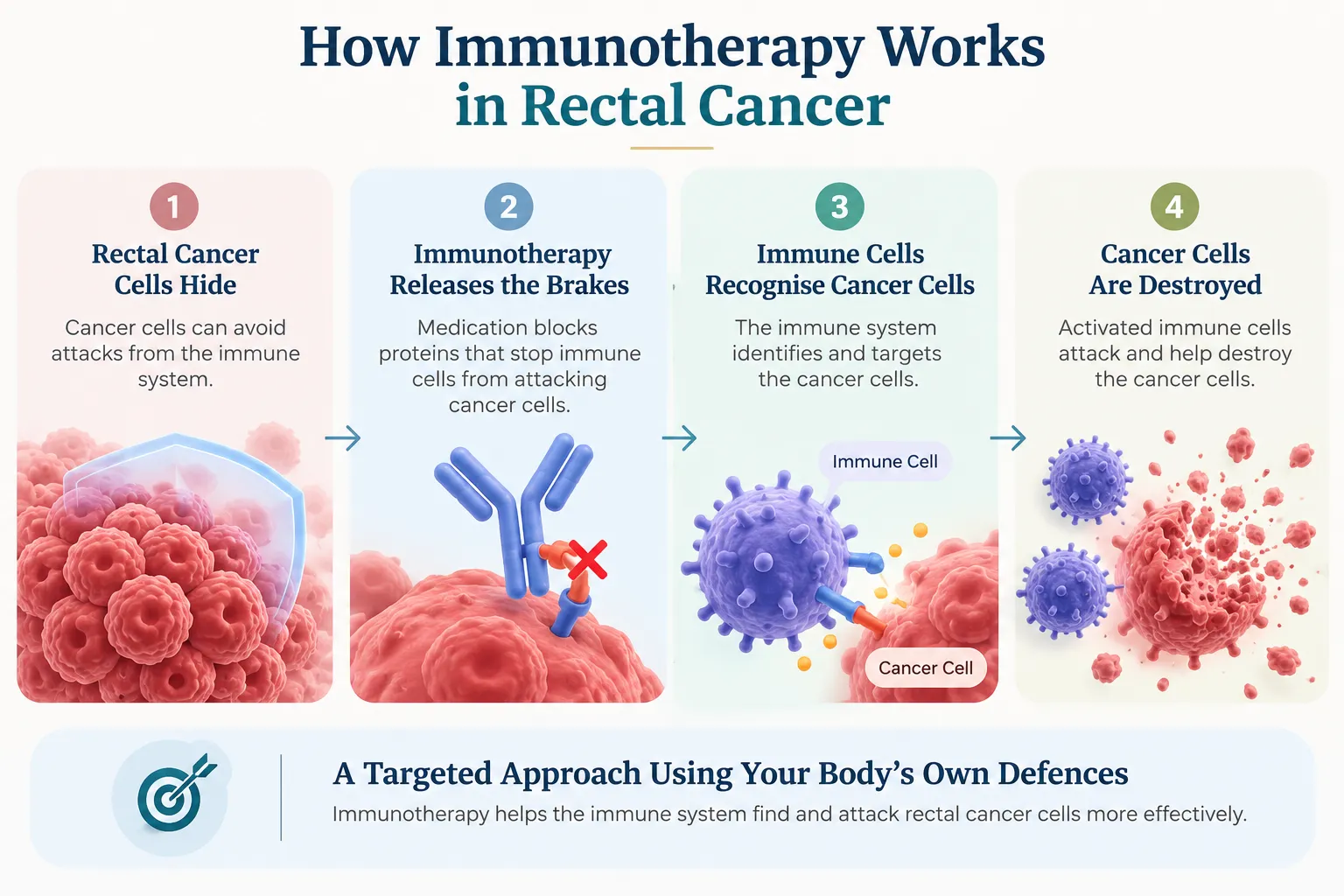
In rectal cancer, drugs such as dostarlimab and pembrolizumab target the PD-1 pathway, helping T-cells recognize cancerous cells.
Immunotherapy has shown particularly promising results in rectal tumors with dMMR/MSI-H characteristics. These tumors contain genetic changes that may make them more recognizable to the immune system.
However, not every rectal tumor responds equally. Molecular testing is essential before selecting this treatment.
Why do certain rectal tumors respond better to immunotherapy? Let’s understand how tumor genetics influence treatment decisions.
Can Immunotherapy Help Some Rectal Cancer Patients Avoid Surgery?
Yes. Some selected patients with locally advanced dMMR rectal cancer can achieve a complete clinical response after immunotherapy treatment, allowing doctors to consider a non-operative management strategy.
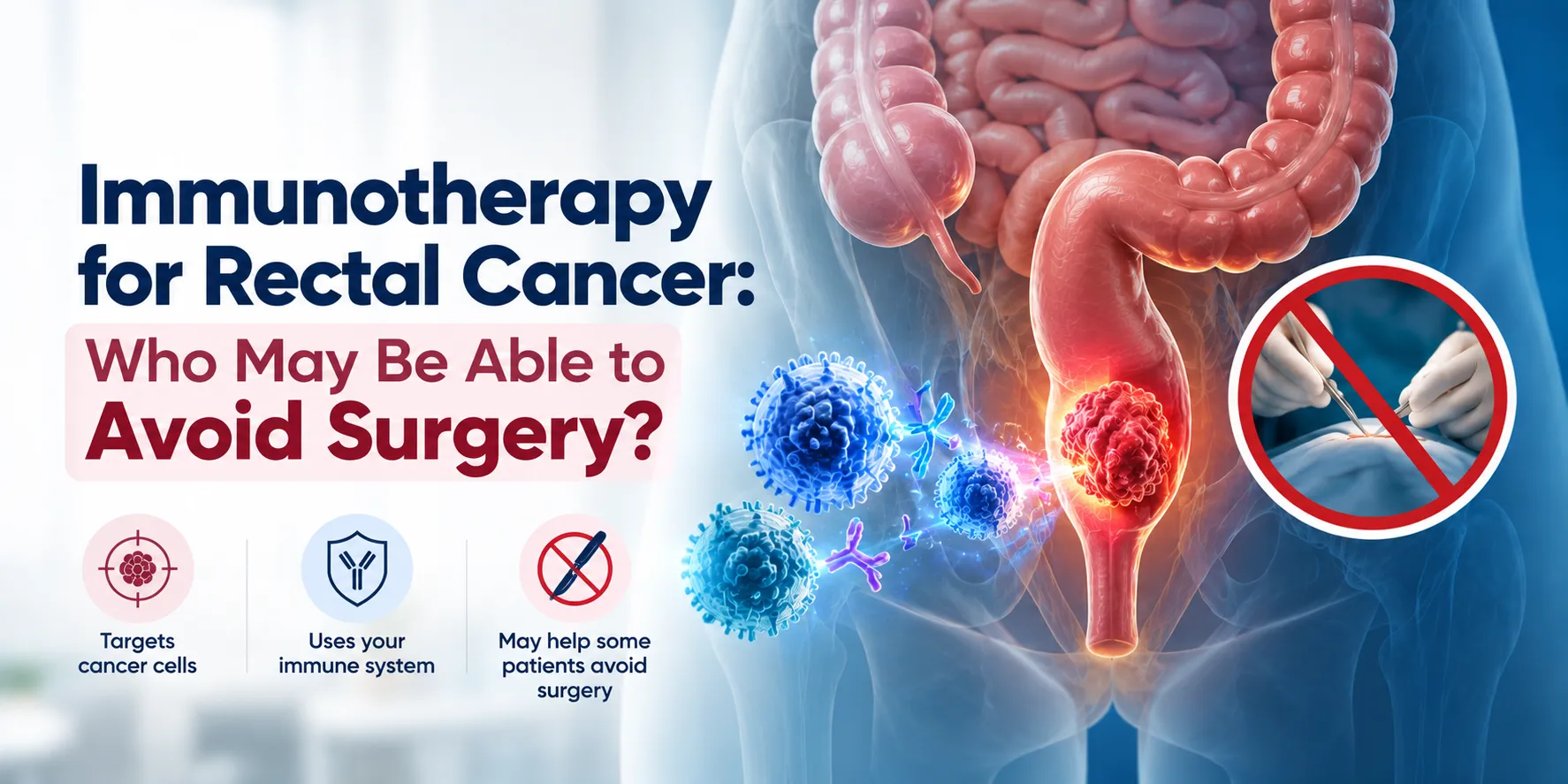
In a study published in the New England Journal of Medicine in 2025, a complete clinical response was observed in all 49 patients with locally advanced dMMR rectal cancer who had undergone dostarlimab treatment. These results are promising, but further research is needed for better outcomes.
A complete clinical response means no signs of cancer on examination or imaging. It does not mean that every cancer cell has been eradicated.
For those patients with a non-operative approach, there will be regular exams, MRIs, and endoscopy.
Understanding tumor genetics may help identify suitable treatment options. Explore personalized rectal cancer care approaches with specialist guidance.
Does a complete response mean surgery is permanently unnecessary? Let’s examine why careful monitoring remains essential.
Which Rectal Cancer Patients May Benefit Most From Immunotherapy?
Patients who have rectal cancer with dMMR/MSI-H are the most established candidates for immune checkpoint inhibitor treatment.
Eligibility is based on various criteria:
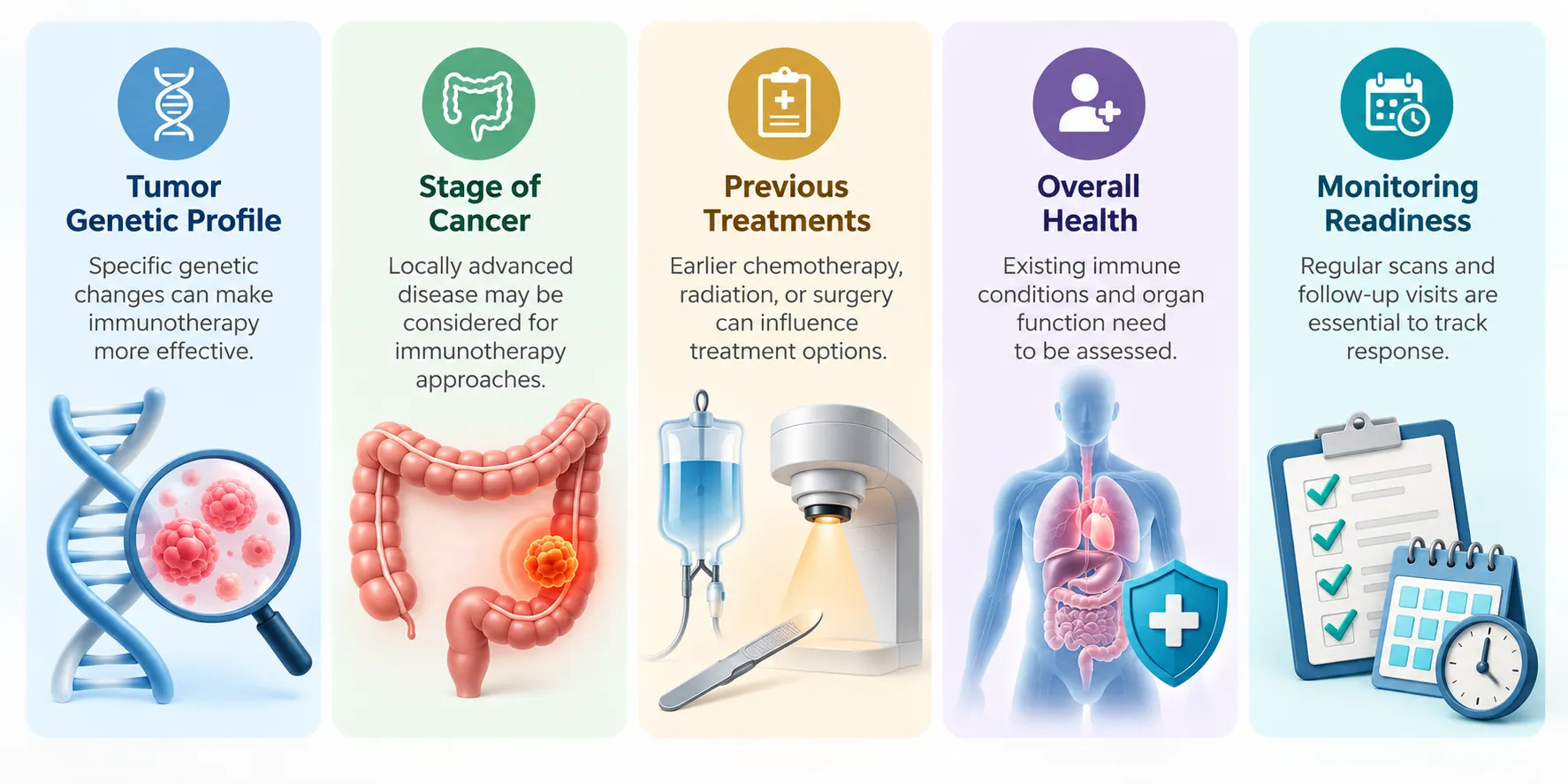
Testing for mismatch repair proteins like MLH1, MSH2, MSH6, and PMS2 is an effective way to identify eligible tumors.
Patients interested in rectal cancer care in Bangalore must undergo complete staging and molecular analysis before opting for immunotherapy.
Dr. Sandeep Nayak, a well-known oncologist in Bangalore, says, “A patient’s suitability for immunotherapy depends on more than the cancer diagnosis. Molecular findings, tumor extent, and the ability to complete long-term follow-up are equally important.”
How Is Immunotherapy Given for Rectal Cancer?
It is mostly administered through intravenous infusion in a specialized cancer treatment facility.
The procedure usually involves:
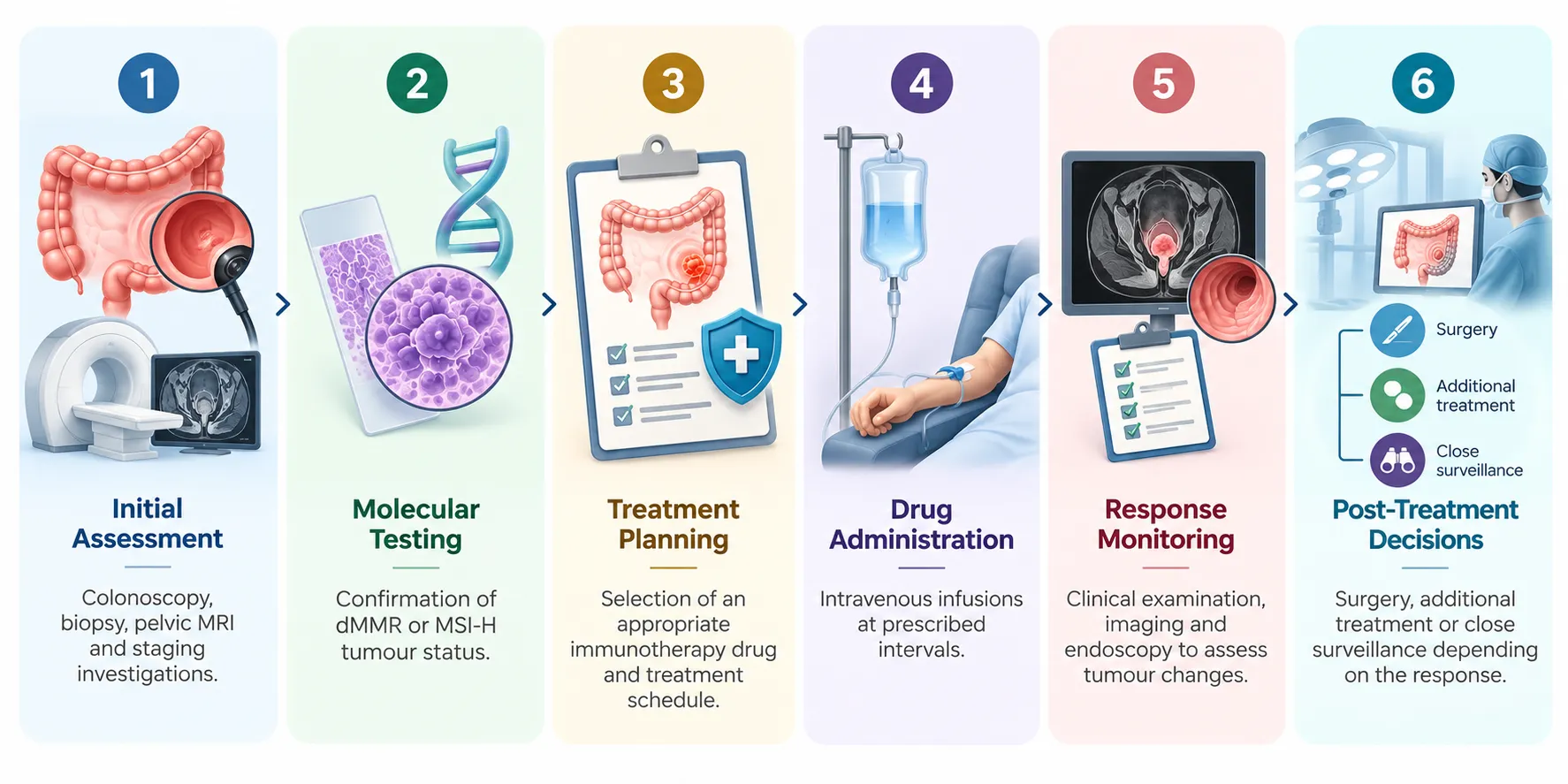
In the landmark dostarlimab study, treatment took about six months. There might be different regimens for other schedules.
Patients seeking cancer treatment in Bangalore should understand that immunotherapy requires experienced multidisciplinary coordination.
Treatment planning begins with accurate diagnosis and molecular testing. Get in touch to learn about cancer treatment in Bangalore options and multidisciplinary evaluation.
What Are the Risks of Choosing a Non-Surgical Approach?
Avoiding surgery could help preserve normal bowel function and reduce the possibility of a permanent stoma. However, non-operative management also carries risks.
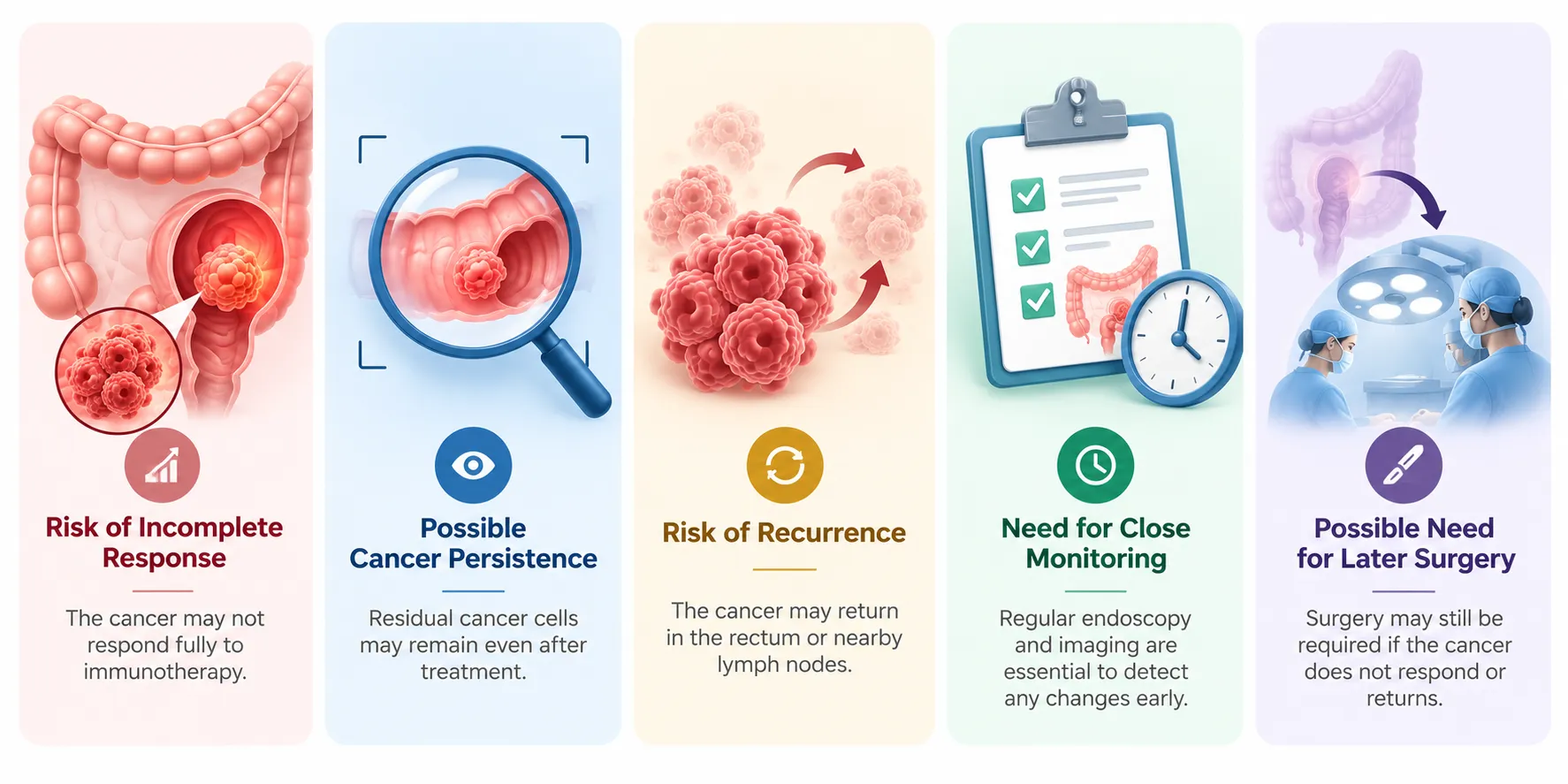
These include:
- Residual cancer: Even though scans may show no signs of cancer, there could be microscopic disease left behind.
- Local recurrence: The cancer can recur locally in the rectum.
- Delayed surgery: Some patients may need to undergo surgery eventually if their cancer persists or recurs.
- Follow-ups: Scans and tests such as MRI scans and endoscopy need to be done regularly.
- Immunotherapy side effects: There can be inflammation in different organs, including the bowel, lungs, liver, and thyroid.
Immune-related problems can sometimes become very severe and could be potentially dangerous for the patient. An expert in the field should explain this to the patient.
Is avoiding surgery always the safest choice? Let’s understand why treatment must balance organ preservation with cancer control.
Does Immunotherapy Replace Surgery for Every Rectal Cancer Patient?
No. Not all patients with rectal cancer can have immunotherapy as a substitute for surgery.
Most rectal cancers are mismatch repair proficient (pMMR) or microsatellite stable (MSS). Such tumors tend to be less responsive to checkpoint inhibitor monotherapy.
For such patients, treatment could include chemotherapy, radiotherapy, surgery, or a combination of these.
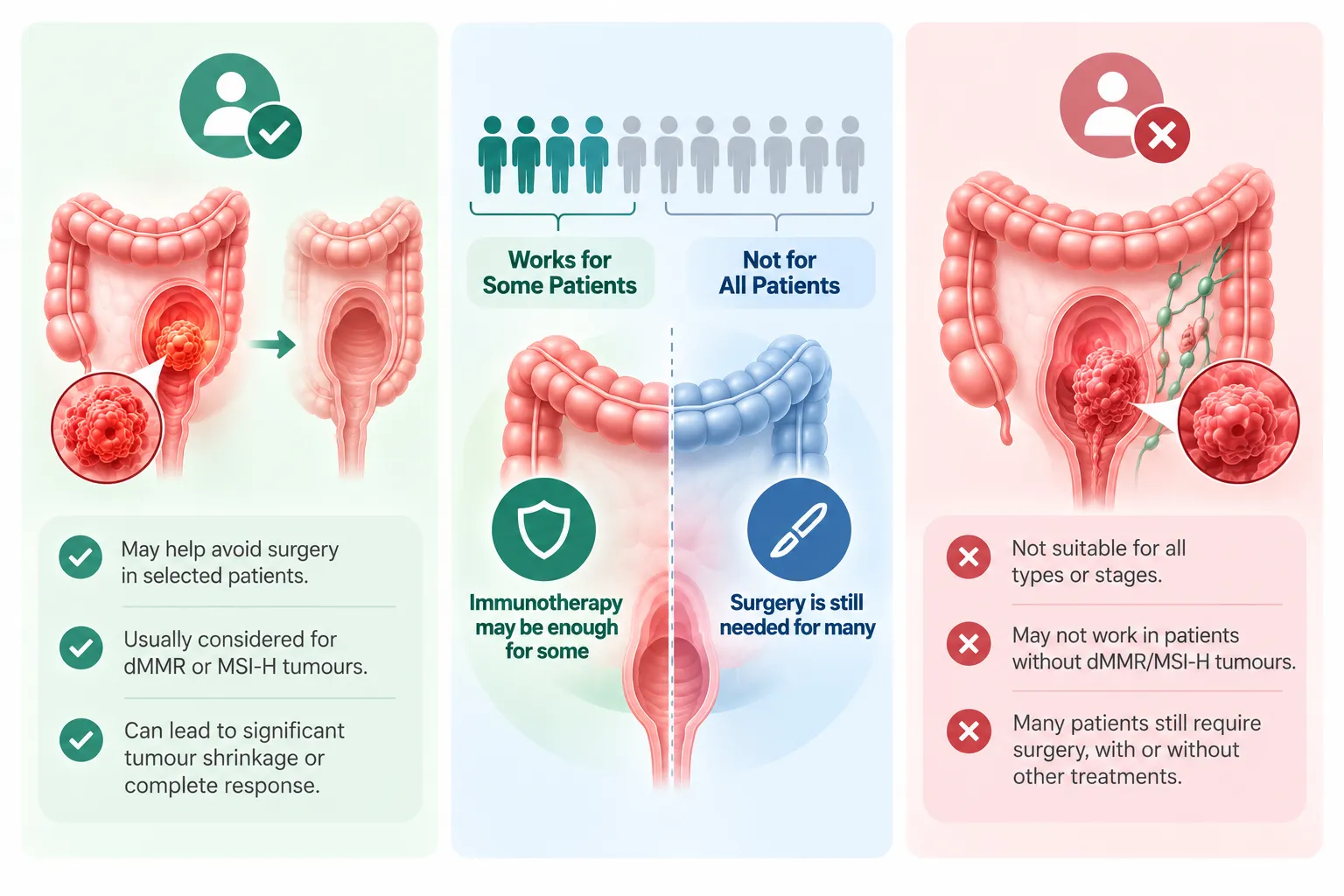
It might also be the case that surgery is required if the patient’s immunotherapy was not fully effective, if the disease progressed, or if complications develop.
A skilled surgical oncologist in India can help with this decision.
Conclusion
Immunotherapy for rectal cancer is an important advancement in carefully selected patients with dMMR or MSI-H tumors. Some could attain complete clinical response and pursue organ preservation via close monitoring.
But not all patients qualify based on their specific molecular features, clinical stage, response to therapy, and clinical assessment. Surgery remains essential for many patients.
Dr. Sandeep Nayak stresses the importance of customized treatment, where the organ’s function should not affect cancer management.
Frequently Asked Questions
1. Can rectal cancer be cured with immunotherapy alone?
Some patients with dMMR/MSI-H rectal cancer achieve complete clinical responses. However, long-term cure cannot be guaranteed, and continued monitoring is essential.
2. What is the success rate of immunotherapy for rectal cancer?
A 2025 study reported complete clinical responses in all 49 evaluable patients who completed dostarlimab treatment. Results cannot be generalized to every rectal cancer patient.
3. Is immunotherapy better than chemotherapy for rectal cancer?
Immunotherapy can be particularly effective for dMMR/MSI-H tumors. Chemotherapy remains important for many other rectal cancer types.
4. What are the side effects of rectal cancer immunotherapy?
Possible effects include fatigue, diarrhea, skin reactions, and thyroid changes. Serious immune-related inflammation may also occur.
5. Can immunotherapy shrink a rectal tumor completely?
Yes. Some dMMR/MSI-H tumors become clinically undetectable following immunotherapy, although microscopic disease cannot always be excluded.
6. What is the cost of immunotherapy for rectal cancer in India?
Costs depend on the prescribed drug, number of infusions, hospital charges, and monitoring requirements. Individual estimates require treatment planning.
7. How do doctors confirm immunotherapy has worked?
Doctors use pelvic MRI, endoscopy, digital rectal examination, and other appropriate investigations to evaluate the treatment response.
References
- https://www.cancercenter.com/cancer-types/colorectal-cancer/treatments/immunotherapy
- https://www.cancerresearch.org/immunotherapy-by-cancer-type/colorectal-cancer
Disclaimer: The information shared in this content is for educational purposes and not for promotional use.
