
Breast Implant vs Flap Reconstruction After Mastectomy

Breast Implant vs Flap Reconstruction After Mastectomy

Breast reconstruction after mastectomy uses either implant-based reconstruction with silicone or saline devices placed under the chest muscle, or autologous flap reconstruction using the patient’s own tissue from the abdomen, back or thighs. Implants offer shorter surgery, faster recovery and no donor site scarring but feel firmer and may need replacing over time. Flap techniques create natural-feeling breasts that age with the body and handle post-mastectomy radiation far better than any implant can.

According to Prof. Dr. Sandeep Nayak, Surgical Oncologist in India,
“Reconstruction is part of the surgical plan from the start, not an afterthought. Getting the right method for that specific patient depends on the oncological plan and the patient’s body together.”

Facing mastectomy and trying to decide between implant and flap reconstruction?

What Is Implant Reconstruction and Who Is It For?

Implant reconstruction is the faster, less complex option and works well in the right clinical situation.

  • How It Works: A silicone or saline implant is placed under the chest muscle either immediately at mastectomy or staged using a tissue expander first that gradually stretches the skin before the final implant is inserted weeks later.
  • Shorter Recovery: No donor site means faster overall recovery than flap procedures and most patients are discharged sooner and return to daily activity more quickly than those having tissue transferred from elsewhere on the body.
  • Radiation Makes It Unsuitable: Post-mastectomy radiation significantly increases implant complication rates including capsular contracture and device failure and breast cancer treatment centres typically recommend flap reconstruction for patients who need chest wall radiation after mastectomy.
  • Long-Term Considerations: Implants may need replacement over time and don’t age the same way natural tissue does while flap reconstruction using the patient’s own tissue behaves more naturally as the body changes with age and weight over years.

Implant reconstruction is the most common first choice where radiation isn’t anticipated and the patient’s anatomy supports it without requiring complex donor site surgery.

Implant vs Flap: How the Two Approaches Compare

Implant Reconstruction

Flap Reconstruction

Material

Silicone or saline device

Patient’s own tissue from back or abdomen

Recovery Time

Faster, shorter hospital stay

Longer, donor site also heals

Natural Feel

Firmer, less natural

More natural, ages with body

After Radiation

Not recommended

Better choice when radiation follows

Replacement Needed

Possibly over time

Generally permanent

Operative Duration

Shorter

Four to eight hours

  • Flap Reconstruction Handles Radiation Better: Tissue transferred from the patient’s own body tolerates radiation far better than a synthetic implant and for Stage 3 patients needing post-mastectomy chest wall radiation, flap options produce significantly more predictable long-term results.
  • DIEP and TRAM Flaps Use Abdominal Tissue: These procedures harvest tissue from the lower abdomen creating a natural-feeling breast while simultaneously flattening the donor area, which some patients find a welcome additional outcome alongside the reconstruction itself.
  • Latissimus Flap Uses Back Tissue: Tissue from the back combined with a small implant underneath is used when abdominal tissue isn’t suitable and robotic cancer surgery centres increasingly perform these with minimally invasive donor site techniques to reduce back scarring and recovery time.
  • Staged vs Immediate Timing: Both approaches can be done immediately at mastectomy or delayed until after chemotherapy and radiation are complete with timing planned around the oncological treatment sequence rather than reconstruction preference alone.

Reconstruction type and timing are decided together with the surgical oncology team before mastectomy happens and for more on the latissimus flap technique specifically, our blog on latissimus dorsi covers this in detail.

Why Choose Dr. Sandeep Nayak for Breast Cancer Treatment?

Dr. Sandeep Nayak brings 24 years of surgical oncology experience, DNB qualifications in Surgical Oncology and General Surgery and a fellowship in Laparoscopic and Robotic Onco-Surgery to every mastectomy including full reconstruction planning from the start of the surgical discussion. He heads Oncology Services across Karnataka and leads breast cancer surgery at KIMS Hospital, Bangalore, with originator credits for RABIT and over 25 published clinical studies. Patients who want reconstruction discussed as part of their mastectomy plan rather than separately are seen here with every decision going through tumour board review. Call +91 8104310753 to book your consultation.

Frequently Asked Questions

Which reconstruction type feels more natural long term?

Flap reconstruction using the patient’s own tissue generally feels more natural and responds to body changes more predictably than an implant over time.

Can reconstruction be done at the same time as mastectomy?

Both implant and flap reconstruction can be performed immediately at mastectomy or delayed depending on whether radiation follows and patient fitness.

Why is implant reconstruction not recommended after radiation?

Radiation damages chest wall tissue making implant complications including capsular contracture and device failure significantly more likely in irradiated skin.

How long does flap reconstruction surgery take compared to implant?

Flap reconstruction typically runs four to eight hours while implant placement adds one to two hours to the mastectomy operative time.

Reference Links-

  1. National Cancer Institute — Breast Reconstruction After Mastectomy
  2. World Health Organization — Breast Cancer Treatment
  • Disclaimer: The information shared in this content is for educational purposes and not for promotional use.
Chemo First vs Surgery First in Breast Cancer: How Is It Decided

Chemo First vs Surgery First in Breast Cancer: How Is It Decided

Small operable tumours go straight to surgery. Large, locally advanced or biologically aggressive breast cancers receive chemotherapy first to shrink the disease before the surgeon operates. The decision is made at tumour board using staging results, biopsy findings and receptor status together before any treatment begins.

According to Prof. Dr. Sandeep Nayak, Surgical Oncologist in India,
“The sequence isn’t a preference it’s a clinical decision made from staging, tumour biology and what gives that specific patient the best surgical and systemic outcome together.”

Trying to understand why your breast cancer treatment is sequenced the way it is?

When Does Surgery Come First?

Surgery opens the treatment plan when the tumour is directly resectable and operating immediately gives the clearest oncological result for that patient.

  • Small Operable Tumour: When the tumour is contained, clear margins are achievable without prior chemotherapy and operating straight away removes the cancer while it’s still in its most favourable surgical state.
  • Pathology Guides Everything After: The surgical specimen gives the team actual margin status, nodal count and receptor confirmation from real tissue rather than imaging estimates and breast cancer treatment planning for adjuvant chemotherapy becomes more precise as a result.
  • Hormone Positive Low-Grade Cancer: These tumours respond modestly to chemotherapy compared to HER2 positive or triple negative subtypes making chemotherapy before surgery less valuable and surgery first the more efficient clinical pathway.
  • No Benefit to Delay: For operable early breast cancer there’s no oncological benefit to running chemotherapy before an operation that can be safely and effectively performed right now so the tumour board recommends surgery without delay.

Surgery first is standard for early operable breast cancer where the disease is contained and the operation can deliver complete tumour clearance without prior systemic treatment.

Chemo First vs Surgery First: How the Decision Differs

Surgery First

Chemo First

Tumour Size

Small relative to breast

Large or locally advanced

Cancer Subtype

Hormone positive, low grade

HER2 positive, triple negative

Lymph Nodes

Minimal or no involvement

Multiple nodes involved

Goal of Sequence

Remove disease immediately

Shrink tumour, enable better surgery

Surgery Type After

Lumpectomy often possible

Mastectomy more common

Pathology Role

Confirms what was removed

Confirms treatment response

  • Chemo First Shrinks What the Surgeon Has to Deal With: When the tumour is large or has spread to multiple nodes running chemotherapy first reduces the operative complexity and in some cases turns a mastectomy case into one where lumpectomy becomes achievable after good response.
  • Response Itself Is Valuable Information: How the tumour behaves during chemotherapy tells the team something that no pre-treatment imaging can: if the cancer disappears completely that result carries significant prognostic weight and shapes every decision that follows.
  • HER2 Positive and Triple Negative Go First to Chemo: Both subtypes respond dramatically to neoadjuvant regimens and complete pathological response rates in these groups are high enough that running chemotherapy first is now the clinical standard rather than the exception.
  • The Specimen After Chemo Guides What Comes Next: The surgical pathology after neoadjuvant chemotherapy shows whether cancer was eliminated completely or partially and that result determines what adjuvant treatment and robotic cancer surgery or conventional follow-up operation is still needed.

The sequence is planned at diagnosis but adjusted at every decision point based on actual clinical findings and for more on how complex surgical treatment decisions are made, our blog on cytoreductive surgery covers detailed surgical planning in context.

Why Choose Dr. Sandeep Nayak for Breast Cancer Treatment?

Dr. Sandeep Nayak brings 24 years of surgical oncology experience, DNB qualifications in Surgical Oncology and General Surgery and a fellowship in Laparoscopic and Robotic Onco-Surgery to every breast cancer sequencing decision including neoadjuvant coordination and surgical timing. He heads Oncology Services across Karnataka and leads breast cancer surgery at KIMS Hospital, Bangalore, with originator credits for RABIT and over 25 published clinical studies. Patients wanting clarity on why their treatment is sequenced a specific way are seen here with every decision going through tumour board review. Call +91 8104310753 to book your consultation.

Frequently Asked Questions

How does the doctor decide whether chemotherapy or surgery comes first?

Tumour size, cancer subtype, nodal involvement and receptor status are reviewed together at tumour board before the sequence is confirmed.

Does chemotherapy before surgery affect survival outcomes?

Survival outcomes are equivalent between both sequences when the correct approach is chosen for the right patient based on clinical criteria.

Can surgery become possible after chemotherapy if it wasn't before?

When chemotherapy achieves good response a tumour that was inoperable at diagnosis sometimes becomes safely resectable and breast conservation occasionally becomes possible.

How long after chemotherapy does surgery happen?

Surgery is typically scheduled three to four weeks after the final chemotherapy cycle once the patient has recovered adequately from the systemic treatment.

Reference Links-

  1. National Cancer Institute — Breast Cancer Treatment
  2. World Health Organization — Breast Cancer Treatment
  • Disclaimer: The information shared in this content is for educational purposes and not for promotional use.
Surgical Oncologist vs Medical Oncologist: Who Treats You First

Surgical Oncologist vs Medical Oncologist: Who Treats You First

Two different specialists with two completely different roles. A surgical oncologist operates to remove tumours. A medical oncologist prescribes chemotherapy, targeted therapy and immunotherapy. Most cancer patients need both at some point and who sees you first depends on the cancer type, how advanced it is and what the tumour board decides should happen before anything else.

According to Prof. Dr. Sandeep Nayak, Surgical Oncologist in India, “patients often arrive not knowing which specialist is running their care and the honest answer is that both are involved the question is who goes first and why, not which one matters more.”

Not sure which specialist you should be seeing first for your cancer?

What Does Each Specialist Actually Do?

The roles are clinically distinct even though both carry the oncologist title. Here is a clear breakdown.

Surgical Oncologist

Medical Oncologist

Primary Role

Operates to remove tumours

Prescribes chemotherapy and systemic drugs

Tools Used

Surgery, biopsy, nodal staging

Chemotherapy, targeted therapy, immunotherapy

Sees Patient First When

Tumour is operable at diagnosis

Cancer is advanced or needs chemotherapy first

Manages

Operative decisions and surgical complications

Systemic treatment and drug sequencing

Works With

Pathologist, radiologist, medical oncologist

Radiation oncologist, surgical oncologist

  • Operable Cancers See Surgery First: When a tumour appears directly resectable at diagnosis the surgical oncologist typically sees the patient first and for early breast cancer treatment this means a surgical assessment before chemotherapy enters the conversation at all.
  • Advanced Cancers See Medical Oncology First: Locally advanced or metastatic presentations often go to the medical oncologist first because systemic treatment needs to run before surgery becomes technically possible or clinically appropriate for that specific patient.
  • Neither Overrides the Other: Both contribute to the same tumour board discussion before any treatment plan is confirmed and the patient is told clearly which specialist is leading which phase of their treatment.
  • Both Are Always Involved: Even when surgery comes first, the medical oncologist is already planning what adjuvant treatment follows and when the surgical team will be needed again if disease recurs or restaging changes the plan.

The sequence is decided by the tumour board based on the clinical picture rather than by either specialist acting independently.

How Do They Work Together Across a Full Treatment Course?

The collaboration between surgical and medical oncology isn’t a one-time referral it happens repeatedly throughout a full cancer treatment course.

  • Before Surgery in Locally Advanced Cases: The medical oncologist runs neoadjuvant chemotherapy first to shrink the tumour before the surgical team operates while surgical input on the operative plan runs in parallel from the start of the treatment discussion.
  • After Surgery for Adjuvant Planning: Once pathology confirms margin and nodal status the medical oncologist plans adjuvant chemotherapy using the staging information that robotic cancer surgery or conventional surgery provides from the specimen.
  • Tumour Board Keeps Both Aligned: High-volume cancer centres hold weekly tumour board meetings where both specialists review the same case simultaneously and agree on the sequence before either starts treatment rather than working from separate referral letters.
  • When Surgery Isn’t the Plan: Some cancers are managed entirely without surgery in which case the medical oncologist leads throughout while the surgical oncologist’s assessment of operability after systemic response remains part of the ongoing clinical conversation.

The two roles run in parallel rather than in sequence and for more on what cancer surgery involves within this framework, our blog on cancer surgery covers this in detail.

Why Choose Dr. Sandeep Nayak for Breast Cancer Treatment?

Dr. Sandeep Nayak brings 24 years of surgical oncology experience, DNB qualifications in Surgical Oncology and General Surgery and a fellowship in Laparoscopic and Robotic Onco-Surgery to cancer cases requiring coordinated surgical and medical oncology input across all cancer types. He heads Oncology Services across Karnataka and leads cancer surgery at KIMS Hospital, Bangalore, with originator credits for RABIT, MIND and L-VEIL techniques and over 25 published clinical studies. Patients wanting clarity on who they should see first and in what order are assessed here with every decision going through full tumour board review. Call +91 8104310753 to book your consultation.

Frequently Asked Questions

Does every cancer patient need both a surgical and medical oncologist?

Most solid tumour patients need input from both at different points though some cancers are managed without surgery and some with surgery alone.

Who decides which oncologist sees the patient first?

The tumour board or referring specialist makes this decision based on cancer type, stage and whether the tumour is operable at diagnosis.

Can a surgical oncologist prescribe chemotherapy?

Surgical oncologists don’t prescribe chemotherapy as that responsibility sits entirely with the medical oncologist who manages all systemic treatments.

Is one specialist more important than the other in cancer care?

Both are essential with the surgical oncologist removing disease and staging it while the medical oncologist addresses what surgery cannot reach through systemic treatment.

Reference Links-

  1. National Cancer Institute — Cancer Treatment Team
  2. National Institutes of Health — Surgical vs Medical Oncology
  • Disclaimer: The information shared in this content is for educational purposes and not for promotional use.
Stage 2 vs Stage 3 Breast Cancer: What Changes in Surgery

Stage 2 vs Stage 3 Breast Cancer: What Changes in Surgery

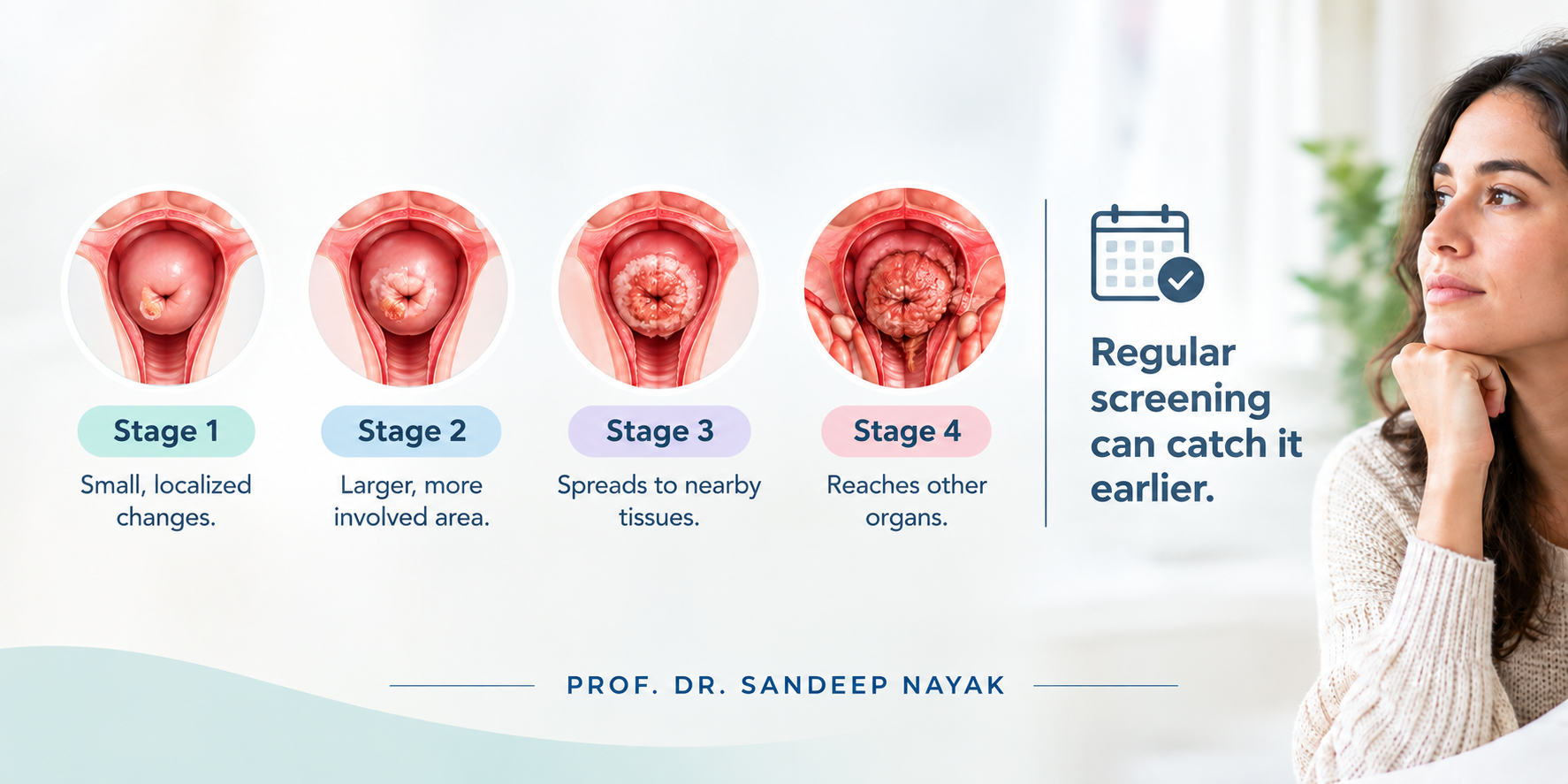
Stage determines what surgery is possible, when it happens and what comes before and after it. Stage 2 breast cancer is usually operable straight away. Stage 3 is locally advanced and in most cases chemotherapy runs before surgery to reduce the disease burden first. The operation itself also changes what nodes are taken, how much tissue comes out and whether radiation to the chest wall follows all shift between these two stages.

According to Prof. Dr. Sandeep Nayak, Surgical Oncologist in India,
“Stage 2 and Stage 3 are not just different numbers. They reflect genuinely different disease states and the surgical plan has to match what the disease actually looks like, not what we wish it looked like.”

Diagnosed with Stage 2 or Stage 3 breast cancer and trying to understand what surgery means for you?

How Does Stage 2 Breast Cancer Get Treated Surgically?

Stage 2 breast cancer is generally operable at diagnosis and surgery typically opens the treatment plan.

  • Surgery First: Most Stage 2 cases go straight to lumpectomy or mastectomy depending on tumour size relative to breast volume and patient preference. Chemotherapy follows after rather than running before surgery in most early Stage 2 presentations.
  • Lumpectomy Often Possible: A tumour that’s grown but remains confined gives the surgical team room to work with clear margins while preserving the breast in many Stage 2 patients who want conservation and meet the clinical criteria for it.
  • Sentinel Node Assessment: Axillary staging through sentinel node biopsy runs in the same operation and breast cancer treatment decisions about adjuvant chemotherapy and axillary management are made based on what that pathology confirms.
  • Post-Operative Radiation: Lumpectomy at Stage 2 is followed by radiation to the remaining breast tissue. Post-mastectomy radiation at Stage 2 depends on nodal involvement and tumour size rather than being applied automatically to every patient.

Stage 2 surgery generally carries less complexity than Stage 3 and recovery before starting adjuvant chemotherapy is usually straightforward.

What Changes When the Disease Is Stage 3?

Stage 3 is locally advanced. The tumour is larger, nodes are more extensively involved or the disease has reached the chest wall or skin. Surgery at this stage rarely opens the plan.

  • Chemotherapy Comes First: Neoadjuvant chemotherapy runs before surgery in most Stage 3 cases. The goal is shrinking the tumour and clearing involved nodes enough to make the operation safer and in some cases to convert a mastectomy into a lumpectomy when response is good.
  • Mastectomy More Common: Even after good chemotherapy response, Stage 3 disease more frequently ends in mastectomy than Stage 2. The extent of original involvement makes achieving consistently clear margins through lumpectomy harder and the surgical team is less likely to take that risk.
  • Full Axillary Dissection Often Needed: Stage 3 cases with confirmed nodal disease before chemotherapy often require full axillary lymph node clearance rather than sentinel node biopsy alone, and robotic cancer surgery or conventional approaches to axillary dissection are planned based on pre-operative nodal staging.
  • Post-Mastectomy Radiation Is Standard: At Stage 3, radiation to the chest wall and regional nodes after mastectomy is standard rather than selective. The extent of original disease makes local control through surgery alone insufficient.

Stage 3 surgery is more complex, more often preceded by chemotherapy and followed by a longer treatment plan, and for more on how staging shapes surgical decisions, our blog on surgical oncologist role covers this in detail.

Why Choose Dr. Sandeep Nayak for Breast Cancer Treatment?

Dr. Sandeep Nayak brings 24 years of surgical oncology experience, DNB qualifications in Surgical Oncology and General Surgery and a fellowship in Laparoscopic and Robotic Onco-Surgery to breast cancer surgery across all stages. He heads Oncology Services across Karnataka and leads breast cancer surgery at KIMS Hospital, Bangalore, with originator credits for RABIT and over 25 published clinical studies. Patients at Stage 2 or Stage 3 wanting a clear surgical plan are seen here with every decision going through tumour board review. Call +91 8104310753 to book your consultation.

Frequently Asked Questions

Can Stage 3 breast cancer be treated with lumpectomy?

In selected cases where chemotherapy achieves excellent tumour response, lumpectomy becomes possible though mastectomy remains more common at this stage.

Does Stage 2 breast cancer always need chemotherapy?

Not always. Chemotherapy after surgery depends on tumour biology, nodal status and receptor profile rather than stage alone.

Is post-mastectomy radiation standard at Stage 3?

Radiation to the chest wall and regional nodes after mastectomy is standard for Stage 3 disease rather than applied selectively.

What is the survival difference between Stage 2 and Stage 3 breast cancer?

Stage 2 generally carries better long-term survival than Stage 3 though outcomes in both stages have improved significantly with modern treatment.

Reference Links-

  1. National Cancer Institute — Breast Cancer Treatment by Stage
  2. World Health Organization — Breast Cancer Treatment
  • Disclaimer: The information shared in this content is for educational purposes and not for promotional use.
HER2 vs Triple Negative Breast Cancer: How Do Outcomes Differ

HER2 vs Triple Negative Breast Cancer: How Do Outcomes Differ

Two diagnoses. Both aggressive. Completely different treatment approaches. HER2 positive breast cancer grows because a specific protein on the cancer cell surface is overexpressed. Triple negative breast cancer has none of the three receptors most treatments target. Knowing which one a patient has changes everything from which drugs are used to when surgery happens to what the team watches for afterward.

According to Prof. Dr. Sandeep Nayak, Surgical Oncologist in India, “the subtype isn’t background detail it determines the sequence of treatment, the surgical timing and the surveillance plan afterward. Getting it right starts with the biopsy.”

Just diagnosed and want to understand what your breast cancer subtype means?

What Makes HER2 Positive Breast Cancer Distinct?

HER2 positive disease was once considered among the worst breast cancer diagnoses. Targeted therapy changed that dramatically.

  • A Specific Target Exists: Trastuzumab and pertuzumab block the HER2 receptor directly and when added to chemotherapy they push complete pathological response rates significantly higher than chemotherapy alone achieves. Patients who reach complete response do markedly better long term.
  • Chemotherapy Before Surgery: Neoadjuvant therapy runs first in most HER2 positive cases and breast cancer treatment surgery follows once the tumour has responded. The pathological result at surgery tells the team what maintenance therapy is needed and for how long.
  • Brain Metastasis Is a Known Risk: HER2 positive breast cancer has a higher tendency than hormone positive cancers to spread to the brain. Post-treatment surveillance accounts for this and any new neurological symptoms get investigated promptly rather than attributed to other causes.
  • Outcomes Have Improved Substantially: Complete pathological response rates in HER2 positive disease now exceed those of most other aggressive breast cancer subtypes when targeted therapy and chemotherapy are combined correctly before surgery.

The availability of effective targeted drugs has made HER2 positive one of the more treatable aggressive subtypes when managed at a centre experienced in sequencing the treatment correctly.

How Is Triple Negative Breast Cancer Different?

No oestrogen receptor. No progesterone receptor. No HER2. That absence of targets shaped how triple negative breast cancer was managed for years and newer treatments are only now changing what’s achievable.

  • Chemotherapy Is the Foundation: There’s no hormone therapy and no HER2 blocker to use. Chemotherapy does the heavy lifting systemically and most locally advanced triple negative cases receive it before surgery to assess the tumour’s response while treatment is still running.
  • Response Rates Can Be High: Triple negative tumours often respond dramatically to chemotherapy. Some disappear almost completely before surgery. Patients who achieve complete pathological response do well long term and robotic cancer surgery or conventional breast surgery in those cases is confirming clearance rather than removing active disease.
  • Residual Disease Is the Problem: Patients with significant cancer remaining in the surgical specimen after neoadjuvant chemotherapy face a harder prognosis than their HER2 positive counterparts in the same situation. This is where newer agents like capecitabine and immunotherapy are increasingly being used.
  • Recurrence Peaks Early: Most triple negative recurrences happen within three years of treatment. Beyond five years without recurrence the risk drops sharply — quite different from hormone positive breast cancer which can return a decade or more later.

Both subtypes are manageable with the right plan and for more on breast surgery options after diagnosis, our blog on breast reconstruction covers post-surgical care in detail.

Why Choose Dr. Sandeep Nayak for Breast Cancer Treatment?

Dr. Sandeep Nayak brings 24 years of surgical oncology experience, DNB qualifications in Surgical Oncology and General Surgery and a fellowship in Laparoscopic and Robotic Onco-Surgery to breast cancer cases across all subtypes including HER2 positive and triple negative. He heads Oncology Services across Karnataka and leads breast cancer surgery at KIMS Hospital, Bangalore, with originator credits for RABIT and over 25 published clinical studies. Patients wanting subtype-specific surgical planning are seen here with every decision going through tumour board review. Call +91 8104310753 to book your consultation.

Frequently Asked Questions

Is HER2 positive or triple negative breast cancer more treatable?

HER2 positive disease has effective targeted therapy today making it one of the more treatable aggressive subtypes when managed correctly.

Does triple negative breast cancer always need chemotherapy?

Chemotherapy is the primary systemic treatment for triple negative breast cancer as no hormone or targeted therapy applies to it.

Can triple negative breast cancer patients achieve complete pathological response?

Complete response after neoadjuvant chemotherapy is achievable and carries significantly better long-term prognosis when reached.

Which subtype recurs earlier after treatment?

Triple negative breast cancer recurs most often within the first three years while HER2 positive disease carries a specific brain metastasis risk.

Reference Links-

  1. National Cancer Institute — Breast Cancer Treatment by Subtype
  2. National Institutes of Health — HER2 and Triple Negative Breast Cancer
  • Disclaimer: The information shared in this content is for educational purposes and not for promotional use.
Surgery vs Radiation for Breast Cancer: When Surgery Comes First

Surgery vs Radiation for Breast Cancer: When Surgery Comes First

Surgery and radiation aren’t alternatives competing against each other in breast cancer. For most patients they’re used together, just in a specific order. Surgery removes the tumour. Radiation addresses what remains at a microscopic level that surgery physically can’t see or reach. The question isn’t which one to choose but rather which one goes first and why the sequence is determined the way it is.

According to Prof. Dr. Sandeep Nayak, Surgical Oncologist in India, “Most early breast cancers are operated on first and radiated after. The surgery defines what the radiation needs to treat. Getting that order right is part of how we give the patient the best possible outcome from both treatments.”

Trying to understand why surgery was recommended before radiation for your breast cancer?

Why Does Surgery Usually Come Before Radiation?

In early and locally advanced breast cancer the standard sequence is surgery first, radiation after, and there are specific clinical reasons why that order is almost always maintained.

  • Removes the Main Disease: Surgery takes out the primary tumour and samples or clears the lymph nodes. Radiation after a lumpectomy treats the remaining breast tissue to kill any cancer cells surgery left behind at a microscopic level that pathology simply can’t detect.
  • Pathology Guides Radiation Planning: The surgical specimen tells the radiation team exactly what they’re dealing with tumour grade, margins, nodal involvement. Breast cancer treatment planning for radiation is more accurate when it’s based on actual pathology rather than imaging estimates alone.
  • Radiation After Mastectomy: Not every mastectomy patient needs post-operative radiation but those with positive lymph nodes, large tumours or involved margins typically do. The surgical result determines whether radiation to the chest wall is part of the plan.
  • Faster to Definitive Treatment: Operating first gets to definitive treatment faster than running a full radiation course upfront. For operable early breast cancer there’s no oncological benefit to delaying surgery in favour of radiation when the tumour can be removed safely right away.

Surgery first is standard for early breast cancer and the radiation that follows is planned using what pathology confirms rather than what imaging estimated before the operation.

When Does the Sequence Change or Radiation Plays a Different Role?

There are specific situations where the standard surgery-first approach changes and radiation steps into a different position in the treatment plan.

  • Inflammatory Breast Cancer: Surgery never opens the treatment plan in IBC. Chemotherapy comes first, sometimes followed by surgery, and radiation runs after the operation to address the chest wall and regional nodes because IBC spreads through dermal lymphatics in ways that need systemic and radiation control.
  • Locally Advanced Inoperable Tumours: When a tumour is fixed to the chest wall or involves the skin in a way that makes immediate surgery technically impossible, radiation alongside chemotherapy reduces the tumour enough to make surgery feasible as a second step in carefully selected patients.
  • Re-irradiation Limitations: A breast that’s already received radiation after lumpectomy can’t be irradiated again safely if cancer recurs. Robotic cancer surgery or conventional mastectomy in that situation removes the radiated breast rather than returning to a modality the tissue can no longer safely receive.
  • Radiation as the Alternative to Re-excision: When lumpectomy margins come back positive and re-excision would significantly compromise breast appearance or function, radiation to the operative bed addresses residual microscopic disease without returning to theatre in selected patients.

The sequence isn’t arbitrary and every decision about which comes first goes through tumour board review, and for more on how these surgical decisions are made, our blog on cancer surgery covers this in detail.

Why Choose Dr. Sandeep Nayak for Breast Cancer Treatment?

Dr. Sandeep Nayak brings 24 years of surgical oncology experience, DNB qualifications in Surgical Oncology and General Surgery and a fellowship in Laparoscopic and Robotic Onco-Surgery to every breast cancer treatment sequencing decision including surgery and radiation coordination. He heads Oncology Services across Karnataka and leads breast cancer surgery at KIMS Hospital, Bangalore, with originator credits for RABIT and over 25 published clinical studies. Patients who want clarity on why their treatment is sequenced the way it is are seen here with every decision going through tumour board review. Call +91 8104310753 to book your consultation.

Frequently Asked Questions

Does every breast cancer patient need radiation after surgery?

Lumpectomy almost always requires radiation afterward. Post-mastectomy radiation depends on nodal involvement, tumour size and margin status.

Can radiation replace surgery for breast cancer?

Radiation doesn’t replace surgery for most breast cancers. The two treatments address different aspects of the disease in a planned sequence.

How soon after breast cancer surgery does radiation start?

Radiation typically begins four to six weeks after surgery once the wound has healed sufficiently for treatment to proceed safely.

What happens if radiation was already given and cancer comes back?

Re-irradiation carries significant risks and the team usually recommends mastectomy rather than a second course of radiation to the same breast.

Reference Links-

  1. National Cancer Institute — Breast Cancer Treatment
  2. World Health Organization — Breast Cancer Treatment
  • Disclaimer: The information shared in this content is for educational purposes and not for promotional use.