
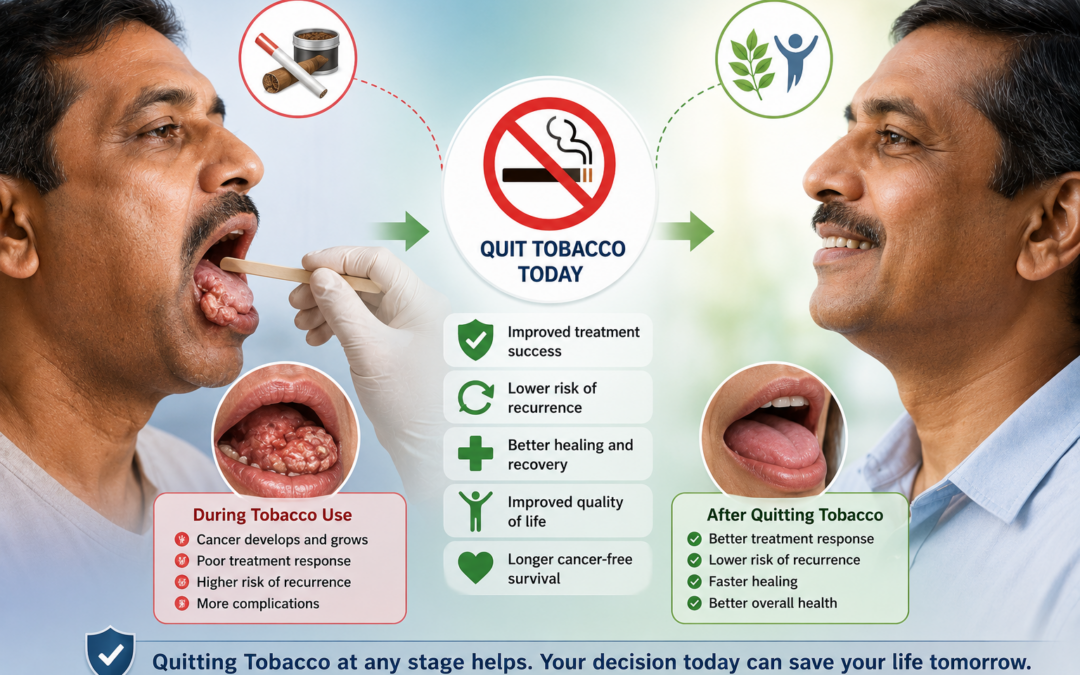
Yes, quitting tobacco after an oral cancer diagnosis genuinely helps, and more than most patients expect. It improves overall survival, helps treatments like surgery and radiation actually do their job better, lowers the odds of the cancer coming back, and reduces the chance of a second primary cancer showing up somewhere else in the mouth or throat down the line.
According to Dr. Sandeep Nayak, surgical oncologist in Bangalore with over 24 years of experience treating solid tumors, “Patients often think the damage is done once they’re diagnosed, so what’s the point now. That’s genuinely not true. Continuing tobacco use during treatment slows healing, raises complication rates, and makes radiation less effective. Quitting at diagnosis, even that late, still changes the outcome meaningfully.”
Diagnosed with oral cancer and thinking about quitting tobacco now?
How Quitting Actually Changes Treatment Outcomes?
- Radiation therapy works less effectively in tissue still exposed to tobacco, continued use can blunt the treatment’s impact.
- Surgical wound healing is noticeably slower in patients who keep using tobacco through treatment, raising complication risk.
- Survival rates are measurably better in patients who quit at or around diagnosis compared to those who continue.
- The risk of a second primary cancer, a new cancer developing separately from the first, drops significantly once tobacco use stops.
Tobacco’s role here connects directly to what we’ve covered in Does Nicotine Cause Cancer, worth reading if you want the fuller picture on how nicotine affects the body during cancer treatment specifically.
What Makes ? Difficult, and What Actually Helps
- Nicotine dependence is a real physical addiction, not simply a matter of willpower, and treating it that way usually backfires.
- Nicotine replacement therapy, patches, gum, lozenges, carries a far lower cancer risk than continued tobacco use and can genuinely ease the process.
- Counselling support alongside quitting improves success rates significantly compared to going it alone.
- Timing matters less than people assume, quitting at diagnosis, mid-treatment, or even shortly after surgery all still bring real benefit.
If oral cancer treatment itself is what you’re weighing right now, our Oral Cancer treatment page covers what that path typically looks like.
Why Choose Dr. Sandeep Nayak ?
Dr. Sandeep Nayak has spent more than two decades in surgical oncology, and oral cancer, closely tied to tobacco use across India, has been a consistent part of that work throughout. He currently serves as Chairman of Oncology Services for Karnataka and heads Surgical Oncology and Robotic Surgery at KIMS Hospital, Bangalore. What tends to matter most to patients isn’t the title though, it’s that quitting tobacco gets treated as a genuine part of the treatment plan, not a lecture delivered once and forgotten. That practical support is often where things get missed elsewhere.
Diagnosed with oral cancer and not sure quitting now even makes a difference? It does. Call +91 9482202240 and get someone to actually walk you through it.
Frequently Asked Questions
Is it too late to quit once I've already been diagnosed?
Not even close. Doesn’t matter how late it feels, quitting still makes a real, measurable difference to how treatment goes and to survival itself.
Will quitting tobacco affect how well radiation works?
It can, actually, and in your favour. Sticking with tobacco through radiation tends to blunt how well it works, so cutting it out gives the treatment a better shot at doing its job properly.
Is nicotine replacement therapy safe during cancer treatment?
Generally, yes, a lot safer than continuing tobacco itself. That said, every case is different, so run it by your oncology team before starting anything.
Does quitting reduce the risk of the cancer coming back?
It does. Both recurrence risk and the odds of a second, unrelated cancer showing up later drop once tobacco’s actually out of the picture.
References
Disclaimer: This blog is for informational and educational purposes only and is not a substitute for professional medical advice or diagnosis.
