
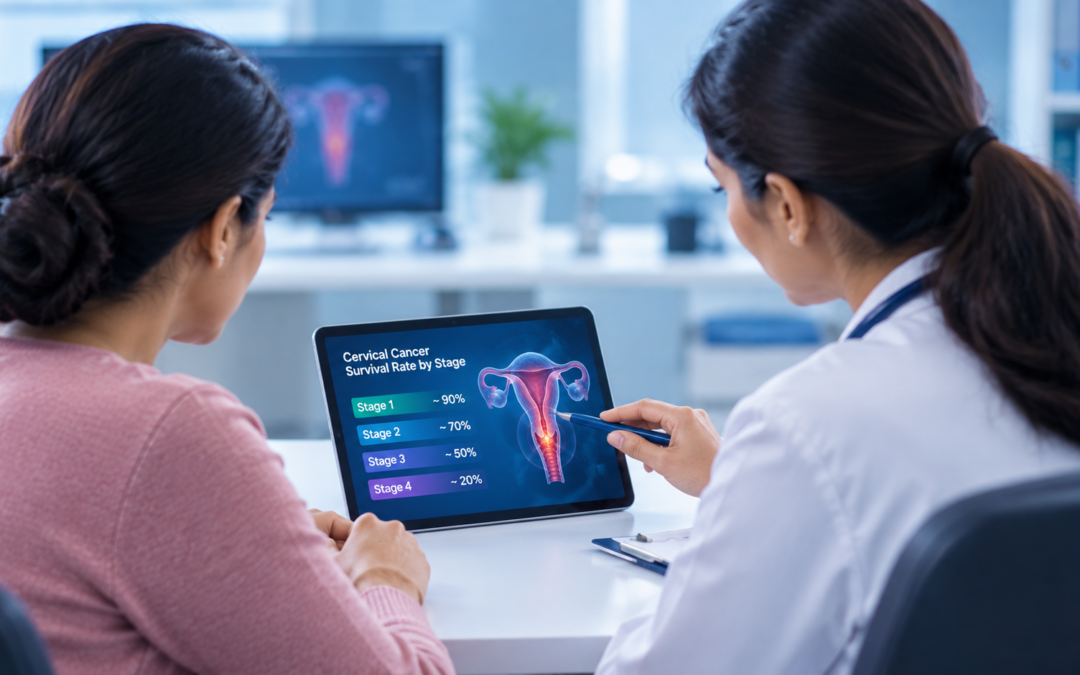
Stage decides almost everything here. Caught early, while it’s still sitting in the cervix, five-year survival is around 91 percent. Let it reach nearby lymph nodes, that number drops to 60. Distant spread, lungs, liver, bone, and you’re under 20 percent. Averaged across every stage, it’s close to 67. None of that is fixed. It moves with when it’s found. That’s really the whole story.
According to Dr. Sandeep Nayak, surgical oncologist in India, forget the percentage on the chart for a second. What actually matters is whether the cervical cancer gets caught before it leaves the cervix. Screening is the lever here, not luck. Catch it early and the odds swing hard in your favor.
Not sure what stage your case might be?
What Determines Survival at Each Stage?
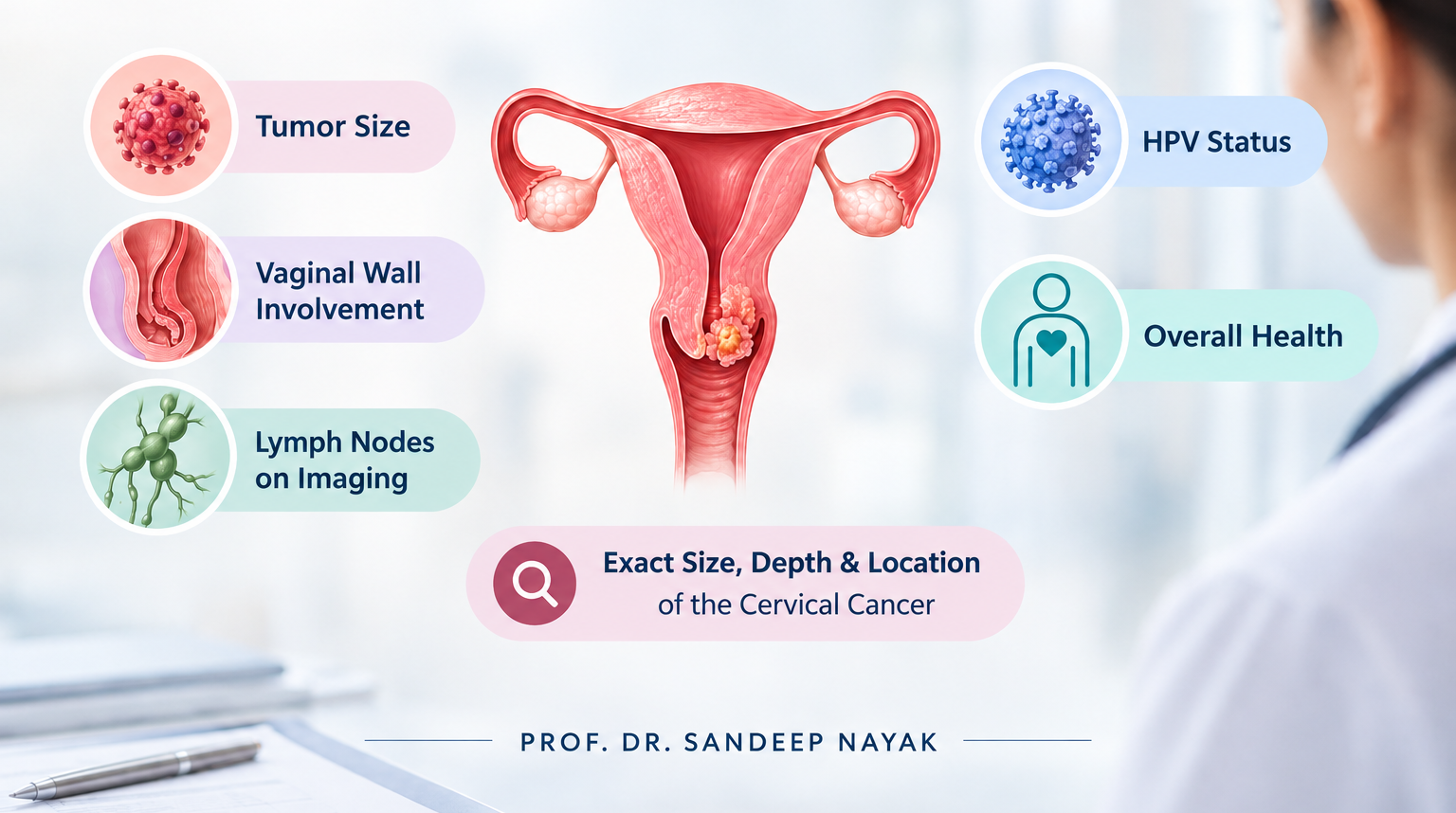
Stage isn’t the whole story. Tumor size. Whether it’s touched the vaginal wall. What the lymph nodes look like on imaging. HPV status. How healthy the patient is walking in. All of it counts, not just the stage number on a report.
Numbers only get you so far, though. Real treatment comes down to the cervical cancer‘s exact size, depth, where it sits. Every case reads differently once someone’s actually looked at the scans. No two plans look the same.
Why Does Stage at Diagnosis Matter Much?
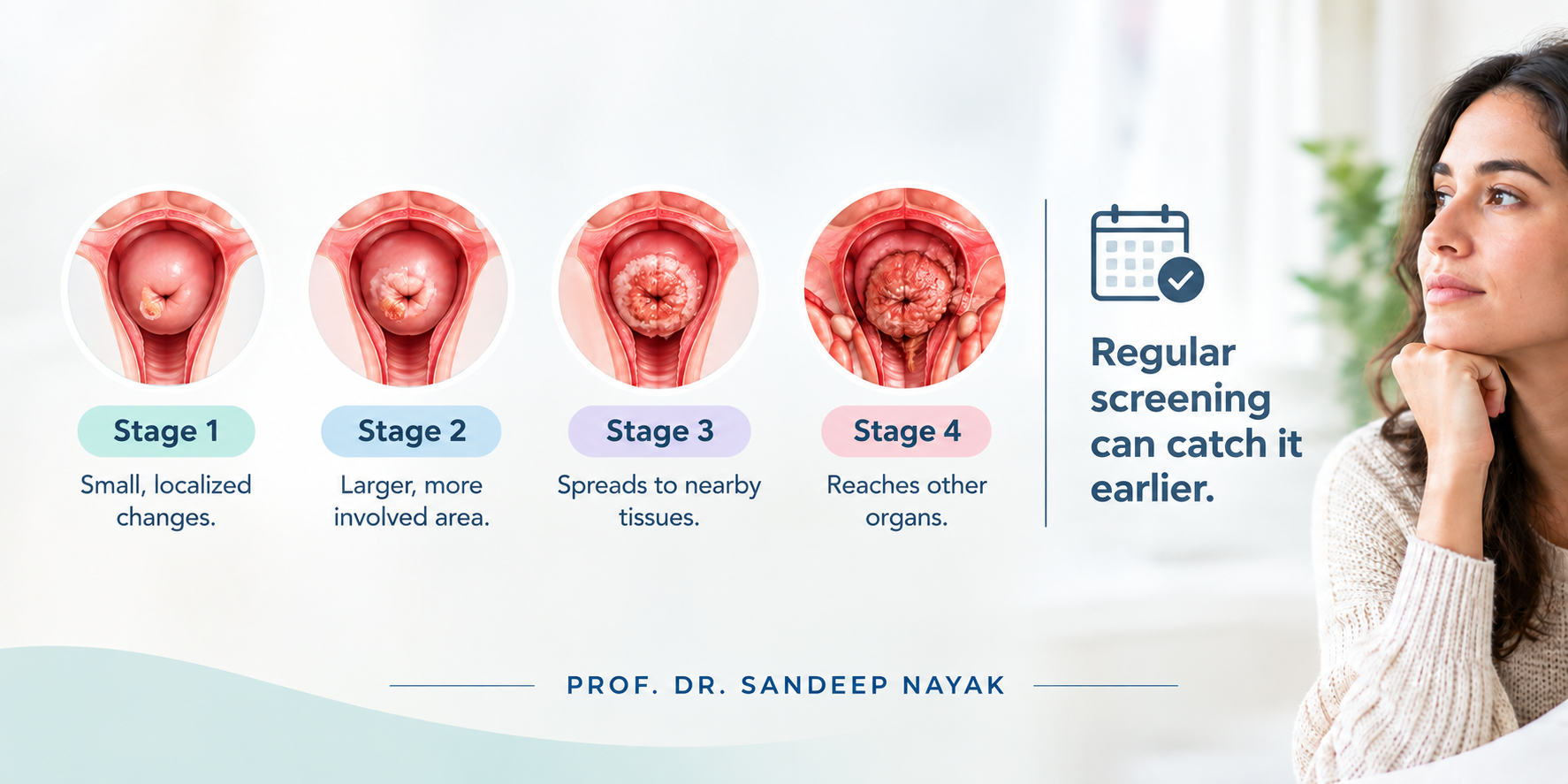
Early cervical cancer doesn’t announce itself. No pain. No red flag. Nothing that sends anyone running to a clinic. By the time bleeding shows up, stage 1 has often quietly become stage 3.
That’s where people get lazy, skipping the yearly Pap smear test because nothing hurts yet. Big mistake, honestly. Our piece on the HPV vaccine gets into how prevention fits into all this.
Why Choose Dr. Sandeep Nayak for Cervical Cancer Treatment ?
Twenty four years doing this. Robotic radical hysterectomy, lymph node dissection, the full range. Dr. Sandeep Nayak starts every case with getting the stage right. No guessing. Then builds the plan around what that specific tumor actually needs.
Fingers and eyes, that’s it, backed by two decades of doing exactly this kind of surgery. Stage still calls the shots, sure. But a precise plan from someone who’s done this a thousand times over? That changes things. No hype. Just outcomes.
Frequently Asked Questions
What is the five-year survival rate for cervical cancer?
Around 91 percent when it’s still localized. Drops to near 60 once it reaches nearby lymph nodes. Under 20 percent once it’s spread to distant organs.
Does HPV vaccination affect survival outcomes?
It lowers your risk of getting cervical cancer from covered HPV strains in the first place. Doesn’t replace screening if you’ve already been exposed.
Why is cervical cancer often caught late?
Early-stage disease barely causes symptoms. Most cases go unnoticed until bleeding or discharge shows up, and by then it’s often progressed.
Does age at diagnosis affect survival?
Yes, younger patients generally tolerate aggressive treatment better and tend to see stronger outcomes than those diagnosed later.
References
- Cancer Stat Facts: Cervical Cancer – National Cancer Institute (SEER)
- Cervical Cancer Survival Rates – American Cancer Society
Disclaimer: This blog is for informational and educational purposes only and is not a substitute for professional medical advice or diagnosis.
