
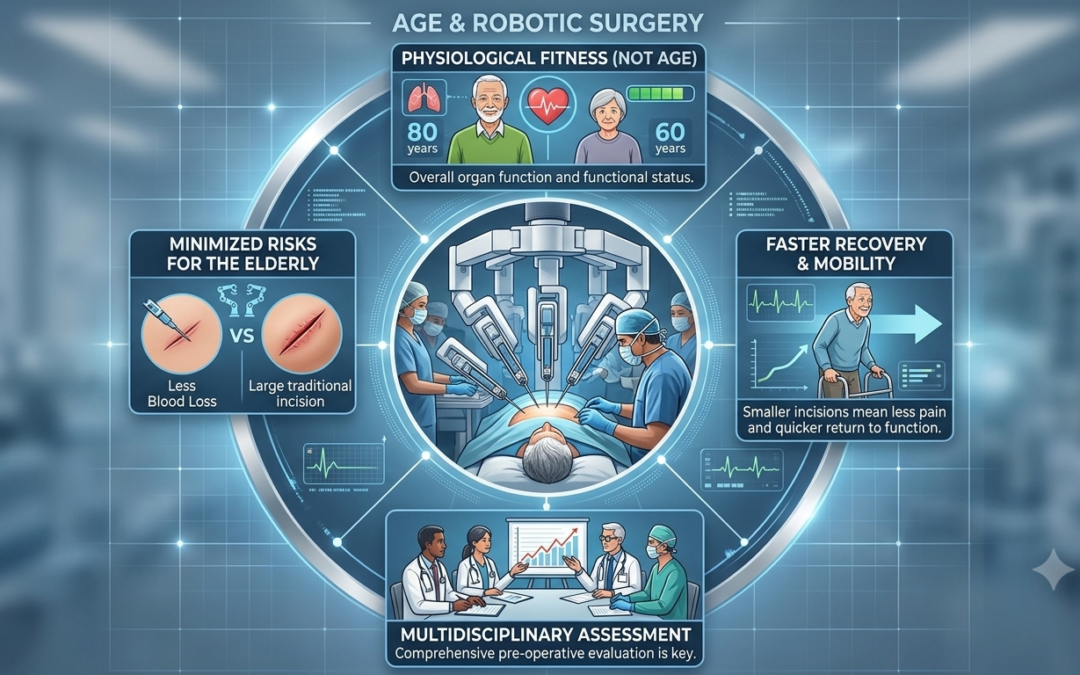
No, there’s no fixed upper age limit for robotic surgery. What actually decides eligibility is overall health, heart and lung function, and general strength, not the number of birthdays someone’s had. Plenty of patients in their 80s and even 90s go through robotic procedures safely, largely because the technique itself causes less blood loss and smaller cuts than open surgery, which matters even more as the body gets older.
According to Dr. Sandeep Nayak, surgical oncologist in Bangalore with over 24 years of experience treating solid tumors, “Families often assume age alone rules someone out, and honestly, it doesn’t. I’ve operated on patients in their 80s who were fitter, in terms of what actually matters for surgery, than some patients decades younger. It comes down to what their heart, lungs, and overall reserve can handle, not their birth year.”
Wondering if age is a factor in your surgery options?
What Actually Determines Fitness for Robotic Surgery?
- Cardiac reserve gets assessed closely, since the heart needs to handle the surgery and recovery period, regardless of age.
- Lung function matters a lot too, particularly for longer procedures under anaesthesia.
- Overall performance status, essentially how independently and actively someone functions day to day, weighs heavily in this decision.
- Nutritional status and muscle reserve are factored in as well, since these affect healing and recovery speed.
This kind of fitness evaluation applies across the board, and if robotic cancer surgery is already on the table for your case, this assessment is one of the first steps before anything gets scheduled.
Why Robotic Surgery Often Works Better for Older Patients?
- Smaller incisions mean less blood loss, which matters more when the body has less physiological reserve to draw from.
- Recovery tends to be faster and less physically demanding compared to open surgery, an important factor for older patients.
- Shorter hospital stays reduce the risk of complications that tend to come with prolonged bed rest in elderly patients specifically.
- Precision instruments reduce trauma to surrounding tissue, which can matter more as the body’s healing capacity naturally slows with age.
We’ve gone into how this fitness evaluation fits into the bigger picture of surgical decision-making in Cancer Surgery: What It Is and When It’s Needed, worth reading if you’re weighing surgery as an option at all right now.
Why Choose Dr. Sandeep Nayak ?
Dr. Sandeep Nayak has spent more than two decades in surgical oncology, and older patients navigating this exact question, whether age itself rules out surgery, have been part of that work throughout. He currently serves as Chairman of Oncology Services for Karnataka and heads Surgical Oncology and Robotic Surgery at KIMS Hospital, Bangalore. What tends to matter most to patients and families isn’t the title though, it’s that fitness gets evaluated properly and honestly, rather than age being used as a shortcut to rule someone out. That thoroughness is often where things get missed elsewhere.
Not sure if age is actually a barrier in your specific case? Don’t assume either way. Call +91 9482202240 and get someone to actually walk you through it.
Frequently Asked Questions
Is there a specific age where robotic surgery becomes too risky?
No fixed cutoff exists. Risk gets assessed individually, based on health and fitness, not a specific number.
Do older patients recover slower from robotic surgery?
Recovery can take a bit longer compared to younger patients, but robotic surgery still tends to be gentler on the body than open surgery would be at any age.
What tests are done to check if an elderly patient is fit for surgery?
Usually a cardiac evaluation, lung function tests, blood work, and an overall assessment of how independently the person functions day to day.
Can a patient with existing health conditions still qualify?
Often, yes, depending on how well-controlled those conditions are. It’s assessed case by case rather than automatically ruled out.
References
Robotic versus Open Oncological Gastric Surgery in the Elderly
ACS Geriatric Surgery Verification Program
Disclaimer: This blog is for informational and educational purposes only and is not a substitute for professional medical advice or diagnosis.
