
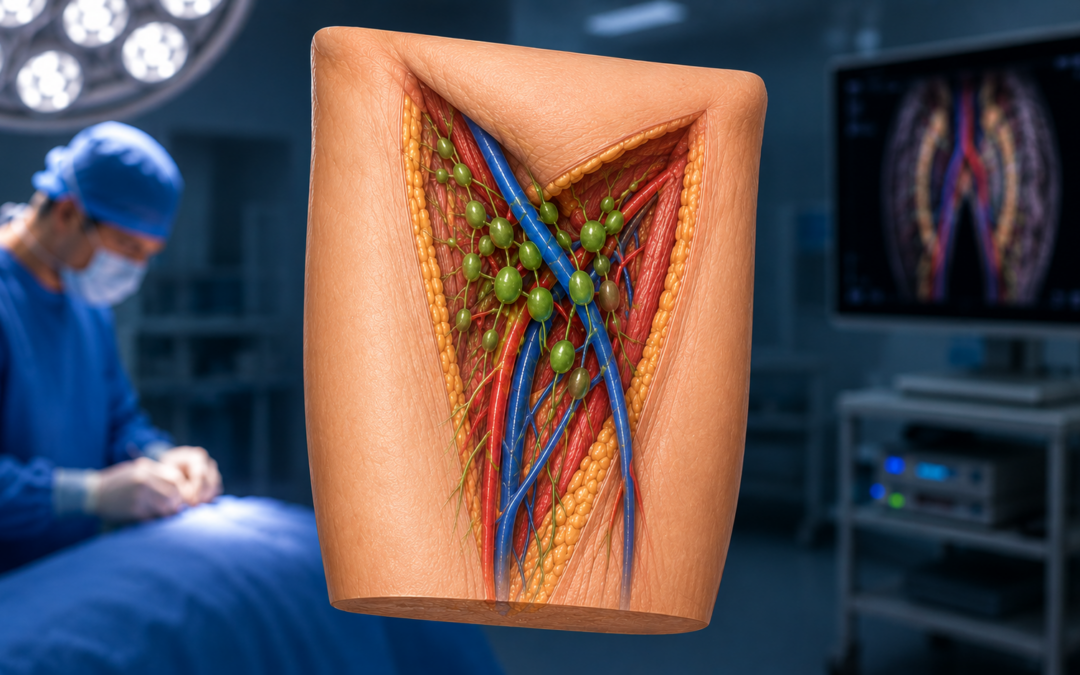
Groin lymph node dissection, also called inguinal block dissection, removes lymph nodes from the groin when cancer has spread there or carries a high risk of doing so. Surgeons use it most often for melanoma of the leg, penile cancer, and vulvar or other gynecological cancers. The procedure can be done through an open incision or through a minimally invasive technique called VEIL, and complication rates differ sharply between the two.
According to Dr. Sandeep Nayak, whose surgical practice focuses on minimally invasive oncologic surgery, “roughly 60% of open groin dissections run into wound-related complications, and that number drops sharply once you move to a minimally invasive approach.”
Diagnosed with a cancer that carries groin lymph node risk?
Why Is Groin Lymph Node Dissection Performed?
Surgeons recommend this procedure for a specific set of cancers where groin nodes are the first likely site of spread.
- Penile Cancer — Cancer of the penis spreads early to the inguinal nodes, and removing them often decides whether the disease stays curable.
- Vulvar Cancer — Vulvar cancers follow a similar pattern, draining first into the groin before moving further, which makes node status central to staging.
- Leg Melanoma — Melanoma arising on the leg or foot drains toward the groin, so surgeons check and often remove these nodes once risk crosses a certain threshold.
- Node Staging — Even without obvious spread, some patients need the nodes removed just to confirm the stage accurately, since imaging alone can miss small deposits.
An inguinal block or ileo-inguinal groin dissection is the standard procedure for these situations, and the extent removed depends on which nodes carry risk. Choosing the right extent upfront avoids a second, harder surgery later.
How Is the Surgery Performed?
Two broad approaches exist, and the choice between them changes recovery considerably.
- Open Approach — The traditional open technique gives wide access but carries a high rate of wound breakdown, seroma, and prolonged nursing care afterward.
- VEIL Technique — Video endoscopic inguinal lymphadenectomy removes the same nodes through small incisions, cutting wound complications while keeping the same nodal yield.
- Node Removal — The count of nodes removed depends on cancer type, with melanoma and penile cancer sometimes needing both inguinal and iliac regions cleared.
- Recovery Time — Patients treated with the minimally invasive route typically go home sooner and need far less wound care than those treated openly.
Groin lymph node involvement changes prognosis the same way it does in testicular cancer, where node status often drives the entire treatment plan. Discussing the surgical approach with a specialist before the operation matters just as much as the decision to operate.
Why Choose Dr. Sandeep Nayak For Groin Lymph Node Dissection?
Dr. Sandeep Nayak is a surgical oncologist with over 24 years of experience who pioneered the lateral approach to VEIL, a technique now practiced at cancer centres worldwide. He has performed more than 10,200 cancer surgeries and specializes in inguinal and iliac block dissections for penile, vulvar, and lower-limb skin cancers.
Choosing a surgeon experienced with VEIL matters, since the open technique still causes wound complications in roughly 60% of cases elsewhere. A dissection planned and executed correctly the first time avoids the extended nursing care that open surgery often demands.
Frequently Asked Questions
When is groin lymph node dissection needed?
It’s needed when penile, vulvar, or leg melanoma carries a confirmed or high risk of nodal spread.
Is VEIL safer than open groin dissection?
Yes, VEIL significantly lowers wound complications compared to the traditional open approach.
How long is recovery after groin lymph node dissection?
Open surgery needs weeks of wound care, while minimally invasive VEIL recovery is notably faster.
Does groin dissection affect leg swelling long-term?
Yes, lymphedema is a recognized long-term risk after removing groin lymph nodes.
References
Disclaimer: This blog is for informational and educational purposes only and is not a substitute for professional medical advice or diagnosis.
