Can a PET Scan Miss Cancer?

 Can a PET Scan Miss Cancer?

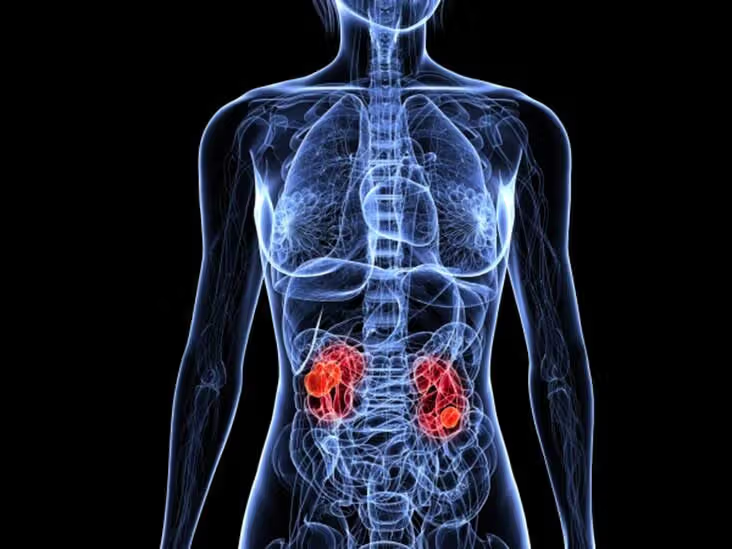
A PET scan can miss cancer. Not often, but it happens. The test works by detecting cells that consume sugar at high rates, which most cancers do, but not all. Very small tumours under a centimetre, slow growing cancers, prostate cancer, lobular breast cancer and low grade lymphomas can all stay invisible on PET despite being there. A negative scan is reassuring, but not definitive on its own, especially when symptoms persist.

According to Prof. Dr. Sandeep Nayak, Surgical Oncologist in India, “A clean PET scan is reassuring but it isn’t the final word. Certain cancers simply don’t light up the way the test expects, and small tumours fall below detection threshold. When clinical signs persist after a negative scan, that’s when biopsy or alternative imaging matters, not after another month of waiting.”

A clean scan is good news, but listen to your body too.

Why Does a PET Scan Sometimes Miss Cancer?

The technology has clear limits. Knowing them helps you understand the result.

  • Tumour too small: PET scans struggle with anything under one centimetre. The signal is just not strong enough to stand out from background activity.
  • Low sugar uptake: Some cancers don’t use much glucose. Prostate cancer, certain neuroendocrine tumours and lobular breast cancer fall into this group.
  • Slow growing: Indolent lymphomas and low grade tumours grow slowly and metabolise slowly too. The scan reads them as normal tissue, not disease.
  • Technical limits: Patient movement, recent infection, high blood sugar or inflammation can all reduce signal accuracy. Even the best scanner has these blind spots.

For patients whose treatment plan involves surgery after diagnosis, robotic cancer surgery brings precise removal of tumours that imaging alone can’t fully define.

What Should You Do If You Suspect a Missed Cancer?

A negative scan plus persistent symptoms shouldn’t end the conversation.

  • Trust symptoms: Unexplained weight loss, persistent pain, ongoing fatigue or a stable lump deserves serious follow up, even if imaging looks clean.
  • Get specific tests: MRI, ultrasound, endoscopy and tumour markers can pick up cancers that PET misses. Different cancers need different tools.
  • Push for biopsy: When everything else is inconclusive and clinical suspicion is high, a tissue biopsy gives the answer no scan can match.
  • Second opinion: A specialist looking at the same scan and same symptoms fresh sometimes catches what the original team missed. Worth asking for if the answer doesn’t feel right.

For patients facing inconclusive scans where the next step is tissue diagnosis, our blog on cancer biopsy explains how the procedure works.

Why Choose Dr. Sandeep Nayak for Your Cancer Care?

Dr. Sandeep Nayak has spent 24 years in surgical oncology. He holds DNB qualifications in Surgical Oncology and General Surgery and trained further with a fellowship in Laparoscopic and Robotic Onco Surgery. He reads PET scans alongside symptoms, never in isolation, and orders biopsy or alternative imaging when clinical suspicion stays high despite a clean scan.

That refusal to rely on a single imaging result is what catches the cancers others miss. Every case at MACS Clinic goes through full tumour board review, where the diagnostic plan is set together. Call +91 8104310753 to book your consultation.

Frequently Asked Questions

Can a PET scan miss cancer?

Yes, very small or low glucose tumours can sometimes go undetected.

Which cancers does PET miss most?

Prostate, lobular breast, low grade lymphomas, and slow growing tumours.

How small a tumour does PET miss?

Tumours under one centimetre are often hard to detect.

What should I do if symptoms persist?

Push for biopsy, MRI or specialist review despite a negative scan.

Disclaimer: This blog is for informational purposes only and is not a substitute for professional medical advice.

What Is Cachexia in Cancer Patients?

What Is Cachexia in Cancer Patients?

Cachexia is a wasting syndrome that causes severe loss of muscle and fat, even when the patient is eating normally. It affects up to 80 percent of people with advanced cancer. The cause is inflammation, insulin resistance and hormone changes triggered by the tumour, not simple under nutrition. Early stages respond to nutrition, medication and exercise. Late refractory cachexia is largely irreversible, which is why catching it early matters so much.

According to Prof. Dr. Sandeep Nayak, Surgical Oncologist in India, “Cachexia is one of the most underdiagnosed complications in advanced cancer, despite being among the most consequential. It’s not just weight loss, it’s a fundamental change in how the body uses energy, and catching it at the pre cachexia stage is when intervention actually works.”

Cachexia is more than weight loss, it’s a signal worth catching early.

What Causes Cachexia in Cancer?

It’s not simple malnutrition. The biology behind it is much more layered.

  • Inflammation drives it: The tumour releases inflammatory chemicals that disrupt how muscle and fat cells use energy. This is the main reason eating more doesn’t fix the problem.
  • Insulin resistance: Cancer pushes the body into insulin resistance. Glucose can’t reach the cells properly, so muscle breaks down for fuel instead.
  • Hormone shifts: Catabolic hormones, which break tissue down, become more active than anabolic ones, which build it up. The balance tips toward wasting.
  • Specific cancers: Cachexia is most common in pancreatic, lung, head and neck, oesophageal and stomach cancers. Breast and prostate cancers cause it less often.

For patients whose treatment includes surgical removal of the tumour driving cachexia, robotic cancer surgery brings precise tumour control with faster recovery from surgical stress.

How Is Cachexia Recognised and Treated?

Diagnosis is staged. Treatment is multi pronged.

  • Three stages: Pre cachexia is mild weight loss, less than 5 percent. Cachexia is over 5 percent loss with muscle wasting. Refractory cachexia is severe loss, often in late stage disease.
  • Early signs: Unintended weight loss, fatigue, weakness, loss of appetite, frequent infections. These flag the syndrome before it gets serious.
  • Nutrition support: Protein rich diet, small frequent meals, oncology dietitian input. Helps mainly in early stages, less so once refractory.
  • Medication options: Anamorelin, megestrol, low dose steroids and newer trial drugs like ponsegromab help appetite, weight and muscle. Always alongside cancer treatment.

For patients dealing with cachexia commonly seen in pancreatic cancer, our blog walks through survival expectations and management.

Why Choose Dr. Sandeep Nayak for Your Cancer Care?

Dr. Sandeep Nayak has spent 24 years in surgical oncology. He holds DNB qualifications in Surgical Oncology and General Surgery and trained further with a fellowship in Laparoscopic and Robotic Onco Surgery. He flags cachexia at the pre cachexia stage where intervention works, coordinates nutrition, medication and supportive care alongside cancer treatment, and never treats severe weight loss in cancer patients as simply a side effect.

That early identification and active management is what separates good cancer care from passive observation. Every case at MACS Clinic goes through tumour board review, where the treatment plan is set together. Call +91 8104310753 to book your consultation.

Frequently Asked Questions

What is cachexia in cancer patients?

A wasting syndrome causing severe muscle and fat loss despite eating.

How common is cachexia?

Up to 80 percent of advanced cancer patients develop some form.

Can cachexia be reversed?

Early stages yes, late refractory cachexia is mostly irreversible.

How is cachexia treated?

Nutrition, medications, exercise and treating underlying cancer all help.

Disclaimer: This blog is for informational purposes only and is not a substitute for professional medical advice.

Can Viruses Cause Cancer?

Can Viruses Cause Cancer?

Yes, some viruses cause cancer. They account for about 15 to 20 percent of all cancers worldwide. The WHO has classified seven viruses as oncogenic, and they include HPV, hepatitis B and C, EBV, HTLV-1, KSHV and HIV. None of them cause cancer the day they enter the body. They set up chronic infection first, then trigger cellular changes that show up as cancer 15 to 40 years later. Vaccines and timely treatment stop most of these in their tracks.

According to Prof. Dr. Sandeep Nayak, Surgical Oncologist in India, “Virus linked cancers are among the most preventable cancers in modern medicine, because we already have vaccines or effective treatments for the major ones. The challenge is awareness, most patients don’t realise that HPV vaccination or hepatitis B screening today protects them from cervical or liver cancer decades later.”

Some cancers can be stopped before they ever start.

Which Viruses Cause Cancer and How?

Seven viruses make the WHO carcinogenic list. Each one works a different way.

  • HPV virus: Human papillomavirus causes most cervical cancers. It’s also behind anal, throat, mouth and penile cancers. HPV vaccines prevent over 90 percent of these.
  • Hepatitis B and C: Both viruses cause long term liver inflammation. Over years, that inflammation pushes the liver toward cancer. HBV has a vaccine. HCV now has cure level treatment.
  • EBV virus: Epstein Barr virus is linked to nasopharyngeal cancer, certain lymphomas and a small share of stomach cancers. Almost everyone carries EBV. Cancer is the rare exception, not the rule.
  • HTLV and KSHV: HTLV-1 leads to a specific adult T cell leukaemia. KSHV is behind Kaposi sarcoma. Both are rare in India but matter where they occur.

For patients diagnosed with virus linked cancers, robotic cancer surgery brings precise removal of tumours like cervical, liver, throat and head and neck cancers.

How Can You Prevent Virus Linked Cancers?

Prevention is genuinely possible for most of these. The tools already exist.

  • HPV vaccine: Vaccination between ages 9 and 26 prevents cervical and oropharyngeal cancers decades later. Available for boys and girls. Three doses or two, depending on age.
  • Hep B vaccine: Hepatitis B vaccination is part of routine childhood immunisation in India. It directly prevents one of the biggest causes of liver cancer worldwide.
  • Hep C treatment: Modern antivirals cure over 95 percent of HCV patients in 8 to 12 weeks. Catch it early and liver cancer never happens.
  • Safe practices: Safe sex, no shared needles, screened blood transfusions, routine virus checks. All of these cut exposure to oncogenic viruses meaningfully.

For patients curious about how virus links and cancer transmission sometimes get confused, our blog on whether cancer is a communicable disease clears up the misconception.

Why Choose Dr. Sandeep Nayak for Your Cancer Care?

Dr. Sandeep Nayak has spent 24 years in surgical oncology. He holds DNB qualifications in Surgical Oncology and General Surgery and trained further with a fellowship in Laparoscopic and Robotic Onco Surgery. He treats virus linked cancers including cervical, oropharyngeal, liver and head and neck cancers, and counsels patients and families on vaccination and screening to prevent these cancers in the next generation.

That prevention focused approach is what shifts oncology from treating advanced disease to stopping it altogether. Every case at MACS Clinic goes through tumour board review, where the treatment plan is set together. Call +91 8104310753 to book your consultation.

Frequently Asked Questions

Can viruses cause cancer?

Yes, about 15 to 20 percent of cancers worldwide are virus linked.

Which viruses cause cancer?

HPV, hepatitis B and C, EBV, HTLV-1, KSHV and HIV mainly.

Can vaccines prevent virus linked cancers?

Yes, HPV and hepatitis B vaccines prevent many of these cancers.

How long after virus does cancer appear?

Often 15 to 40 years after the initial chronic infection.

Disclaimer: This blog is for informational purposes only and is not a substitute for professional medical advice.

What Is the Difference Between Cancer and a Cyst?

What Is the Difference Between Cancer and a Cyst?

A cyst is a fluid filled sac that’s almost always benign and rarely turns cancerous. Cancer, on the other hand, is a solid mass of abnormal cells with the potential to invade surrounding tissue and spread elsewhere in the body. Most cysts stay stable, cause no real trouble and need only watching, while cancer needs active treatment because of its behaviour. Imaging and biopsy are the tools that confirm which is which.

According to Prof. Dr. Sandeep Nayak, Surgical Oncologist in India, “A cyst and a cancer are biologically different from the start. One is a fluid pocket the body has walled off, the other is uncontrolled solid cell growth with invasive potential. Knowing which it is decides everything from whether you watch and wait or move to surgery and beyond.”

A cyst or a cancer feels the same on the outside, but the answer changes everything.

What Exactly Is a Cyst and How Does It Form?

A cyst is the body’s way of walling off something it doesn’t need.

  • Fluid pocket: A cyst forms when a sac of tissue traps fluid, air, pus or other material. It’s a contained collection, not a growing mass of new cells.
  • Mostly harmless: Most cysts cause no real symptoms beyond a visible lump or mild pressure. They sit in place for years without any malignant behaviour.
  • Common types: Sebaceous cysts on the skin, ovarian functional cysts, breast cysts, kidney cysts, ganglion cysts on joints, all are routinely benign and very common.
  • Watch usually: Most simple cysts get watched on ultrasound or scan over time. Surgery is needed only when they grow large, painful or look complex.

For cysts that do need surgical removal, especially when complex features raise malignant concern, robotic cancer surgery brings precise organ sparing dissection in delicate areas.

Cancer vs Cyst: How Do They Actually Differ?

Side by side, the two are biologically distinct. Here’s the comparison.

Feature

Cyst

Cancer

Composition

Fluid filled sac

Solid mass of abnormal cells

Behaviour

Stable, slow or no growth

Often growing, invasive

Symptoms

Lump only, painless mostly

Lump plus weight loss, fatigue or change

Imaging

Smooth, uniform on ultrasound

Irregular borders, solid components

Outcome

Almost always benign

Needs active treatment

  • Imaging clue: A simple cyst looks uniform and smooth on ultrasound. Cancer typically shows irregular borders, solid parts, blood flow on Doppler imaging.
  • Growth pattern: Cysts stay roughly the same size or shrink, sometimes fluctuating with hormones. Cancers grow over weeks or months in a consistent direction.
  • Other symptoms: Cysts almost never cause weight loss, fatigue, fever or systemic signs. Cancer often comes with these alongside the lump.
  • Biopsy decides: When imaging is unclear or features are concerning, a tissue biopsy gives the definitive answer that no scan alone can match.

For patients dealing specifically with a painless lump and wondering whether it’s a cyst or something more, our blog on painless lump and cancer walks through the warning patterns.

Why Choose Dr. Sandeep Nayak for Your Cancer Care?

Dr. Sandeep Nayak has spent 24 years in surgical oncology. He holds DNB qualifications in Surgical Oncology and General Surgery and trained further with a fellowship in Laparoscopic and Robotic Onco Surgery. He never reassures a cyst as benign without proper imaging and clinical evaluation, because the small fraction of cysts that aren’t harmless look almost identical to the ones that are on basic scans.

That careful evaluation is what separates true reassurance from false reassurance for patients with lumps and cysts. Every case at MACS Clinic goes through tumour board review, where the diagnostic plan is set together. Call +91 8104310753 to book your consultation.

Frequently Asked Questions

What is the difference between a cyst and cancer?

A cyst is fluid filled and usually benign, cancer is solid and invasive.

Can a cyst become cancer?

Most don’t, but some specific cyst types carry small malignant risk.

How do doctors tell them apart?

Ultrasound, MRI, blood markers and biopsy when needed clarify it.

Do all cysts need removal?

No, most simple cysts can be safely watched without surgery.

Disclaimer: This blog is for informational purposes only and is not a substitute for professional medical advice.

Understanding the Connection Between Thyroid Health and Fertility

Understanding the Connection Between Thyroid Health and Fertility

The thyroid is a small, butterfly-shaped gland in the neck, yet it controls metabolism, energy, and the hormones that govern reproduction. As its reach is so wide, even a minor imbalance can disrupt the body’s normal rhythm. This is where thyroid health and fertility become closely linked: when hormone levels run too high or too low, ovulation, menstrual cycles, and sperm quality can all suffer, making conception harder.

Dr. Sandeep Nayak, an ace surgical oncologist in Bangalore with deep expertise in thyroid and cancer care, explains:

Thyroid imbalance is one of the most common yet overlooked causes of infertility. He points out that many couples try for months before realizing a simple thyroid test holds the answer, and that fertility often improves once the imbalance is corrected.

Known for his work in advanced robotic and minimally invasive surgery, Dr. Sandeep Nayak guides patients through thyroid evaluation, nodule assessment, and treatment when a serious condition is suspected. This makes him a trusted name for cancer treatment in Bangalore.

Trying to conceive without success? A simple thyroid test could be the missing piece. Speak to your doctor about getting checked.

Introduction to Thyroid Health and Fertility

First, here’s why this gland matters so much for reproduction.

The thyroid produces two key hormones, T3 and T4, that regulate how every cell in the body uses energy. These hormones also interact closely with the reproductive system. In women, they influence ovulation and the menstrual cycle. In men, they affect sperm production and quality.

When thyroid hormone levels are too high (hyperthyroidism) or too low (hypothyroidism), this delicate balance is disturbed. The result can be irregular cycles, difficulty conceiving, or a higher chance of complications during pregnancy. Healthy thyroid function, therefore, is a quiet but essential foundation for fertility in both partners.

Curious whether your thyroid could be affecting your fertility? Keep reading.

How Thyroid Imbalances Impact Fertility

Both an underactive and an overactive thyroid can disrupt reproduction in several ways:

  • Disrupted ovulation

Hypothyroidism can prevent the ovaries from releasing an egg each month, making conception unlikely.

  • Irregular menstrual cycles

Thyroid imbalance often causes cycles that are too heavy, too light, or unpredictable.

  • Hormonal interference

Low thyroid hormone can raise prolactin levels, which further suppresses ovulation.

  • Luteal phase problems

The second half of the cycle can be shortened, and this can make it difficult for an embryo to implant.

  • Male fertility effects

Thyroid imbalance may have an impact on the sperm level, motility, and libido in men.

  • Higher miscarriage risk

Untreated thyroid disorders are linked to early pregnancy loss.

The encouraging news is that thyroid dysfunction-caused fertility problems are often easily correctable when diagnosed.

Trying to conceive without success? A simple thyroid test could be the missing piece. Speak to your doctor about getting checked.

Signs of Thyroid Imbalances Affecting Fertility

Now, what should actually make you suspicious?

Thyroid problems can be subtle, but certain signs are worth noting, especially alongside fertility concerns.

Possible signs of an underactive thyroid:

  • Constant fatigue and low energy
  • Unexplained weight gain
  • Feeling cold often
  • Dry skin and hair thinning
  • Heavy or irregular periods
  • Low mood or difficulty concentrating

Possible signs of an overactive thyroid:

  • Rapid weight loss
  • Racing heartbeat or palpitations
  • Anxiety and restlessness
  • Light or skipped periods
  • Trouble sleeping
  • Excessive sweating

“If several of these sound familiar, it is worth raising them with a doctor. A simple blood test can confirm whether your thyroid is the cause,” advises Dr. Sandeep Nayak, an acclaimed oncologist in Bangalore.

The Role of Thyroid Disorders in Pregnancy

Conceiving is one step. Carrying a healthy pregnancy is the next step.

Thyroid hormones are vital during pregnancy, particularly in the first trimester when the baby relies entirely on the mother’s supply. Unmanaged thyroid disorders during this time can raise the risk of complications.

Untreated hypothyroidism in pregnancy has been linked to miscarriage, premature birth, low birth weight, and effects on the baby’s brain development. Untreated hyperthyroidism can lead to pre-eclampsia, preterm delivery, and other concerns. This is why doctors often check thyroid levels early in pregnancy and continue to monitor them throughout pregnancy.

The good news is that with proper treatment and regular monitoring, most women with thyroid disorders go on to have healthy pregnancies and healthy babies.

Planning a pregnancy or already expecting? Get your thyroid checked early. It is one of the simplest steps toward a safer pregnancy.

Treatment Options for Thyroid Disorders and Fertility Enhancement

Here’s the reassuring part: most thyroid issues are highly treatable.

Treatment depends on whether the thyroid is underactive or overactive:

  • Hypothyroidism is usually managed with daily thyroid hormone replacement medication. Once levels are stabilized, ovulation and cycles often return to normal.
  • Hyperthyroidism may be treated with anti-thyroid medication, and in some cases, other interventions, depending on the cause.
  • Regular monitoring through blood tests ensures hormone levels stay in the ideal range, especially before and during pregnancy.
  • Fertility support may be combined with thyroid treatment if conception is still difficult after hormone levels are corrected.

In some cases, thyroid problems are linked to nodules or, less commonly, thyroid cancer. When a suspicious nodule is found, specialist evaluation is important. For those in Bangalore who need thyroid cancer treatment, Dr. Sandeep Nayak offers expert assessment and advanced surgical care. You can read more about thyroid disease during pregnancy from the American Thyroid Association for trusted background information.

Tips for Optimizing Thyroid Health and Boosting Fertility

In addition to medication, some small daily habits can support your thyroid.

  • Eat a balanced diet. Add sufficient iodine, selenium, and zinc, which support thyroid function. Avoid extreme or restrictive diets.
  • Manage stress. Chronic stress can disturb both thyroid and reproductive hormones. Rest, sleep, and relaxation are important.
  • Stay active. Regular, moderate exercise supports metabolism and hormonal balance.
  • Maintain a healthy weight. Both being underweight and being overweight can affect thyroid and fertility.
  • Take medication consistently. If prescribed thyroid medication, take it exactly as advised and never stop without consulting your doctor.
  • Get regular check-ups. Periodic thyroid checks are used to detect imbalances early, particularly when planning a family.

These steps are not a substitute for medical treatment, but they promote the best possible health for conception.

Frequently Asked Questions

1. Can I get pregnant with a thyroid disorder?

Yes. Most women with a well-managed thyroid disorder conceive and have healthy pregnancies.

2. Which thyroid problem affects fertility more, hypothyroidism or hyperthyroidism?

Both affect fertility, but hypothyroidism is more commonly linked to ovulation and cycle problems.

3. Should I get my thyroid tested before trying to conceive?

Yes. A simple TSH blood test before planning a pregnancy is a sensible precaution, especially if you have symptoms.

4. Does thyroid imbalance affect men's fertility?

Yes. It can reduce sperm count, lower motility, and affect libido in men.

5. Can treating my thyroid improve my chances of conceiving?

Often, yes. Once hormone levels are corrected, ovulation and cycles frequently return to normal.

6. Is thyroid medication safe during pregnancy?

Thyroid hormone replacement is considered safe and is usually essential. Always take it under medical guidance.

7. Can thyroid problems cause miscarriage?

Untreated thyroid disorders are linked to a higher risk of miscarriage, which is why early monitoring matters.

8. Can diet alone fix a thyroid disorder?

No. Diet supports thyroid health but cannot replace medical treatment when a disorder is present.

Disclaimer: The information shared in this content is for educational purposes and not for promotional use.

Call Now Button