
What Makes Dr. Sandeep Nayak Different From Other Oncologists?

What Makes Dr. Sandeep Nayak Different From Other Oncologists?

Dr. Sandeep Nayak is different from most oncologists in India because he didn’t build his reputation by treating cancer the way everyone else was treating it, he built it by developing surgical techniques that didn’t exist before he made them, operating robotically and laparoscopically on cancers that most centres were still doing open a decade after minimally invasive technology was available and consistently telling patients what was genuinely achievable for their specific case rather than what was easiest to offer.

According to Prof. Dr. Sandeep Nayak, Surgical Oncologist in India, “Every cancer patient deserves a surgical plan built around their specific tumour, their anatomy and their life rather than a protocol that was designed for the average case and applied to everyone.”

What Sets Dr. Sandeep Nayak Apart Technically?

These are the things that distinguish Dr. Nayak’s surgical practice from most oncologists in India:

  • Original techniques: RABIT, MIND and RIA-MIND are surgical techniques Dr. Nayak developed himself and they exist because he identified gaps in what conventional surgery was offering patients and built the technical solutions to close them rather than waiting for someone else to do it.
  • Robotic surgery early: Dr. Nayak got into robotic and laparoscopic cancer surgery over 15 years ago when most Indian oncology centres hadn’t committed to it and that head start built a depth of experience with robotic dissection in difficult anatomical spaces that centres adopting it later are still catching up to.
  • Scarless thyroid surgery: RABIT removes the thyroid through armpit and infraclavicular incisions with no cut on the neck and for a patient who would otherwise carry a visible neck scar for decades that difference is not cosmetic it’s something they live with every single day.
  • Sphincter preservation: Operating deep in the narrow pelvis with the precision that inter-sphincteric rectal resection demands, Dr. Nayak gives patients with low rectal cancer a realistic chance at avoiding permanent stoma in cases where open surgery or a less experienced surgeon would make a bag the default outcome.

The technical depth Dr. Nayak has built across specific cancer types at real volume over 24 years is what separates his practice from an oncologist who operates broadly across many cancer types without the same depth in any of them. Robotic cancer surgery at MACS Clinic represents the full range of minimally invasive capability that serious surgical oncology in India should be offering every patient whose tumour allows it.

What Sets Dr. Sandeep Nayak Apart as a Clinician?

These are the things patients consistently say set their experience with Dr. Nayak apart from other oncologists they consulted:

  • Honest assessment: Dr. Nayak tells patients what the surgical options genuinely are for their specific tumour rather than what sounds most reassuring or what’s easiest to offer and patients who’ve had consultations elsewhere notice that difference immediately.
  • Case specificity: Every patient gets a surgical plan built around their actual imaging, their pathology, their anatomy and their life circumstances rather than a standard protocol adjusted slightly for each new case that comes through the door.
  • No unnecessary surgery: Dr. Nayak is as clear about what doesn’t need operating on as he is about what does and patients who come in expecting to be pushed toward surgery often leave with a surveillance plan or a non-surgical recommendation that other centres hadn’t offered them.
  • Patient outcomes first: The decisions at MACS Clinic are driven by what the evidence says gives the patient the best oncological outcome and functional result not by what’s technically impressive or what fits the centre’s capabilities most conveniently.

What patients remember most after seeing Dr. Nayak isn’t just the surgery, it’s that they understood what was happening to them, why the plan was what it was and what the realistic outcomes looked like before they agreed to anything. Laparoscopic cancer surgery at MACS Clinic covers the full minimally invasive spectrum where every surgical decision starts with what your specific cancer actually needs rather than what the centre does most.

Why Choose Dr. Sandeep Nayak for Cancer Treatment?

Over 24 years in surgical oncology. Chairman of Oncology Services across Karnataka. Developer of RABIT, MIND and RIA-MIND. 15 plus years doing robotic and laparoscopic cancer surgery before most Indian centres made the decision to invest in it. Alumni of Kidwai Memorial Institute of Oncology Bangalore. These aren’t credentials assembled for a website, they’re the output of a surgeon who kept operating at the frontier of what minimally invasive oncology could offer patients rather than settling at the level most centres in India were comfortable with. Dr. Nayak sees patients at MACS Clinic in Bangalore where the standard of care is built around what the best evidence says patients deserve rather than what’s easiest to deliver at scale.

Frequently Asked Questions

What makes Dr. Sandeep Nayak different from other oncologists?

He developed original surgical techniques including RABIT, MIND and RIA-MIND, adopted robotic cancer surgery 15 years ago and consistently offers patients case-specific surgical plans rather than standard protocols.

What techniques did Dr. Sandeep Nayak develop?

RABIT for scarless thyroid surgery, MIND and RIA-MIND for precise pelvic and colorectal cancer surgery, techniques he built to address gaps conventional surgery wasn’t closing for patients.

How long has Dr. Sandeep Nayak been doing robotic cancer surgery?

Over 15 years, making him one of the earliest adopters of robotic surgical oncology in India at a time when most centres hadn’t yet committed to the technology.

Where does Dr. Sandeep Nayak see patients?

At MACS Clinic in Jayanagar, Bangalore, Monday to Saturday from 3pm to 6:30pm, contact number plus 91 9482202240.

Reference links:

  1. National Cancer Institute. Finding Cancer Care. https://www.cancer.gov/about-cancer/managing-care/services
  2. American Cancer Society. Choosing a Cancer Treatment Center. https://www.cancer.org/cancer/managing-cancer/finding-care/choosing-a-cancer-treatment-center.html
    • Disclaimer: The information shared in this content is for educational purposes and not for promotional use.

    How Do I Choose a Cancer Surgeon in Bangalore?

    How Do I Choose a Cancer Surgeon in Bangalore?

    Choosing a cancer surgeon in Bangalore is one of the most consequential decisions you’ll make after a diagnosis and the patients who do it well look for the same things, a surgeon who specialises specifically in the cancer they have rather than a general surgeon who does cancer occasionally, someone doing enough volume of their specific procedure to have built genuine technical mastery, and a centre where the oncology, radiology and pathology teams actually talk to each other rather than operating in separate rooms.

    According to Prof. Dr. Sandeep Nayak, Surgical Oncologist in India, “The most important question a cancer patient can ask a potential surgeon in Bangalore is how many cases like mine do you operate on every year because volume predicts outcomes more reliably than any other single factor.”

    What Should You Look for in a Cancer Surgeon in Bangalore?

    These are the things that actually separate a good cancer surgeon from a great one:

    • Subspecialty focus: A surgical oncologist who operates primarily on your cancer type is a fundamentally different proposition from a general surgeon who does cancer surgery among many other procedures and the technical depth that comes from specialisation shows up directly in outcomes.
    • Case volume: A surgeon doing fifty or more cases of your specific procedure per year has built a level of anatomical familiarity and technical refinement that someone doing ten or fifteen simply hasn’t and that gap in volume translates into measurable differences in complication rates, margin quality and recurrence.
    • Minimally invasive capability: A cancer surgeon in Bangalore who offers laparoscopic and robotic surgery for your cancer type gives you recovery options that open surgery doesn’t and a surgeon who only does open surgery is not offering you the full range of what’s available at serious oncology centres.
    • Multidisciplinary team: Cancer surgery doesn’t happen in isolation and a surgeon operating within a team where oncologists, radiologists and pathologists review cases together before and after surgery gives you treatment planning that individual judgment alone can’t match.

    The best cancer surgeons in Bangalore are not hard to find if you know what to look for but they don’t always have the most prominent social media presence or the most advertising and the patients who find them are usually the ones who asked the right questions rather than just going with whoever came up first. Robotic cancer surgery at a specialist surgical oncology centre gives you access to the full range of minimally invasive options that serious cancer surgery in Bangalore should be offering.

    What Questions Should You Ask a Cancer Surgeon in Bangalore?

    These are the questions worth asking before you commit to any cancer surgeon:

    • Case numbers: How many cases of my specific cancer type do you operate on each year and what are your personal complication and recurrence rates because a surgeon confident in their outcomes will answer this without hesitation.
    • Surgical approach: Is minimally invasive surgery an option for my case and if not why not because a surgeon who defaults to open surgery without a specific reason related to your tumour may not be offering you the full range of what’s possible.
    • Second opinion: Will you support me getting a second opinion before surgery because any surgeon who discourages this is telling you something about how they view informed consent and patient autonomy that you should factor into your decision.
    • Post-operative plan: What does the follow-up after surgery look like, who manages the adjuvant treatment, how are surveillance scans organised and who do you call if something doesn’t feel right three weeks after discharge because the answer to this tells you whether you’re entering a system or just an operation.

    Choosing a cancer surgeon in Bangalore is ultimately about finding someone whose experience with your specific cancer type at real volume gives you confidence that the most important operation of your life is being done by someone who has done it hundreds of times before. Laparoscopic cancer surgery at specialist centres in Bangalore covers the full minimally invasive spectrum where the right surgical approach for your cancer gets properly worked out before anyone picks up an instrument.

    Why Choose Dr. Sandeep Nayak for Cancer Treatment?

    Dr. Sandeep Nayak has been doing surgical oncology in Bangalore for over 24 years and the answer to every question above is something he can give you with specifics from his own practice rather than averages from published literature. He chairs Oncology Services across Karnataka and sees patients at MACS Clinic in Bangalore where the MDT structure, robotic and laparoscopic capability and case volume across colorectal, thyroid, head and neck and other cancers is what separates serious surgical oncology from general surgery with a cancer label on it. Dr. Nayak will tell you honestly whether his practice is the right fit for your specific cancer case and if it isn’t he’ll tell you that too.

    Frequently Asked Questions

    How do I choose a cancer surgeon in Bangalore?

    Look for subspecialty focus in your cancer type, high case volume, minimally invasive capability and a multidisciplinary team structure rather than individual reputation alone.

    Does surgeon volume matter for cancer surgery outcomes?

    Yes, surgeons operating at high volume for specific procedures consistently show lower complication rates, better margin quality and lower recurrence than low volume surgeons doing the same operations.

    Should I get a second opinion before cancer surgery in Bangalore?

     Yes always, any surgeon confident in their assessment will support a second opinion and the information you gather makes your decision significantly better informed regardless of what you decide.

    What is the difference between a surgical oncologist and a general surgeon for cancer?

    A surgical oncologist specialises specifically in cancer surgery while a general surgeon does cancer among many other procedures and that specialisation difference shows up in technical depth and outcomes.

    Reference links:

    1. National Cancer Institute. Thyroid Cancer Treatment. https://www.cancer.gov/types/thyroid/patient/thyroid-treatment-pdq
    2. American Cancer Society. Thyroid Cancer. https://www.cancer.org/cancer/types/thyroid-cancer.html
      • Disclaimer: The information shared in this content is for educational purposes and not for promotional use.
      Is Thyroid Cancer Curable With Surgery?

      Is Thyroid Cancer Curable With Surgery?

      Yes and for most people hearing a thyroid cancer diagnosis for the first time that answer genuinely holds up because papillary and follicular thyroid cancers which make up the vast majority of cases are slow growing, respond well to surgery and carry five year survival rates above ninety five percent at specialist centres meaning the overwhelming majority of patients who get this right go on to live completely normal lives without thyroid cancer ever becoming relevant to them again.

      According to Prof. Dr. Sandeep Nayak, Surgical Oncologist in India, “Thyroid cancer is one of the cancers where surgery done properly at the right stage genuinely cures most patients and the outcomes at specialist centres reflect that when the diagnosis is made before significant spread.”

      How Does Surgery Cure Thyroid Cancer?

      These are the key things that make surgery the definitive treatment for most thyroid cancers:

      • Full removal: Total thyroidectomy takes the entire gland out and when that’s done completely with no residual thyroid tissue there’s genuinely nothing left for the cancer to use as a foothold which is the core reason cure rates for well-differentiated thyroid cancer are as high as they are.
      • Node clearance: Thyroid cancer moves to neck lymph nodes reliably before it goes anywhere else and a surgeon who clears the relevant groups at the same operation removes the most predictable route through which the cancer would come back after what looked like a clean primary resection.
      • Radioiodine after: Differentiated thyroid cancers respond to radioiodine ablation after surgery which destroys any remaining thyroid cells including microscopic ones that imaging would never have shown and the combination of surgery plus ablation is what the long term cure numbers are actually built on.
      • TSH suppression ongoing: You take thyroid hormone replacement after thyroidectomy which replaces what the gland was doing and keeps TSH suppressed and that suppression matters because TSH is exactly what would stimulate any residual thyroid cancer cells to grow if it were left running unchecked.

      Surgery coordinated with radioiodine and hormone management as a single planned pathway rather than an operation followed by uncertainty about next steps is what translates the high cure rates from a statistic into something that applies to your specific case. Thyroid cancer treatment at MACS Clinic covers the full pathway from diagnosis through surgery through follow-up rather than handing patients off between disconnected services.

      What Affects Whether Thyroid Cancer Is Curable With Surgery?

      These are the factors that genuinely shape how curable your specific thyroid cancer is:

      • Histology first: Papillary and follicular are highly curable, medullary and anaplastic behave completely differently and carry significantly worse prognosis even with aggressive treatment and knowing which type you have is one of the most important pieces of information you need before any treatment decision gets made.
      • Stage at diagnosis: Cancer confined inside the gland is in a completely different situation from cancer that’s spread through neck nodes and the gap in outcomes between those two scenarios is large enough that how long someone waited to get a neck lump checked can genuinely change the trajectory of their disease.
      • First surgery thoroughness: Clear margins, right lymph node groups, complete resection first time around, that’s the surgical standard thyroid cancer needs and going back later to clear residual disease or recurrent nodes is harder, riskier and produces worse long term numbers than getting it done properly the first time.
      • Surgeon volume: The recurrent laryngeal nerve and parathyroid glands sitting right in the operative field during thyroid cancer surgery require technical familiarity that builds through hundreds of cases and the rates of voice change, calcium problems and incomplete resection are genuinely lower at surgeons doing this at real volume.

      Whether your thyroid cancer is curable depends on your histology, your staging scans and a surgeon honest enough to tell you what the realistic prognosis looks like for your specific case rather than applying blanket reassurance because most thyroid cancers turn out fine and yours is probably one of them. Oral cancer treatment at specialist centres covers the full head and neck spectrum where each cancer type gets its own evidence-based surgical plan rather than a generalised approach.

      Why Choose Dr. Sandeep Nayak for Cancer Treatment?

      Dr. Sandeep Nayak has been treating thyroid cancer for over 24 years and the reason RABIT exists is that he kept watching patients come through surgery cured of their cancer and leave with a visible scar on their neck that would be there every morning for the rest of their life when the evidence for a scarless approach was already there and just needed someone to actually build the technique to deliver it. He chairs Oncology Services across Karnataka and sees patients at MACS Clinic in Bangalore. Dr. Nayak will look at your pathology, your imaging and your anatomy and tell you exactly what your thyroid cancer means for your specific situation rather than what thyroid cancer means in general.

      Frequently Asked Questions

      Is thyroid cancer curable with surgery?

      Yes, papillary and follicular thyroid cancers are highly curable with surgery and proper follow-up with five year survival above ninety five percent for early stage disease.

      What type of thyroid cancer is most curable?

      Papillary thyroid cancer is the most common type and carries excellent long term outcomes with surgery and radioiodine at specialist centres.

      Does thyroid cancer come back after surgery?

      Recurrence is possible but rates are low for well differentiated types treated with complete thyroidectomy and radioiodine ablation done properly at volume.

      What happens after thyroid cancer surgery?

      Radioiodine ablation, thyroid hormone replacement with TSH suppression and regular surveillance with imaging and blood tests to catch any recurrence early.

      Reference links:

      1. National Cancer Institute. Thyroid Cancer Treatment. https://www.cancer.gov/types/thyroid/patient/thyroid-treatment-pdq
      2. American Cancer Society. Thyroid Cancer. https://www.cancer.org/cancer/types/thyroid-cancer.html
        • Disclaimer: The information shared in this content is for educational purposes and not for promotional use.

        What Are Early Signs of Thyroid Cancer?

        What Are Early Signs of Thyroid Cancer?

        Early signs of thyroid cancer are the kind of things most people explain away for months before they do anything about them because a lump that doesn’t hurt feels less urgent than one that does, a slightly hoarse voice gets blamed on a cold that already cleared up weeks ago and difficulty swallowing gets put down to stress until one day someone mentions it to a doctor almost in passing and that conversation changes everything about what happens next.

        According to Prof. Dr. Sandeep Nayak, Surgical Oncologist in India, “Thyroid cancer caught early is very treatable but the window where early detection makes the biggest difference closes faster than most patients realise when they’re waiting to see if symptoms settle on their own.”

        What Are the Early Signs of Thyroid Cancer?

        These are the early signs of thyroid cancer that need a specialist appointment not another few weeks of watching:

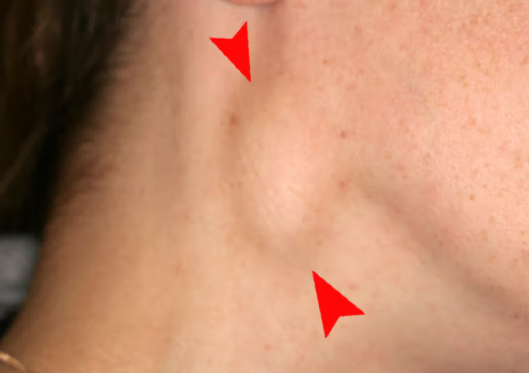
        • Painless lump: A swelling in the front of the neck that doesn’t hurt is the most common early sign and the absence of pain is exactly what makes people leave it alone for months thinking something serious would feel worse than this does.
        • Voice changes: Hoarseness or a voice that sounds different without a cold explaining it and doesn’t clear up in two to three weeks needs investigating because the nerve running right next to the thyroid can get compressed or invaded by a tumour that’s still small enough to treat well.
        • Swallowing issues: A persistent sensation of something sitting in the throat or actual difficulty swallowing that keeps coming back without an obvious cause can come from a thyroid tumour pressing on the oesophagus and it’s the kind of symptom that deserves a proper answer not a fourth week of antacids.
        • Swollen neck node: A lymph node in the neck that stays enlarged for more than a few weeks without an infection driving it is worth taking seriously because thyroid cancer spreads to neck nodes early and sometimes the swollen node is the first thing the patient actually notices before they find the primary tumour.

        Almost every thyroid cancer patient looking back says there was a point where they knew something was different and they waited anyway and almost all of them wish they hadn’t. Thyroid cancer treatment at a specialist surgical oncology centre starts with the diagnostic workup that actually tells you whether what you’re feeling needs treatment, surveillance or nothing to worry about.

        What Should You Do If You Notice These Signs?

        These are the steps that actually move things forward when you notice potential thyroid cancer symptoms:

        • Stop waiting: A neck lump that’s been there for more than three to four weeks without a recent infection explaining it isn’t going to tell you anything more useful by sitting with it another month and getting an ultrasound done is straightforward and not something to keep putting off.
        • Ultrasound first: Thyroid ultrasound is where the diagnostic process starts for a neck lump or suspected thyroid nodule and it gives the specialist information about size, shape, characteristics and next steps that physical examination simply cannot provide on its own.
        • Fine needle aspiration if needed: A suspicious nodule on ultrasound leads to fine needle aspiration cytology to get cells for pathology and this is a quick outpatient procedure that gives you a real answer to what you’re dealing with rather than a clinical opinion that something looks probably fine.
        • See someone who operates on thyroid cancer: A general physician can order an ultrasound but a surgical oncologist who operates on thyroid cancer regularly reads the imaging differently, recognises the borderline presentations that get missed elsewhere and can tell you what the actual management options look like for your specific findings.

        Whether your symptoms need urgent investigation, active surveillance or reassurance is a question that needs your ultrasound findings and a specialist who sees enough thyroid cases to know the difference. Oral cancer treatment at specialist oncology centres covers the full head and neck spectrum where early detection across all head and neck cancers is built into how serious centres approach patient care.

        Why Choose Dr. Sandeep Nayak for Cancer Treatment?

        Dr. Sandeep Nayak has been diagnosing and treating thyroid cancer for over 24 years and built RABIT specifically so thyroid cancer patients could have their cancer removed completely without carrying a visible scar on their neck for the rest of their life. He chairs Oncology Services across Karnataka and sees patients at MACS Clinic in Bangalore. Dr. Nayak will look at your ultrasound, your cytology and everything else on the table and tell you honestly whether you need surgery, active surveillance or something in between rather than giving every patient with a neck lump the same answer.

        Frequently Asked Questions

        What are the early signs of thyroid cancer?

        Painless neck lump, voice changes without infection explaining them, persistent swallowing difficulty and enlarged neck nodes that don’t resolve are the main early signs.

        Does thyroid cancer hurt in the early stages?

        Usually no and that’s exactly why people leave neck lumps alone for months thinking something cancer-related would hurt more than this does.

        What should I do if I find a lump in my neck?

        Get a thyroid ultrasound and see a specialist if the lump has been there more than three to four weeks without a recent infection causing it.

        Can thyroid cancer be cured if caught early?

        Yes, early thyroid cancer caught before significant spread has excellent outcomes with the right surgery and follow-up at a specialist

        Reference links:

        1. National Cancer Institute. Thyroid Cancer Treatment. https://www.cancer.gov/types/thyroid/patient/thyroid-treatment-pdq
        2. American Cancer Society. Thyroid Cancer. https://www.cancer.org/cancer/types/thyroid-cancer.html
          • Disclaimer: The information shared in this content is for educational purposes and not for promotional use.

          What Are the Risks of Robotic Cancer Surgery?

          What Are the Risks of Robotic Cancer Surgery?

          Robotic cancer surgery has real risks and patients who go into it thinking the robot makes everything safer than open surgery are going in with incomplete information because bleeding still happens, organs still get injured, anaesthesia still carries its own risks and sometimes mid-procedure the whole thing converts to open anyway, so understanding what you’re actually signing up for rather than just the sales pitch version of robotic surgery is genuinely part of making a proper decision about your treatment.

          According to Prof. Dr. Sandeep Nayak, Surgical Oncologist in India, “Robotic surgery reduces certain risks significantly compared to open surgery but it doesn’t eliminate surgical risk and patients should understand both sides of that before they decide.”

          What Are the Main Risks of Robotic Cancer Surgery?

          These are the key risks patients need to understand before agreeing to robotic cancer surgery:

          • Bleeding: Robotic surgery cuts blood loss down significantly in most cases but major vessels sit in the operating field throughout and a vascular injury during dissection is serious, hard to manage robotically and often the reason a case converts to open in a hurry.
          • Going open mid-surgery: Sometimes the surgeon switches to open surgery because of bleeding, poor visibility, adhesions from previous operations or anatomy that just doesn’t cooperate and patients who find out about this possibility for the first time in recovery are patients who weren’t properly prepared.
          • Port site problems: The small incisions for the robotic ports can develop infection, hernia or wound breakdown and while these are far less dramatic than open wound complications they’re not zero and patients with diabetes or slow healing are at meaningfully higher risk than they might expect.
          • Positioning and anaesthesia: Robotic procedures often run long and require steep positioning that puts real pressure on the body over hours and the combination of extended anaesthesia time and that positioning causes nerve compression, cardiovascular stress and pressure injuries particularly in older patients or those who aren’t in great shape going in.

          The risks of robotic surgery are generally lower than open surgery for the right patient done by the right surgeon but lower is not zero and a surgeon who tells you robotic surgery carries no significant risks is leaving things out. Robotic cancer surgery at a specialist surgical oncology centre means those risks get managed by a team doing this at real volume who’ve seen complications before and know what to do when they show up.

          What Risks Are Specific to the Cancer Type Being Treated Robotically?

          These are the procedure-specific risks that change depending on which cancer is being operated on:

          • Rectal cancer: The nerves controlling bladder function and sexual function run right through the dissection plane in low pelvic rectal surgery and nerve injury causing urinary retention or sexual dysfunction after the operation is a risk whose severity is directly tied to surgeon experience and technique in that specific space.
          • Thyroid cancer: Robotic thyroid surgery runs instruments through a longer tunnel than open neck surgery and injury to the recurrent laryngeal nerve affecting voice quality is a real risk in any thyroidectomy approach including the robotic ones regardless of how the incision is hidden.
          • Prostate cancer: Urinary incontinence and erectile dysfunction after robotic prostatectomy are genuine outcomes that happen at rates that vary significantly between surgeons and centres and whether nerve sparing was truly achieved or just attempted matters enormously to what the patient lives with afterward.
          • Colorectal cancer: Anastomotic leak where the rejoined bowel opens up is a risk in any colorectal reconstruction whether done robotically or not and while robotic precision might reduce leak rates in some settings it doesn’t make the risk disappear in low pelvic joins where the conditions are most demanding.

          What the specific risks mean for your cancer type, your age, your fitness and your comorbidities is a conversation that needs your actual case in front of a surgeon who has enough volume to quote you real numbers rather than averages from someone else’s data. Laparoscopic cancer surgery covers the full minimally invasive spectrum at specialist centres where your individual risk profile gets properly weighed against the benefits before any decision gets made.

          Why Choose Dr. Sandeep Nayak for Cancer Treatment?

          Over 15 years of robotic cancer surgery. Dr. Sandeep Nayak knows what the complication rates actually look like from personal case volume not from reading other people’s published data and that’s the difference between a surgeon who can tell you the real risks and one who’s reciting statistics. He chairs Oncology Services across Karnataka and sees patients at MACS Clinic in Bangalore. Dr. Nayak will tell you honestly whether robotic surgery is the right approach for your case, what the risks actually are for your specific procedure and what the alternatives look like because patients making a genuine decision about cancer treatment deserve that conversation not a pitch.

          Frequently Asked Questions

          What are the risks of robotic cancer surgery?

          Bleeding, infection, conversion to open surgery, anaesthesia and positioning complications and procedure-specific risks like nerve injury or anastomotic leak.

          Is robotic cancer surgery safer than open surgery?

          For the right patients and procedures generally yes but it reduces risk rather than eliminating it and surgeon volume and experience significantly affect the numbers.

          What causes conversion from robotic to open surgery?

          Bleeding that can’t be managed robotically, poor visibility, dense adhesions or unexpected anatomy that makes continuing robotically unsafe.

          Who faces higher risk with robotic cancer surgery?

          Older patients, those with significant health conditions, prior abdominal surgery with adhesions or procedures that run very long carry meaningfully higher complication risk.

          Reference links:

          1. National Cancer Institute. Surgery to Treat Cancer. https://www.cancer.gov/about-cancer/treatment/types/surgery
          2. American Cancer Society. Surgery for Cancer. https://www.cancer.org/cancer/managing-cancer/treatment-types/surgery.html
            • Disclaimer: The information shared in this content is for educational purposes and not for promotional use.