This website is being reviewed and updated in line with the National Medical Commission (NMC) guidelines on ethical advertising and public communication by registered medical practitioners.
support@macsclinic.com
+91 9482202240
Does Hepatitis B or C Increase Liver Cancer Risk?

Does Hepatitis B or C Increase Liver Cancer Risk?

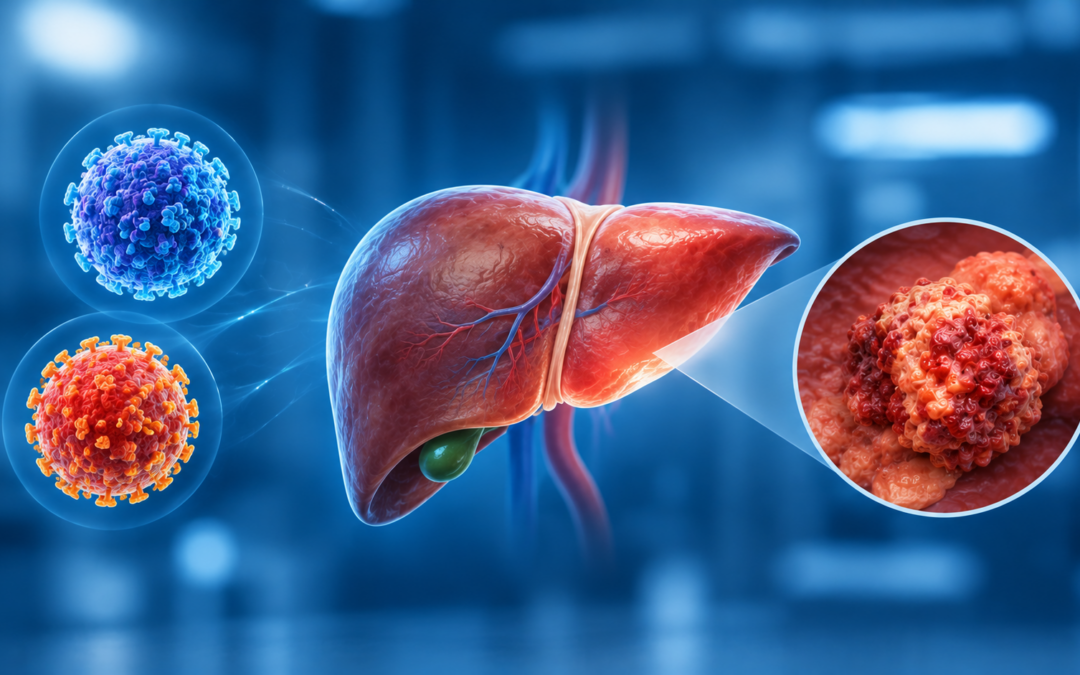
Yes, and the numbers are hard to ignore. Hepatitis B accounts for roughly 40 to 50 percent of liver cancer cases in India, hepatitis C for another 12 to 32 percent. Together, these two viruses sit behind the majority of hepatocellular carcinoma diagnosed in the country. One hospital-based study found the risk of liver cancer jumped more than fourteen-fold in hepatitis B positive men compared to the general population. Cirrhosis usually comes first. Cancer, for a lot of these patients, comes after.

According to Prof. Dr. Sandeep Nayak, Surgical Oncologist in India, “hepatitis doesn’t just damage the liver quietly for years, it rewires the risk entirely, which is why every hepatitis B or C patient needs liver cancer screening built into their routine care, not an afterthought.”

Living with hepatitis B or C and never been screened for liver cancer?

How Much Does Hepatitis Actually Raise Liver Cancer Risk?

Big numbers. Bigger than most people realize until they see them written down.

  • Hepatitis B : Close to half of all liver cancer cases in India trace back to hepatitis B, somewhere between 40 and 50 percent depending on the study.
  • Hepatitis C : Smaller share, still huge. 12 to 32 percent of cases, and that range keeps shifting as more data comes in.
  • The Multiplier : One Tata Memorial study found hepatitis B positive men were over fourteen times more likely to get liver cancer. Fourteen times.
  • Cirrhosis First : Most of these cancers don’t appear out of nowhere. Roughly 80 percent show up in a liver that’s already cirrhotic.

Regular liver cancer screening with AFP blood tests and ultrasound is what actually catches this early, while surgery is still on the table.

What Should Someone With Hepatitis Actually Do About This?

Knowing the risk is one thing. Acting on it is the part that saves lives.

  • Six-Monthly Screening : AFP testing and liver ultrasound every six months, that’s the global standard for anyone with chronic hepatitis B or C.
  • Antiviral Treatment : Suppressing the virus itself lowers cancer risk over time. It doesn’t erase it, but it helps, meaningfully.
  • Family Screening : Hepatitis B spreads within families. So relatives of a known carrier should get tested too, not just the patient.
  • Don’t Wait for Symptoms : By the time hepatitis-related liver cancer causes symptoms, it’s often already advanced. Screening exists precisely for that gap.

That screening gap is exactly what gets closed with structured surveillance, covered in more detail in early detection of liver cancer.

Why Choose Dr. Sandeep Nayak for Liver Cancer Treatment?

Prof. Dr. Sandeep Nayak brings over 24 years of surgical oncology experience to liver cancer, including laparoscopic and robotic-assisted hepatic resection at KIMS Hospital, Bangalore. Heads Oncology Services across Karnataka. Every hepatitis-positive patient gets AFP testing and imaging built into their care from the start, not added later. Every case reviewed through tumour board.

Patients with known hepatitis B or C get watched closely here, because waiting is exactly what this disease counts on. Call +91-9482202240 to book your consultation.

Frequently Asked Questions

Does hepatitis B cause liver cancer?

It’s linked to roughly 40 to 50 percent of liver cancer cases in India.

Does hepatitis C also increase liver cancer risk?

Yes, hepatitis C accounts for another 12 to 32 percent of cases in India.

How often should hepatitis patients be screened for liver cancer?

Every six months, using AFP blood tests and liver ultrasound imaging.

Can treating hepatitis lower liver cancer risk?

Yes, antiviral treatment meaningfully reduces risk, though it doesn’t eliminate it.

References

  1. Spectrum of Hepatitis B and Hepatitis C-Related Cancers in India, PubMed
  2. World Health Organization, Hepatitis B Fact Sheet

Disclaimer: This blog is for informational and educational purposes only and is not a substitute for professional medical advice or diagnosis.


What is the Difference Between Colon Polyp and Colon Cancer?

What is the Difference Between Colon Polyp and Colon Cancer?

A colon polyp isn’t cancer. Not yet, anyway. It’s a small clump of extra tissue growing on the lining of the colon, mostly harmless, mostly silent. Colon cancer is different. That’s when cells inside a polyp break through the wall they’re supposed to stay behind and start invading deeper tissue. Most polyps never get there. Some do, and it usually takes years, not weeks.

According to Prof. Dr. Sandeep Nayak, Surgical Oncologist in India, “A Polyp is the warning, not the disease, remove it in time and colon cancer simply never gets the chance to happen.”

Had a Polyp before, or never been screened at all?

What Actually Makes a Polyp Different From Cancer?

Same starting point. Very different endings, most of the time.

  • Definition : A polyp is just tissue growing where it shouldn’t, sitting on the surface, minding its own business until someone finds it.
  • The Line : Cancer starts the moment those cells push through the muscularis mucosae, that thin wall a polyp is never supposed to cross.
  • Timeline : Ten to fifteen years, on average. That’s roughly how long it takes a polyp to turn, and plenty never turn at all.
  • Not All Polyps : Tubular ones barely worry anyone. Villous ones? Different story, malignancy risk climbs to around 40 percent depending on size.

Regular colonoscopy screening is what catches a polyp while it’s still just a polyp, before that ten-year clock ever finishes running.

So When Should a Polyp Actually Worry You?

Size matters here. So does type. So does what the biopsy actually says.

  • Size Risk : Under a centimetre? Risk sits around 1 percent. Past two centimetres, it jumps to roughly 50.
  • Symptoms : Polyps rarely announce themselves. Cancer does, eventually, bleeding, anemia, bowel habits that just won’t settle.
  • Removal Changes Everything : Take the polyp out during colonoscopy and that’s usually the end of the story, no further treatment needed at all.
  • Multiple Polyps : More polyps, more mutations happening at once, and that pushes overall risk higher even if each one looks small on its own.

That’s exactly the window screening is built to exploit, something covered in more depth in early screening for colon cancer.

Why Choose Dr. Sandeep Nayak for Colon and Rectal cancer?

Prof. Dr. Sandeep Nayak has been treating colon and rectal cancer for over 24 years now. Polyps, early tumours, advanced disease, he’s seen the whole spectrum. Chairman of Oncology Services across Karnataka. Runs Surgical Oncology and Robotic Surgery at KIMS Hospital, Bangalore. Every case still goes through tumour board first.

Patients get looked at properly, not rushed through a checklist. Catch it as a polyp, and surgery might not even come up. Call +91-9482202240 to book your consultation.

Frequently Asked Questions

Is a colon polyp the same as colon cancer?

No, a polyp is benign tissue that can sometimes turn cancerous over time.

How long does it take a polyp to become cancer?

Usually five to fifteen years, though many polyps never progress at all.

Do all colon polyps need to be removed?

Most are removed during colonoscopy regardless, since removal prevents future risk.

What type of polyp is most likely to become cancer?

Villous adenomas carry the highest risk, especially when larger than two centimetres.

References

  1. National Cancer Institute, Colorectal Cancer Screening (PDQ)
  2. American Cancer Society, Understanding Colon Polyps in a Pathology Report

Disclaimer: This blog is for informational and educational purposes only and is not a substitute for professional medical advice or diagnosis.
What Is the Link Between HPV and Throat Cancer?

What Is the Link Between HPV and Throat Cancer?

HPV-16 is now the top cause of throat cancer in a lot of the world. Not tobacco. Not alcohol. A virus. It shows up in the tonsils, the base of the tongue, throat tissue nearby. And here’s the strange part: these cancers behave better than the ones smoking used to cause almost exclusively in this spot. Better response to treatment. Better odds at diagnosis. Most people who catch the virus never see cancer at all, their immune system just clears it and moves on.

According to Prof. Dr. Sandeep Nayak, Surgical Oncologist in India, “HPV-related throat cancer behaves like an entirely different disease, one that responds better to treatment and carries a far better prognosis than the tobacco-driven cancers we used to see almost exclusively in this location.”

Sore throat that won’t quit, or a lump that won’t go away? Don’t sit on it.

How Does HPV Actually Cause Throat Cancer?

Doesn’t happen overnight. Takes years, usually. Only a tiny slice of infections ever get there.

  • Viral Strain HPV-16 does most of the damage here, and a handful of other high-risk strains pick up the remaining cases.
  • Transmission Spreads through intimate contact. No visible signs needed on either side, none at all.
  • Persistent Infection Most infections clear on their own within a year or two. Cancer only shows up when the virus refuses to leave, sometimes for decades.
  • Tumour Site Tonsils, base of tongue, that’s where this one lives. Rare almost everywhere else in the mouth or throat.

Confirming HPV status is step one now, and that shapes exactly how TORS treatment gets planned for tumours in this location. A p16 test on the biopsy tells you what you’re dealing with.

Does HPV Status Actually Change Treatment or Outcomes?

HPV status isn’t a side note anymore. It runs the whole show.

  • Better Prognosis HPV-positive tumours respond better, plain and simple, and the survival numbers back that up clearly against HPV-negative disease at the same stage.
  • Patient Profile Often healthier people getting this one. No smoking history. No years of heavy drinking either.
  • Treatment Response Chemo works. Radiation works. Works so well, in fact, that some patients now get less of both, not more, what doctors call de-escalated protocols.
  • Recurrence Risk Three years out? HPV-positive cases barely look back. HPV-negative ones aren’t so lucky.

That gap is exactly why HPV status gets watched so closely after surgery, and cancer recurrence following TORS covers the rest of that story.

Why Choose Dr. Sandeep Nayak for Throat Cancer Treatment?

Prof. Dr. Sandeep Nayak has been doing this for over 24 years now. HPV-related, HPV-negative, doesn’t matter, he’s treated both. Robotic surgery for tumours in the tonsils and base of tongue is where he spends most of his time. Heads Oncology Services across Karnataka. Runs Surgical Oncology and Robotic Surgery at KIMS Hospital, Bangalore. Every case goes through tumour board first. No shortcuts.

Patients get a plan that factors in HPV status from day one, not some template pulled off a shelf. Call +91-9482202240 to book your consultation.

Frequently Asked Questions

Does HPV cause throat cancer?

Yes, HPV-16 is now the leading cause of throat cancer in many countries.

Is HPV-related throat cancer more treatable?

Yes, it generally responds better to treatment than HPV-negative disease.

How is HPV status confirmed in throat cancer?

A p16 test performed on the biopsy sample confirms HPV status.

Can the HPV vaccine prevent throat cancer?

Yes, vaccination before exposure significantly lowers the risk of infection.

References

  1. National Cancer Institute, HPV and Cancer
  2. Centers for Disease Control and Prevention, HPV and Oropharyngeal Cancer

Disclaimer: This blog is for informational and educational purposes only and is not a substitute for professional medical advice or diagnosis.
What Is the Survival Rate for Head and Neck Cancer?

What Is the Survival Rate for Head and Neck Cancer?

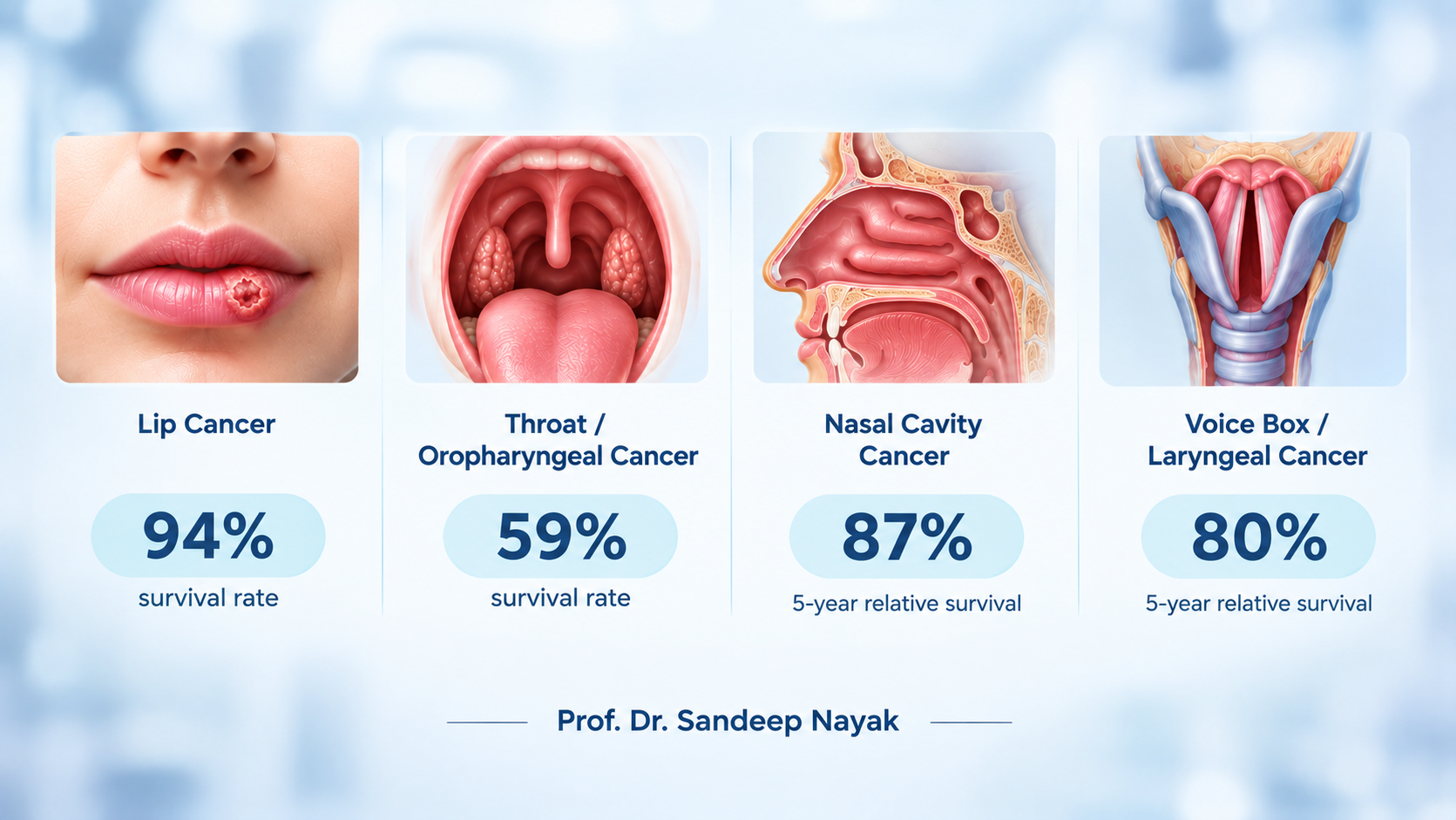
Head and neck cancer survival splits hard depending on where it started and how far it’s spread. Localized disease, still sitting in the original site, sees five-year survival close to 88 percent. Reach the nearby lymph nodes, that drops to around 69. Distant spread pulls it under 40. Overall, across every stage combined, survival sits near 69 percent. But site matters just as much as stage here.

According to Dr. Sandeep Nayak, surgical oncologist in India, head and neck cancer gets far easier to treat when it’s caught before the nodes light up. Location matters almost as much as stage here. A tongue tumor and a laryngeal one don’t behave the same way, and neither should the treatment plan.

Not sure what stage your case might be?

What Determines Survival at Each Stage?

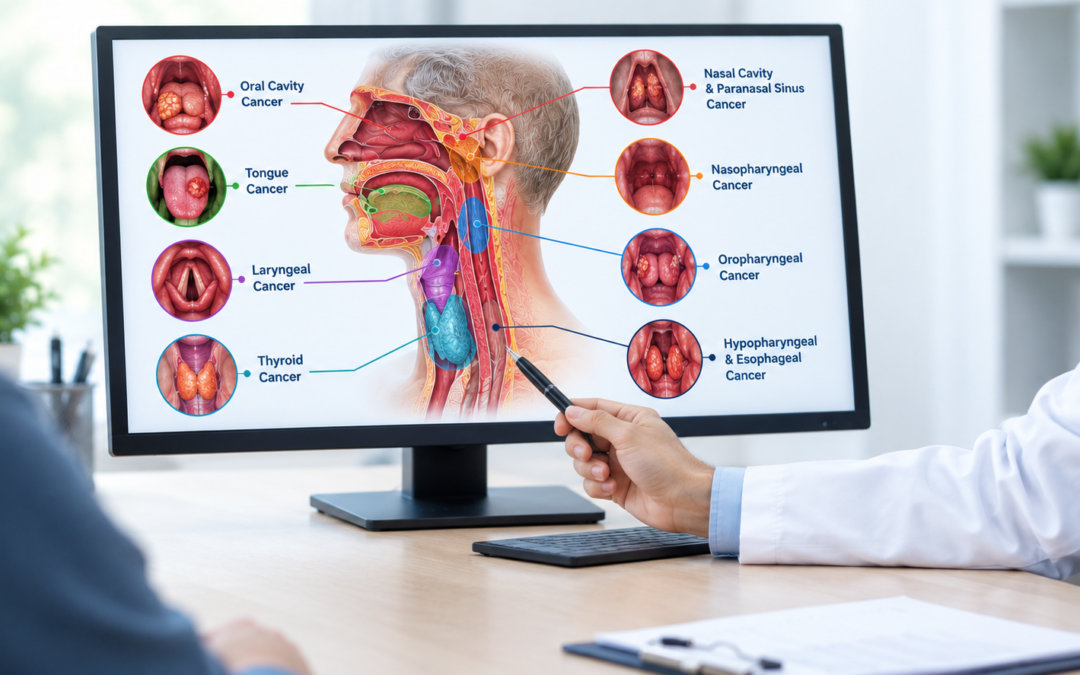
Site changes everything, honestly. Lip cancer, caught early, survives at 94 percent. Oropharyngeal? Barely 59, even localized, because it tends to hide near the tonsils and base of tongue where nobody’s looking. HPV status matters here too, more than most people expect.

Treatment gets built around exactly where the tumor sits and how far it’s reached, not just a stage number on a report. Every head and neck case gets read on its own terms, node by node, margin by margin.

Why Does Stage at Diagnosis Matter Much?

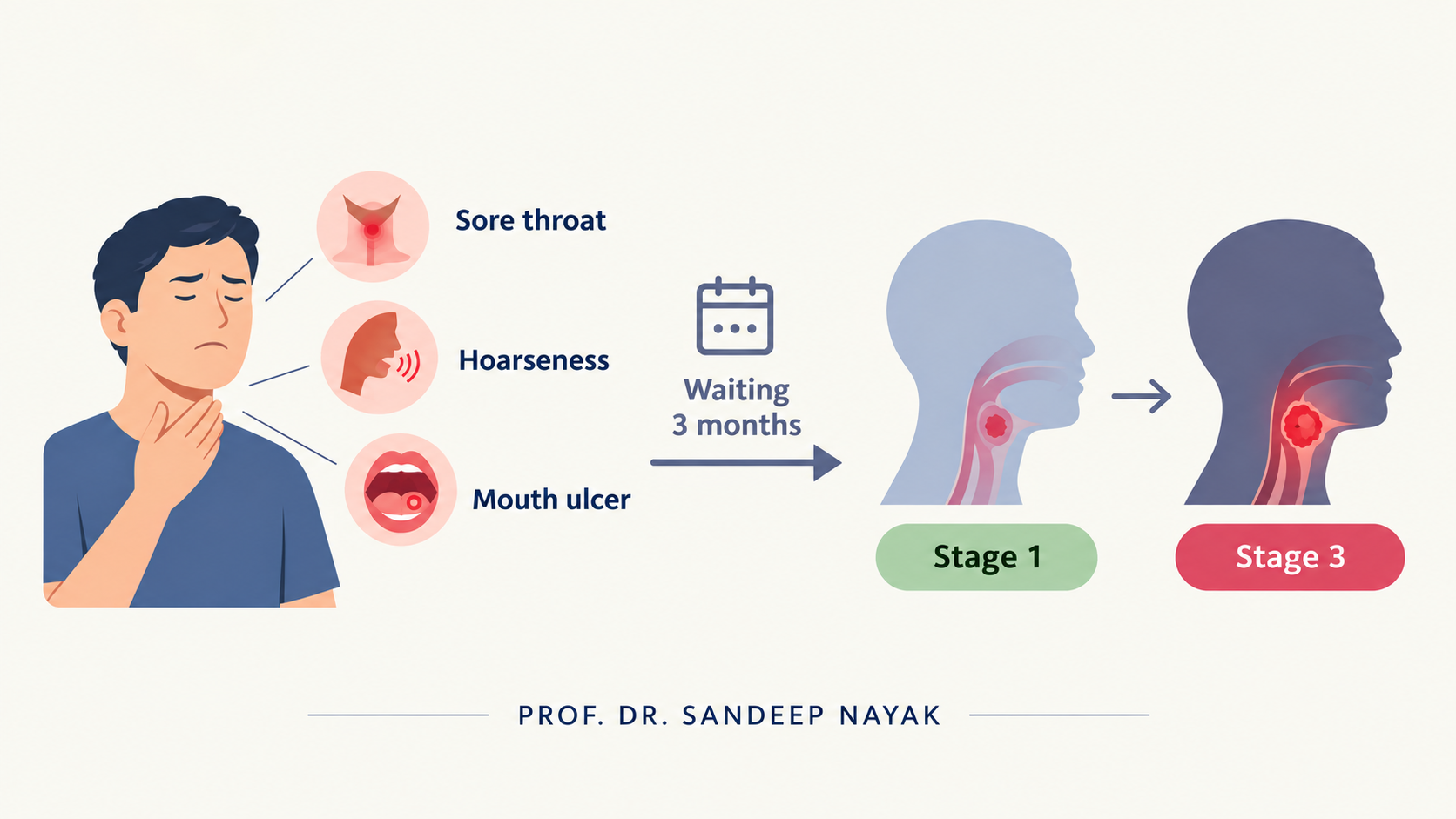
Most head and neck cancers get missed early because the symptoms look ordinary. A sore throat. Hoarseness. A mouth ulcer that won’t heal. Nobody panics over those, not at first.

That’s the problem. Waiting three months on a persistent lump or a voice that won’t come back is how stage 1 quietly turns into stage 3. Our piece on throat cancer symptoms lays out exactly what’s worth acting on.

Why Choose Dr. Sandeep Nayak for Head and Neck Cancer Treatment

Twenty four years in this specific anatomy. TORS, MIND neck dissection, RABIT thyroid surgery, Dr. Sandeep Nayak has built techniques used elsewhere in the field, not just performed them.

Mirror first. No shortcuts. Every case gets staged properly before anyone talks treatment. That’s what keeps recurrence down and function intact after surgery. No hype. Just outcomes.

Frequently Asked Questions

What is the five-year survival rate for head and neck cancer?

Overall, close to 69 percent. But it swings by site, from 94 percent for early lip cancer down to under 40 for distant spread of oropharyngeal disease.

Does HPV status affect head and neck cancer survival?

 Yes. HPV-positive oropharyngeal cancer generally responds better to treatment, with survival often exceeding 80 percent even at advanced stages.

Why is head and neck cancer often diagnosed late?

Early symptoms like a sore throat, hoarseness, or a mouth ulcer look ordinary, so people delay getting checked until the disease has progressed.

Does the tumor's location affect survival outcomes?

Yes. Lip and thyroid cancers tend to have high survival rates, while oropharyngeal and hypopharyngeal cancers are usually caught later and carry lower survival on average.

References

  1. Cancer Stat Facts: Oral Cavity and Pharynx Cancer – National Cancer Institute (SEER)
  2. Survival Rates for Head & Neck Cancers – Roswell Park Comprehensive Cancer Center

Disclaimer: This blog is for informational and educational purposes only and is not a substitute for professional medical advice or diagnosis.
What Is the Survival Rate for Cervical Cancer by Stage?

What Is the Survival Rate for Cervical Cancer by Stage?

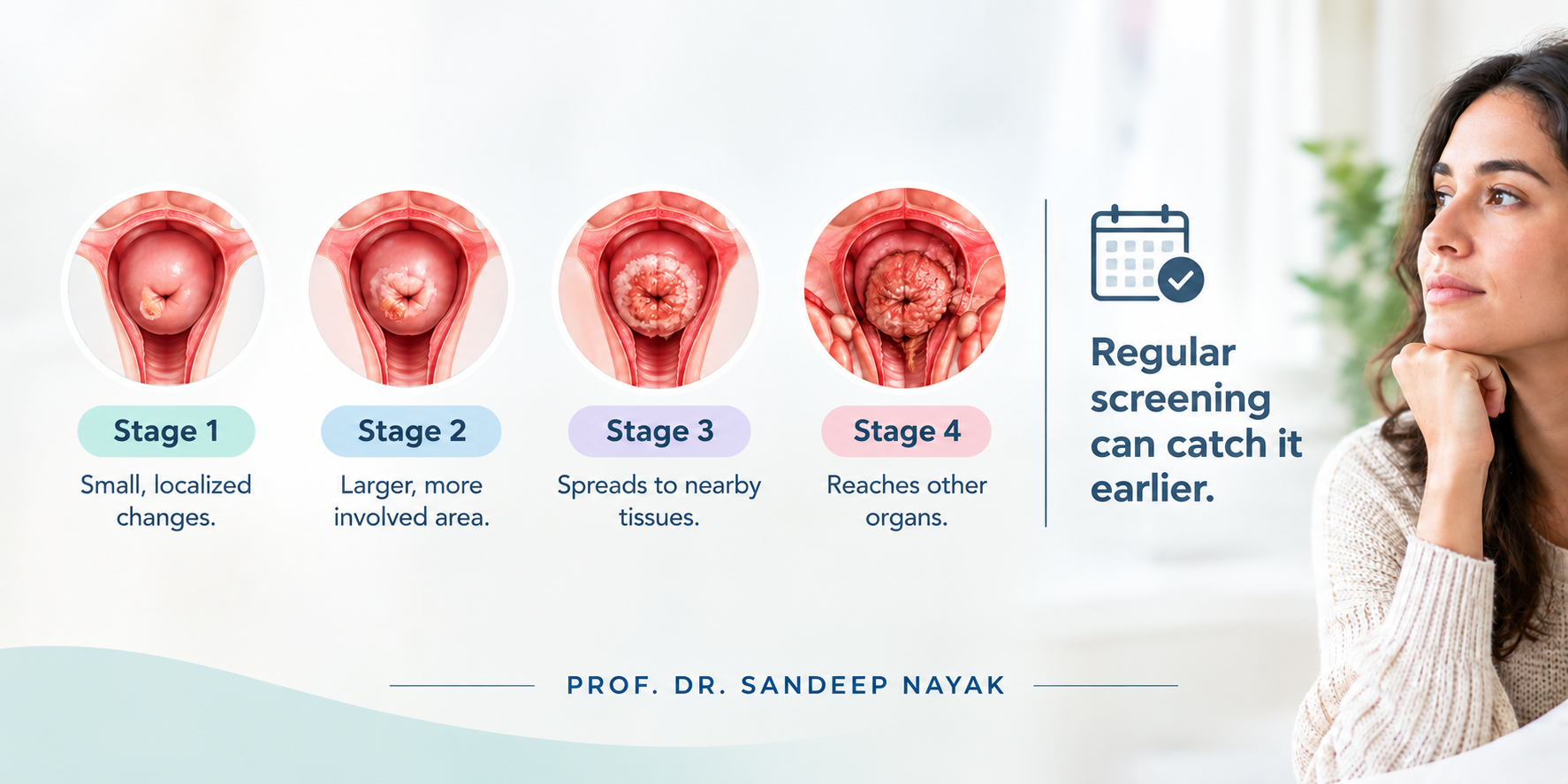
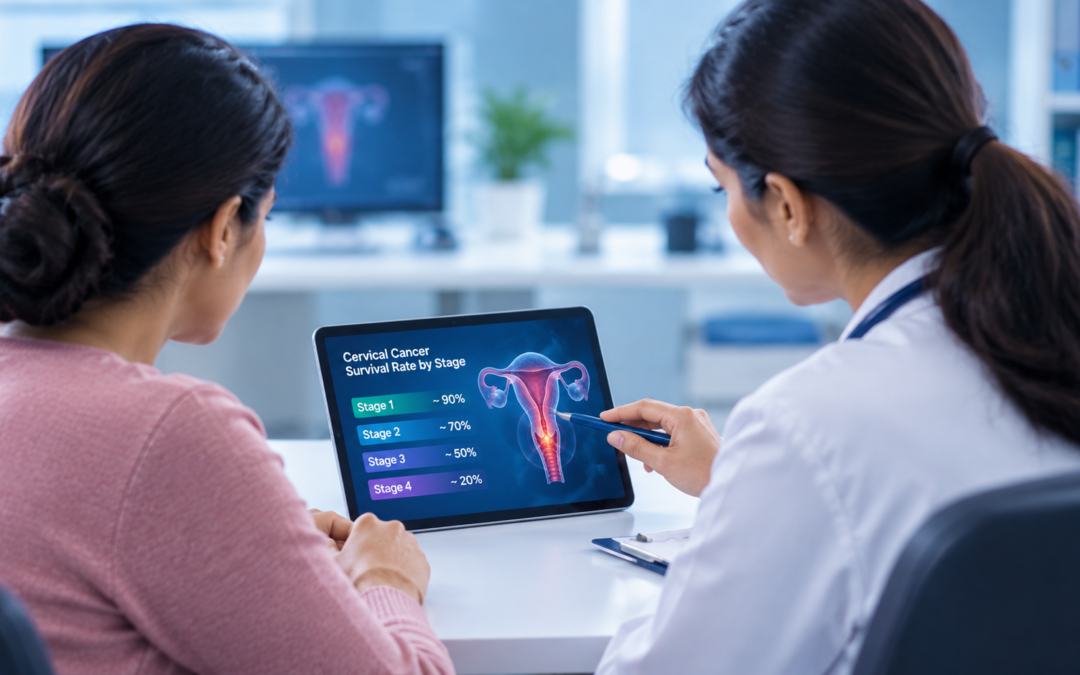
Stage decides almost everything here. Caught early, while it’s still sitting in the cervix, five-year survival is around 91 percent. Let it reach nearby lymph nodes, that number drops to 60. Distant spread, lungs, liver, bone, and you’re under 20 percent. Averaged across every stage, it’s close to 67. None of that is fixed. It moves with when it’s found. That’s really the whole story.

According to Dr. Sandeep Nayak, surgical oncologist in India, forget the percentage on the chart for a second. What actually matters is whether the cervical cancer gets caught before it leaves the cervix. Screening is the lever here, not luck. Catch it early and the odds swing hard in your favor.

Not sure what stage your case might be?

What Determines Survival at Each Stage?

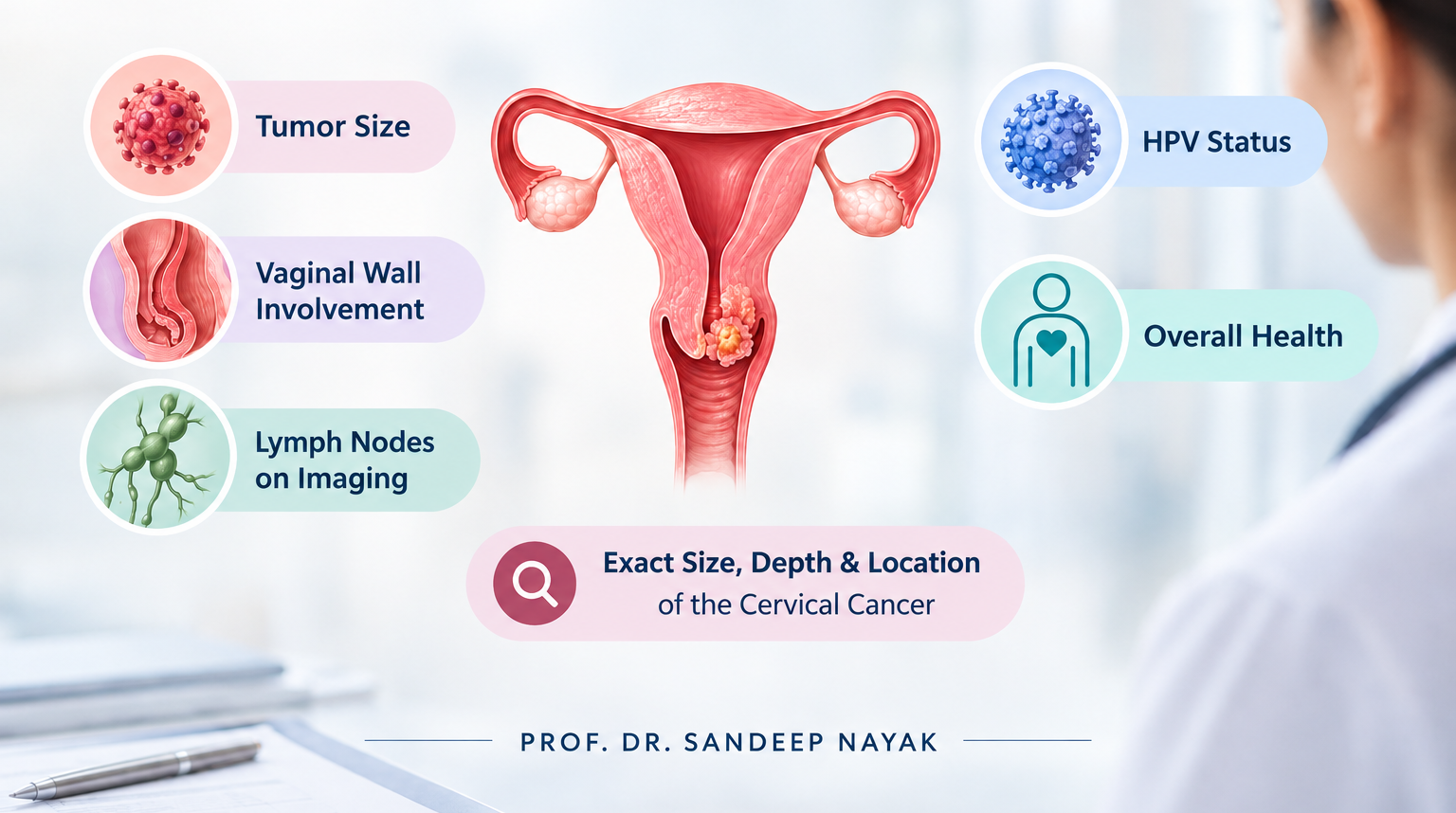
Stage isn’t the whole story. Tumor size. Whether it’s touched the vaginal wall. What the lymph nodes look like on imaging. HPV status. How healthy the patient is walking in. All of it counts, not just the stage number on a report.

Numbers only get you so far, though. Real treatment comes down to the cervical cancer‘s exact size, depth, where it sits. Every case reads differently once someone’s actually looked at the scans. No two plans look the same.

Why Does Stage at Diagnosis Matter Much?

Early cervical cancer doesn’t announce itself. No pain. No red flag. Nothing that sends anyone running to a clinic. By the time bleeding shows up, stage 1 has often quietly become stage 3.

That’s where people get lazy, skipping the yearly Pap smear test because nothing hurts yet. Big mistake, honestly. Our piece on the HPV vaccine gets into how prevention fits into all this.

Why Choose Dr. Sandeep Nayak for Cervical Cancer Treatment ?

Twenty four years doing this. Robotic radical hysterectomy, lymph node dissection, the full range. Dr. Sandeep Nayak starts every case with getting the stage right. No guessing. Then builds the plan around what that specific tumor actually needs.

Fingers and eyes, that’s it, backed by two decades of doing exactly this kind of surgery. Stage still calls the shots, sure. But a precise plan from someone who’s done this a thousand times over? That changes things. No hype. Just outcomes.

Frequently Asked Questions

What is the five-year survival rate for cervical cancer?

 Around 91 percent when it’s still localized. Drops to near 60 once it reaches nearby lymph nodes. Under 20 percent once it’s spread to distant organs.

Does HPV vaccination affect survival outcomes?

It lowers your risk of getting cervical cancer from covered HPV strains in the first place. Doesn’t replace screening if you’ve already been exposed.

Why is cervical cancer often caught late?

Early-stage disease barely causes symptoms. Most cases go unnoticed until bleeding or discharge shows up, and by then it’s often progressed.

Does age at diagnosis affect survival?

Yes, younger patients generally tolerate aggressive treatment better and tend to see stronger outcomes than those diagnosed later.

References

  1. Cancer Stat Facts: Cervical Cancer – National Cancer Institute (SEER)
  2. Cervical Cancer Survival Rates – American Cancer Society

Disclaimer: This blog is for informational and educational purposes only and is not a substitute for professional medical advice or diagnosis.
Call Now Button