
support@macsclinic.com
+91 9482202240
What Is Groin Lymph Node Dissection Surgery?

What Is Groin Lymph Node Dissection Surgery?

Groin lymph node dissection, also called inguinal block dissection, removes lymph nodes from the groin when cancer has spread there or carries a high risk of doing so. Surgeons use it most often for melanoma of the leg, penile cancer, and vulvar or other gynecological cancers. The procedure can be done through an open incision or through a minimally invasive technique called VEIL, and complication rates differ sharply between the two.

According to Dr. Sandeep Nayak, whose surgical practice focuses on minimally invasive oncologic surgery, “roughly 60% of open groin dissections run into wound-related complications, and that number drops sharply once you move to a minimally invasive approach.”

Diagnosed with a cancer that carries groin lymph node risk?

Why Is Groin Lymph Node Dissection Performed?

Surgeons recommend this procedure for a specific set of cancers where groin nodes are the first likely site of spread.

  • Penile Cancer — Cancer of the penis spreads early to the inguinal nodes, and removing them often decides whether the disease stays curable.
  • Vulvar Cancer — Vulvar cancers follow a similar pattern, draining first into the groin before moving further, which makes node status central to staging.
  • Leg Melanoma — Melanoma arising on the leg or foot drains toward the groin, so surgeons check and often remove these nodes once risk crosses a certain threshold.
  • Node Staging — Even without obvious spread, some patients need the nodes removed just to confirm the stage accurately, since imaging alone can miss small deposits.

An inguinal block or ileo-inguinal groin dissection is the standard procedure for these situations, and the extent removed depends on which nodes carry risk. Choosing the right extent upfront avoids a second, harder surgery later.

How Is the Surgery Performed?

Two broad approaches exist, and the choice between them changes recovery considerably.

  • Open Approach — The traditional open technique gives wide access but carries a high rate of wound breakdown, seroma, and prolonged nursing care afterward.
  • VEIL Technique — Video endoscopic inguinal lymphadenectomy removes the same nodes through small incisions, cutting wound complications while keeping the same nodal yield.
  • Node Removal — The count of nodes removed depends on cancer type, with melanoma and penile cancer sometimes needing both inguinal and iliac regions cleared.
  • Recovery Time — Patients treated with the minimally invasive route typically go home sooner and need far less wound care than those treated openly.

Groin lymph node involvement changes prognosis the same way it does in testicular cancer, where node status often drives the entire treatment plan. Discussing the surgical approach with a specialist before the operation matters just as much as the decision to operate.

Why Choose Dr. Sandeep Nayak For Groin Lymph Node Dissection?

Dr. Sandeep Nayak is a surgical oncologist with over 24 years of experience who pioneered the lateral approach to VEIL, a technique now practiced at cancer centres worldwide. He has performed more than 10,200 cancer surgeries and specializes in inguinal and iliac block dissections for penile, vulvar, and lower-limb skin cancers.

Choosing a surgeon experienced with VEIL matters, since the open technique still causes wound complications in roughly 60% of cases elsewhere. A dissection planned and executed correctly the first time avoids the extended nursing care that open surgery often demands.

Frequently Asked Questions

When is groin lymph node dissection needed?

It’s needed when penile, vulvar, or leg melanoma carries a confirmed or high risk of nodal spread.

Is VEIL safer than open groin dissection?

Yes, VEIL significantly lowers wound complications compared to the traditional open approach.

How long is recovery after groin lymph node dissection?

Open surgery needs weeks of wound care, while minimally invasive VEIL recovery is notably faster.

Does groin dissection affect leg swelling long-term?

Yes, lymphedema is a recognized long-term risk after removing groin lymph nodes.

References

    1. PubMed — Lymph Node Dissections for T3T4 Stage Penile Cancer Patients: Survival Benefits
    2. PubMed — Higher Rate of Lymphedema with Inguinal versus Axillary Lymph Node Dissection

Disclaimer: This blog is for informational and educational purposes only and is not a substitute for professional medical advice or diagnosis.

Can Testicular Cancer Be Treated Without Removing the Testicle?

Can Testicular Cancer Be Treated Without Removing the Testicle?

In some cases, yes. It’s called testis-sparing surgery, and it lets a surgeon remove just the tumour instead of the entire testicle. It’s not an option for everyone — it works best for small, well-defined tumours, for men with only one functioning testis, or for tumours affecting both sides, and only when hormone levels and tumour size fall within safe limits. For most patients, radical orchiectomy (removing the whole testicle) is still the standard, and it offers the most reliable cure rate. Testis-sparing surgery is kept for the specific situations where preserving hormone function and fertility potential is medically justified — not offered as a default alternative.

According to Prof. Dr. Sandeep Nayak, Robotic Cancer Surgery in Bangalore, the deciding factor isn’t how the tumour looks on imaging beforehand. It comes down to whether the tumour stays small and clearly contained — and that’s confirmed with a frozen section analysis during the surgery itself, not by the scan taken days or weeks earlier.

Not sure if your tumour qualifies for testis-sparing surgery?

What Makes a Tumour Suitable for Testis-Sparing Surgery?

Only a handful of clinical factors actually determine whether preserving the testicle is even on the table.

  • Size matters most. As a general rule, the lesion needs to be under 2 centimetres and take up less than half the testicle’s volume before sparing surgery is realistically considered.
  • A solitary testis changes the calculation. If the other testicle is missing or non-functional, losing the remaining one has a much bigger impact — so sparing surgery moves up the priority list whenever this is the case.
  • Bilateral tumours push things the same direction. When both testicles are affected, either at the same time or one after the other, the goal shifts toward preserving as much healthy tissue as possible on at least one side.
  • Hormones need to check out first. Testosterone and luteinizing hormone should sit within a healthy range going in. When they don’t, it’s usually a sign the disease is more diffuse than sparing surgery can address.

All of this gets worked out as part of a standard testicular cancer evaluation — well before anyone’s decided whether the testicle can be saved.

What Happens to Fertility After This Surgery?

Preserving testicular tissue puts the fertility conversation on very different footing than complete removal does.

  • Hormone production usually holds up. Most patients keep normal hormone levels afterward, simply because enough healthy tissue stays behind and keeps functioning.
  • About half go on to father children naturally. That number moves around a lot depending on how much tissue was preserved and how healthy the sperm was to begin with.
  • Radiotherapy can complicate things. If residual pre-cancerous cells show up in what’s left of the tissue, adjuvant radiotherapy sometimes becomes necessary — and that step on its own can chip away at fertility further.
  • Sperm banking is still worth discussing. Even when the surgery itself preserves fertility, chemotherapy later on can affect sperm independently, so it’s a conversation worth having upfront rather than after the fact.

For a lot of men, this whole conversation actually starts earlier — with questions about why testicular cancer shows up in young men in the first place.

Why Choose Dr. Sandeep Nayak For Testicular Cancer?

Dr. Sandeep Nayak holds DNB qualifications in Surgical Oncology and General Surgery, along with a fellowship in Laparoscopic and Robotic Onco-Surgery, and has spent over 24 years handling genuinely complex oncological cases. He currently heads Oncology Services across Karnataka and leads Surgical Oncology and Robotic Surgery at KIMS Hospital. He’s also the surgeon behind the RABIT, MIND, and L-VEIL techniques.

At MACS Clinic, every testicular cancer case is checked for organ preservation potential before radical surgery is assumed to be the only route forward — because a tumour that looks straightforward on a scan can still change the plan once the frozen section results come back mid-surgery. Patients leave the consultation understanding exactly why one option was chosen over another. Nobody’s left guessing.

Frequently Asked Questions

Is testis-sparing surgery available for all testicular tumours?

No — only small, well-contained tumours that meet strict size and hormone criteria qualify.

Does testis-sparing surgery affect testosterone production?

Not usually in any significant way, since enough healthy tissue typically stays functional afterward.

Can I still father children after testis-sparing surgery?

Many men can, though it really depends on how much tissue was preserved and the health of the sperm.

Is radiotherapy always needed after testis-sparing surgery?

No — only when residual pre-cancerous cells turn up in the leftover tissue.

References

  1. National Cancer Institute: Prostate Cancer Treatment. https://www.cancer.gov/types/prostate
  2. World Health Organisation: Cancer. https://www.who.int/news-room/fact-sheets/detail/cancer

Disclaimer: This blog is for informational and educational purposes only and is not a substitute for professional medical advice or diagnosis.
Is Nerve-Sparing Surgery Possible in Prostate Cancer?

Is Nerve-Sparing Surgery Possible in Prostate Cancer?

Yes, nerve-sparing surgery is possible for many prostate cancer patients, provided the tumour hasn’t grown into the neurovascular bundles running along either side of the gland. Not always, though. It’s a case-by-case call. The decision comes down to cancer stage, tumour location, and how aggressive things look on biopsy. When it’s feasible, surgeons preserve the nerves that handle erectile function and continence while still clearing the cancer completely. When it isn’t, complete removal wins. Every time.

According to Prof. Dr. Sandeep Nayak, Robotic Cancer Surgery in Bangalore, “Nerve sparing only works when the cancer’s location actually allows it, and that’s something the anatomy on the table decides, not the scan taken beforehand.”

Worried about losing function after prostate cancer surgery?

What Determines Whether Nerve-Sparing Is Possible?

A handful of concrete factors decide this. Case by case, never by default.

  • Tumour location. If the cancer sits close to where the neurovascular bundles run, surgeons often sacrifice function on that side to stay ahead of the disease.
  • Cancer stage. Early, organ-confined tumours leave far more room to work with than disease that’s already pushed past the capsule.
  • Gleason score. Because leaving cancer behind costs more than losing function ever would, higher grade disease pushes surgeons toward a wider resection margin.
  • Baseline function. Men with some erectile difficulty going in simply don’t gain as much from nerve sparing, so that gets weighed upfront, honestly.

A detailed prostate evaluation covering imaging and biopsy mapping decides this, not guesswork, before surgery ever begins.

How Well Does Nerve-Sparing Surgery Preserve Function?

Results vary considerably here. Worth being honest about that range instead of promising a number that won’t hold for everyone.

  • Bilateral sparing. Preserving both neurovascular bundles pushes potency recovery meaningfully higher, sometimes well above 70% in younger, healthier men.
  • Unilateral sparing. Saving just one bundle still helps, though the numbers drop and recovery tends to stretch out longer.
  • Recovery timeline. Nerves heal slowly, and it can take six months to two years for function to return, which is normal, not a failure of the surgery.
  • Robotic precision. So magnified 3D visualisation lets surgeons dissect closer to the nerves without the thermal damage older techniques often caused.

Much of this overlaps with what gets discussed during stage 2 prostate cancer planning too, where staging shapes strategy directly.

Why Choose Dr. Sandeep Nayak For Prostate Cancer?

Dr. Sandeep Nayak has performed over 10,200 cancer surgeries across 24 years, with deep experience in robotic and laparoscopic prostate cancer surgery where nerve preservation genuinely matters. His training spans several advanced minimally invasive techniques. And prostate cases get planned with that same precision, the kind built from thousands of other complex oncology surgeries.

Patients get a clear, individualised answer about their nerve-sparing candidacy before they’re ever on the table. Not a vague reassurance, and not a guess either. And when sparing isn’t safely possible, that gets said plainly too. Because oncological control always comes first. No exceptions.

Frequently Asked Questions

Can nerve-sparing surgery be done robotically?

Yes, robotic-assisted prostatectomy is commonly used for nerve-sparing surgery due to its precision.

How long does it take to recover erectile function?

Recovery can take six months to two years, varying by patient and nerve-sparing extent.

Does nerve-sparing surgery increase cancer recurrence risk?

When properly selected, it doesn’t significantly raise recurrence risk versus standard surgery.

Is nerve-sparing surgery suitable for all prostate cancer stages?

No, it’s typically reserved for early-stage, organ-confined tumours without extracapsular extension.

References

  1. National Cancer Institute: Prostate Cancer Treatment. https://www.cancer.gov/types/prostate
  2. World Health Organisation: Cancer. https://www.who.int/news-room/fact-sheets/detail/cancer

Disclaimer: This blog is for informational and educational purposes only and is not a substitute for professional medical advice or diagnosis.

Ovarian Cancer: Can I Still Get Pregnant?

Ovarian Cancer: Can I Still Get Pregnant?

Yes, some ovarian cancer patients can still get pregnant, through an approach called fertility-sparing surgery that preserves the uterus and at least one healthy ovary while removing the cancer. This applies mainly to Stage IA disease, confined to one ovary, with a favourable grade and no sign of spread. Patient selection comes down to imaging, tumour markers, and pathology confirmed right there in surgery. Once the disease turns advanced or high-grade, complete removal stays the standard, closing off that option.

According to Prof. Dr. Sandeep Nayak, Best Surgical Oncologist in Bangalore, fertility preservation only makes sense when the cancer stays fully within safe margins. Confirming that on the table, not from a scan, is what actually protects the patient. That’s the whole point.

Diagnosed with ovarian cancer but still hoping to become a mother?

What Criteria Decide Fertility-Sparing Eligibility?

A handful of factors have to line up first. Not just one.

  • Stage confined. The cancer sits entirely within one ovary, and imaging plus direct surgical exploration rule out any spread to the other side, the uterus, or nearby peritoneal surfaces.
  • Grade matters a lot. Low-grade, well-differentiated tumours qualify far more often than aggressive ones, because grade tracks almost directly with how likely the cancer comes back.
  • Capsule intact. Simple as that. Nothing ruptured during removal keeps the risk low enough to justify leaving healthy tissue in place.
  • Clean washings. Always. Peritoneal fluid and biopsy samples taken mid-surgery have to come back completely free of malignant cells before anyone finalises anything.

Confirming all of this usually happens during pre-operative ovarian surgery planning, well before the final call on what gets preserved.


What Happens After Fertility-Sparing Surgery?

Care afterward shifts toward watching what’s left and mapping out what reproduction looks like next.

  • Chemotherapy, sometimes. Certain tumour subtypes and grades still call for it even when the uterus and one ovary have been kept.
  • Egg freezing helps. So when chemo can’t be skipped, talking through egg or embryo freezing beforehand protects fertility from what treatment might do to what’s left.
  • Years of scans. Regular pelvic imaging and tumour marker checks continue well beyond surgery. Recurrence here is rare. Not impossible, just rare.
  • Timing the pregnancy. Most oncologists say wait until surveillance confirms things are stable. The exact window shifts case by case, though. And honestly, that’s a conversation worth having early, not after the fact.

Patients often land here after an incidental finding first raised concern. That’s also where understanding ovarian cysts becomes part of the bigger picture.

Why Choose Dr. Sandeep Nayak For Ovarian Cancer?

Dr. Sandeep Nayak holds DNB qualifications in Surgical Oncology and General Surgery, with a fellowship in Laparoscopic and Robotic Onco-Surgery and over 24 years across genuinely complex oncological cases. He heads Oncology Services across Karnataka, leads Surgical Oncology and Robotic Surgery at KIMS Hospital, and he’s the one behind the RABIT, MIND, and L-VEIL surgical techniques.

Every ovarian cancer case at MACS Clinic goes through a full tumour board before fertility-sparing surgery is even offered. Because leaving healthy tissue behind only makes sense when the pathology genuinely backs it up. Patients who qualify walk into surgery knowing exactly what’s being preserved and why. Not a hopeful guess.

Frequently Asked Questions

Can all ovarian cancer patients have fertility-sparing surgery?

No, only early-stage, favourable-grade tumours confined to one ovary typically qualify.

Does fertility-sparing surgery increase recurrence risk?e

Slightly, in select cases, which is why long-term follow-up imaging stays essential

Can I still get pregnant after this surgery?

Yes, many patients conceive naturally, though it depends on individual factors.

Is chemotherapy still needed after fertility-sparing surgery?

Sometimes, depending on tumour grade and subtype, decided on a case-by-case basis.

References

References

  1. National Cancer Institute: Ovarian Cancer Treatment. https://www.cancer.gov/types/ovarian
  2. World Health Organisation: Cancer. https://www.who.int/news-room/fact-sheets/detail/cancer


Disclaimer: This blog is for informational and educational purposes only and is not a substitute for professional medical advice or diagnosis.

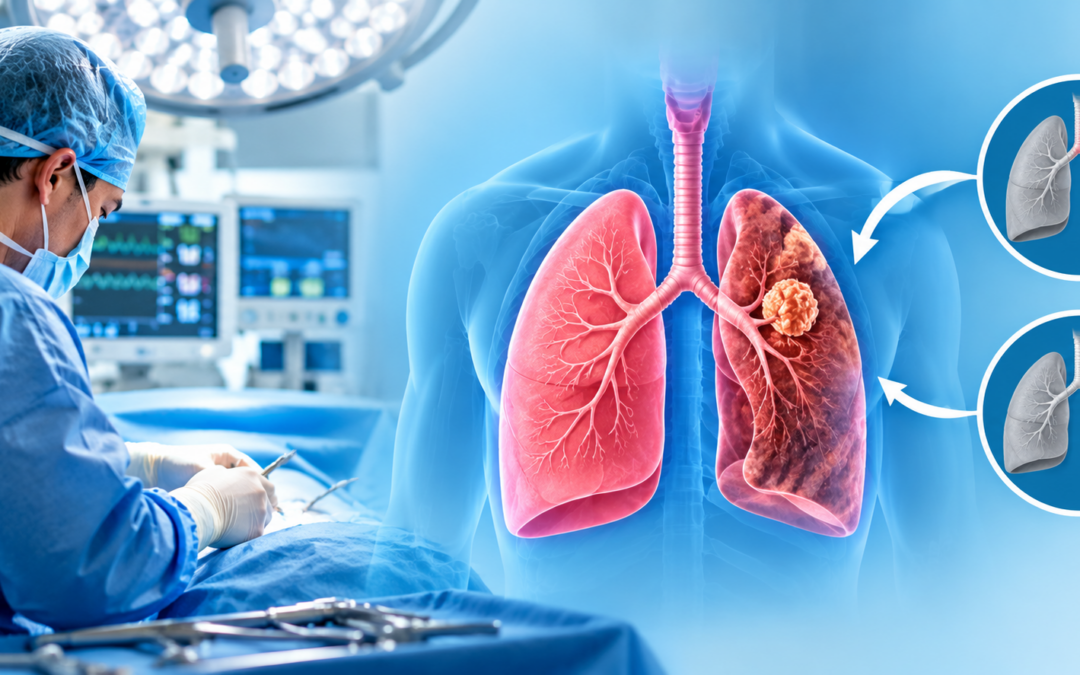
Can Early Lung Cancer Be Cured Without Chemo?

Can Early Lung Cancer Be Cured Without Chemo?

Yes, early-stage lung cancer can genuinely be cured without chemotherapy. For very early Non-Small Cell Lung Cancer specifically, surgical removal of the tumour is the standard, curative treatment on its own, and for a lot of patients at this stage, chemotherapy simply isn’t needed afterward at all.

According to Dr. Sandeep Nayak, surgical oncologist in Bangalore with over 24 years of experience treating solid tumors, “Patients hear a lung cancer diagnosis and immediately picture months of chemotherapy, and I understand why, that’s the association most people carry. But caught early enough, before it’s spread to lymph nodes or beyond, surgery alone often does the job completely. Chemo comes into the picture at later stages, not necessarily at this one.”

Diagnosed with early-stage lung cancer and wondering if chemo is really needed?

When Surgery Alone Is Genuinely Enough?

  • Stage 1 Non-Small Cell Lung Cancer, where the tumour is small and hasn’t spread to lymph nodes, is often treated with surgery alone, no chemotherapy required afterward.
  • VATS or robotic-assisted surgery removes the affected part of the lung with smaller incisions and faster recovery than traditional open surgery.
  • Cure rates at this early stage, with surgery alone, are genuinely high, particularly when caught before any spread has occurred.
  • Follow-up imaging and monitoring still continue after surgery, even without chemotherapy, to catch anything early if it does come back.

We’ve written in detail about how this surgical approach actually works in What Is VATS Surgery for Lung Cancer?, worth reading if surgery’s already on the table for your case.

When Chemo Does Get Added Back In?

  • Once cancer’s reached the lymph nodes or spread further, chemotherapy usually becomes part of the plan alongside surgery, not instead of it.
  • Tumour size and specific pathology findings after surgery can sometimes shift the plan, even in cases that looked early beforehand.
  • Some patients get chemotherapy before surgery instead of after, depending on how the case is staged and planned.
  • This decision always goes through a tumour board discussion, weighing the actual pathology against what surgery alone achieved.

If persistent respiratory symptoms are what brought you to this question in the first place, we’ve covered that separately in Persistent Cough: Can It Be Lung Cancer?, worth reading before jumping to conclusions about symptoms.

Why Choose Dr. Sandeep Nayak ?

Dr. Sandeep Nayakhas spent more than two decades in surgical oncology, and early-stage lung cancer, treated with VATS and robotic-assisted surgery, has been a consistent part of that work throughout. He currently serves as Chairman of Oncology Services for Karnataka and heads Surgical Oncology and Robotic Surgery at KIMS Hospital, Bangalore. What tends to matter most to patients isn’t the title though, it’s that treatment doesn’t get over-escalated with chemo a patient doesn’t actually need, or under-treated when they genuinely do. That precision in matching treatment to stage is often where things get missed elsewhere.

Diagnosed early and not sure if chemo’s really necessary in your case? Get a clear answer before assuming either way. Call +91 9482202240 and get someone to actually walk you through it.

Frequently Asked Questions

Does every lung cancer patient eventually need chemotherapy?

No, not at all. Very early-stage cases treated with surgery alone often don’t need chemotherapy, it depends heavily on stage and how far the cancer’s spread, if at all.

Is VATS surgery enough to cure early lung cancer on its own?

For many stage 1 cases, yes. Surgical removal alone can be curative when the cancer’s caught before spreading to lymph nodes or elsewhere.

How do doctors decide if chemo is needed after surgery?

Pathology results after surgery, checking lymph node involvement and other specific findings, guide that decision, not just the original scan.

Does skipping chemo mean a higher chance of recurrence?

Not if the staging and pathology genuinely support skipping it. Chemo gets added specifically in cases where it’s shown to improve outcomes, not withheld arbitrarily.

References

NCI — Non-Small Cell Lung Cancer Treatment (Health Professional Version)
ACS — Surgery for Non-Small Cell Lung Cancer

Disclaimer: This blog is for informational and educational purposes only and is not a substitute for professional medical advice or diagnosis.

Call Now Button