

support@macsclinic.com
+91 9482202240
Why Does My Voice Sound Hoarse After Thyroid Surgery?

Why Does My Voice Sound Hoarse After Thyroid Surgery?

Hoarseness after thyroid surgery is genuinely common, and most of the time, it goes away on its own. Usually it’s one of three things at play. Swelling right around the surgical site, some irritation from the breathing tube used during anaesthesia, nothing to do with the surgery itself really, or the recurrent laryngeal nerve getting stretched or bruised a bit, that’s the nerve running past the thyroid that controls your vocal cords. Give it a few weeks. Most of this clears up as the tissue heals. 

According to Dr. Sandeep Nayak, surgical oncologist in Bangalore with over 24 years of experience treating solid tumors, “This is one of the most common questions I get after thyroid surgery, and it worries patients more than it probably should. The recurrent laryngeal nerve sits right in the operative field, so some irritation is expected even in a clean, well-executed surgery. Permanent nerve injury is genuinely uncommon when the surgeon has real volume with this specific anatomy.”

Voice not back to normal after thyroid surgery?

What's Actually Causing the Hoarseness?

  • Swelling around the surgical site is the most common cause, and it settles down naturally as healing progresses.
  • The breathing tube placed during anaesthesia can irritate the vocal cords slightly, unrelated to the surgery itself.
  • The recurrent laryngeal nerve runs directly alongside the thyroid, so some stretching or bruising during surgery is fairly routine, even in straightforward cases.
  • True nerve injury is far less common, and when it happens, it’s usually identified and discussed with you directly after surgery.

Surgeon experience with this specific nerve matters here more than people realise, and it’s something we’ve written about separately in Is Thyroid Cancer Curable With Surgery?, worth reading if voice change is a concern you had going into surgery.

When the Hoarseness Should Actually Worry You?

  • Most temporary hoarseness improves noticeably within two to three weeks, and continues improving from there.
  • If your voice hasn’t shown any improvement after several weeks, that’s worth flagging to your surgical team rather than waiting it out further.
  • Difficulty swallowing alongside voice changes deserves a proper look sooner rather than later.
  • A weak or breathy voice that doesn’t budge at all past the expected healing window can point to nerve involvement that needs direct evaluation.

If you’re weighing thyroid surgery and this is part of what’s on your mind, our Thyroid Cancer treatment page covers how this risk gets managed as part of the surgical approach itself.

Why Choose Dr. Sandeep Nayak ?

Dr. Sandeep Nayak has spent more than two decades in surgical oncology, and thyroid surgery, voice preservation included, has been a consistent part of that work throughout. He currently serves as Chairman of Oncology Services for Karnataka and heads Surgical Oncology and Robotic Surgery at KIMS Hospital, Bangalore. What tends to matter most to patients isn’t the title though, it’s that recurrent laryngeal nerve protection is treated as a genuine surgical priority, not an afterthought once the tumour’s out. That focus is often where things get missed elsewhere.

Voice not improving the way you expected after thyroid surgery? Don’t just wait it out indefinitely. Call +91 9482202240 and get someone to actually walk you through it.

Frequently Asked Questions

How long does hoarseness usually last after thyroid surgery?

Two to three weeks is typical before you notice real improvement, then it keeps getting better over the following month, give or take.

Is permanent voice change common after thyroid surgery?

Not really, no. Genuinely rare, especially in the hands of a surgeon who’s done a lot of this specific anatomy. And on the off chance it does happen, it gets flagged and talked through with you directly, not left as a surprise.

Can robotic thyroid surgery reduce the risk of voice changes?

Not particularly. Comes down more to how careful the surgeon is around the nerve itself than which access method got used to get there.

Should I see a specialist if my voice hasn't improved after a month?

Yeah, at that point it’s worth getting looked at properly instead of just waiting around for it to sort itself out.

References

Disclaimer: This blog is for informational and educational purposes only and is not a substitute for professional medical advice or diagnosis.

Is There an Age Limit for Robotic Surgery?

Is There an Age Limit for Robotic Surgery?

No, there’s no fixed upper age limit for robotic surgery. What actually decides eligibility is overall health, heart and lung function, and general strength, not the number of birthdays someone’s had. Plenty of patients in their 80s and even 90s go through robotic procedures safely, largely because the technique itself causes less blood loss and smaller cuts than open surgery, which matters even more as the body gets older.

According to Dr. Sandeep Nayak, surgical oncologist in Bangalore with over 24 years of experience treating solid tumors, “Families often assume age alone rules someone out, and honestly, it doesn’t. I’ve operated on patients in their 80s who were fitter, in terms of what actually matters for surgery, than some patients decades younger. It comes down to what their heart, lungs, and overall reserve can handle, not their birth year.”

Wondering if age is a factor in your surgery options?

What Actually Determines Fitness for Robotic Surgery?

  • Cardiac reserve gets assessed closely, since the heart needs to handle the surgery and recovery period, regardless of age.
  • Lung function matters a lot too, particularly for longer procedures under anaesthesia.
  • Overall performance status, essentially how independently and actively someone functions day to day, weighs heavily in this decision.
  • Nutritional status and muscle reserve are factored in as well, since these affect healing and recovery speed.

This kind of fitness evaluation applies across the board, and if robotic cancer surgery is already on the table for your case, this assessment is one of the first steps before anything gets scheduled.

Why Robotic Surgery Often Works Better for Older Patients?

  • Smaller incisions mean less blood loss, which matters more when the body has less physiological reserve to draw from.
  • Recovery tends to be faster and less physically demanding compared to open surgery, an important factor for older patients.
  • Shorter hospital stays reduce the risk of complications that tend to come with prolonged bed rest in elderly patients specifically.
  • Precision instruments reduce trauma to surrounding tissue, which can matter more as the body’s healing capacity naturally slows with age.

We’ve gone into how this fitness evaluation fits into the bigger picture of surgical decision-making in Cancer Surgery: What It Is and When It’s Needed, worth reading if you’re weighing surgery as an option at all right now.

Why Choose Dr. Sandeep Nayak ?

Dr. Sandeep Nayak has spent more than two decades in surgical oncology, and older patients navigating this exact question, whether age itself rules out surgery, have been part of that work throughout. He currently serves as Chairman of Oncology Services for Karnataka and heads Surgical Oncology and Robotic Surgery at KIMS Hospital, Bangalore. What tends to matter most to patients and families isn’t the title though, it’s that fitness gets evaluated properly and honestly, rather than age being used as a shortcut to rule someone out. That thoroughness is often where things get missed elsewhere.

Not sure if age is actually a barrier in your specific case? Don’t assume either way. Call +91 9482202240 and get someone to actually walk you through it.

Frequently Asked Questions

Is there a specific age where robotic surgery becomes too risky?

No fixed cutoff exists. Risk gets assessed individually, based on health and fitness, not a specific number.

Do older patients recover slower from robotic surgery?

Recovery can take a bit longer compared to younger patients, but robotic surgery still tends to be gentler on the body than open surgery would be at any age.

What tests are done to check if an elderly patient is fit for surgery?

Usually a cardiac evaluation, lung function tests, blood work, and an overall assessment of how independently the person functions day to day.

Can a patient with existing health conditions still qualify?

Often, yes, depending on how well-controlled those conditions are. It’s assessed case by case rather than automatically ruled out.

References


Robotic versus Open Oncological Gastric Surgery in the Elderly
ACS Geriatric Surgery Verification Program 

Disclaimer: This blog is for informational and educational purposes only and is not a substitute for professional medical advice or diagnosis.
What Is Peritoneal Cancer Index for HIPEC?

What Is Peritoneal Cancer Index for HIPEC?

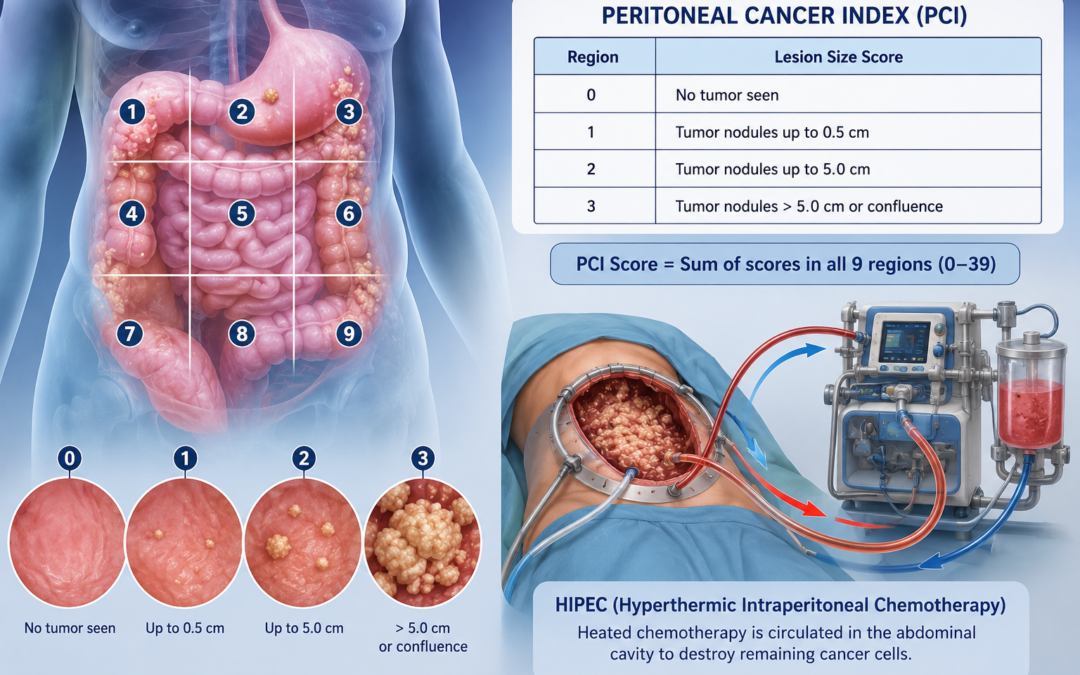
The Peritoneal Cancer Index, PCI for short, is a scoring system that runs from 0 to 39, and it’s how surgeons measure exactly how far cancer has spread across the inside of the abdomen. It’s not just a number for the file. This score is what actually decides whether cytoreductive surgery combined with HIPEC is a realistic option for a patient, or whether it isn’t.

According to Dr. Sandeep Nayak, surgical oncologist in Bangalore with over 24 years of experience treating solid tumors, “Patients hear HIPEC and assume it’s something we can just decide to do. It’s not that simple. PCI tells us how much disease is actually there, and past a certain point, surgery stops helping and starts adding risk without benefit. That number genuinely shapes the whole conversation.”

Wondering if your PCI score makes you a HIPEC candidate?

How the PCI Score Actually Works?

  • The abdomen gets divided into 13 regions, and each one is scored from 0 to 3 based on the size of tumour deposits found there.
  • Those 13 scores get added together, giving a total that lands somewhere between 0 and 39.
  • A lower PCI generally means disease that’s more limited and contained, which is a better position for surgery to actually help.
  • A higher PCI usually points to more widespread disease, and past a certain threshold, complete removal becomes unlikely.
    This scoring directly shapes eligibility for HIPEC treatment, it’s one of the first things assessed before that conversation even goes further.

Why PCI Matters for Surgical Decision-Making?

  • The whole goal of cytoreductive surgery is complete removal of visible disease, called CC-0, and PCI helps predict whether that’s realistically achievable.
  • Cancer type matters too, the same PCI score can mean different things depending on whether it’s colorectal, ovarian, or appendix cancer.
  • PCI is assessed through imaging first, then confirmed during surgery itself, since scans don’t always catch everything.
  • A high PCI doesn’t automatically rule someone out, but it does change the conversation around risk, benefit, and realistic outcomes.

    We’ve written more about what actually happens once someone’s confirmed as a HIPEC candidate in Life Expectancy After HIPEC Surgery, worth reading if PCI scoring already came up in your consultation.

Why Choose Dr. Sandeep Nayak ?

Dr. Sandeep Nayak has spent more than two decades in surgical oncology, and HIPEC candidacy assessments, PCI scoring included, have been a consistent part of that work. He currently serves as Chairman of Oncology Services for Karnataka and heads Surgical Oncology and Robotic Surgery at KIMS Hospital, Bangalore. What tends to matter most to patients isn’t the title though, it’s that he’ll tell you honestly if HIPEC is or isn’t the right path for your specific PCI and disease pattern, rather than offering a procedure that isn’t actually going to help. That honesty is often where things get missed elsewhere.

Not sure if your case qualifies for HIPEC based on your scans so far? Don’t wait to find out. Call +91 9482202240 and get someone to actually walk you through it.

Frequently Asked Questions

What PCI score is too high for HIPEC?

There’s no single universal cutoff, it varies by cancer type and centre, but very high scores generally mean complete removal becomes unlikely, which changes the risk-benefit picture significantly.

Is PCI the only thing that decides HIPEC eligibility?

No, cancer type, overall health, and how the disease has responded to any prior treatment all factor in alongside the PCI score.

Can PCI be measured before surgery?

Imaging gives an estimate beforehand, but the final, accurate score usually gets confirmed once surgeons can actually see inside during the operation.

Does a low PCI guarantee HIPEC will work?

No guarantee in medicine ever works that way, but a lower PCI generally means a better chance of complete removal, which is strongly linked to better outcomes.

References

    Disclaimer: This blog is for informational and educational purposes only and is not a substitute for professional medical advice or diagnosis.
    Can Cancer Recur Despite Clear Margins?

    Can Cancer Recur Despite Clear Margins?

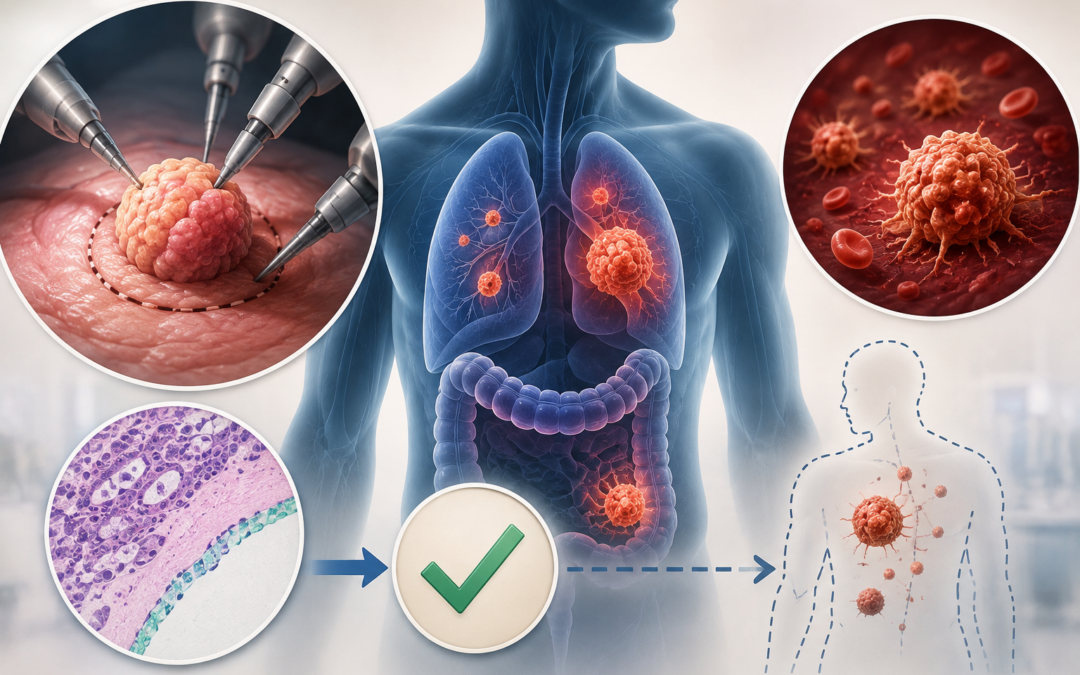
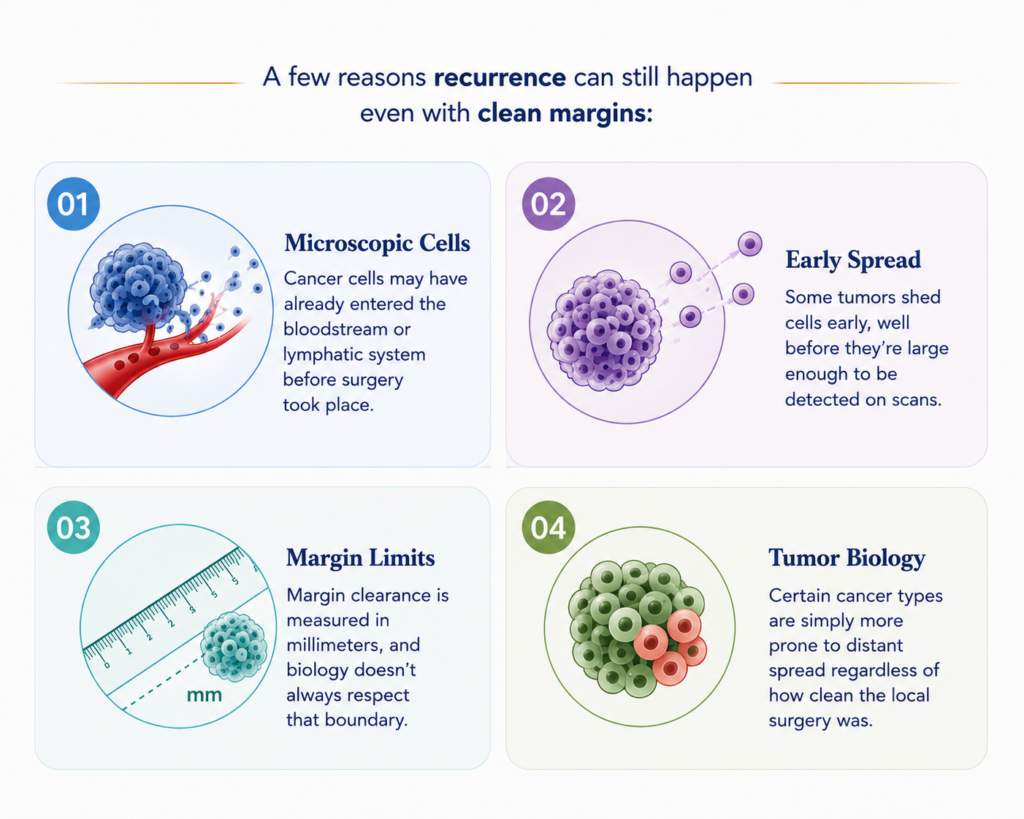
    Yes, and it catches a lot of people off guard, especially right after surgery that seemed to go well. “Clear margins” just means the pathologist looked at the outer edge of the tissue that got removed and didn’t find cancer cells sitting there. Good news, no question. But that’s really all it’s telling you. It says nothing about whether a few cells had already slipped out and moved somewhere else before the surgery ever started, and that’s the part people tend to miss.

    According to Prof. Dr. Sandeep Nayak, surgical oncologist in Bangalore with over 24 years of experience in surgical oncology, explains it this way: “Clear margins tell us the visible tumor was removed completely. They don’t tell us whether a handful of cells had already broken off and traveled somewhere else before we ever got to the operating table. That’s a separate question, and it’s why follow-up matters just as much as the surgery itself.”

    Concerned about recurrence risk after surgery?

    Why Do Clear Margins Not Guarantee No Recurrence?

    Why Do Clear Margins Not Guarantee No Recurrence

    This is part of why staging and follow-up imaging exist as a separate step from the surgery report itself. Our robotic cancer surgery program is built around precise margin control during the operation, paired with a structured follow-up plan afterward, since the two aren’t substitutes for each other.

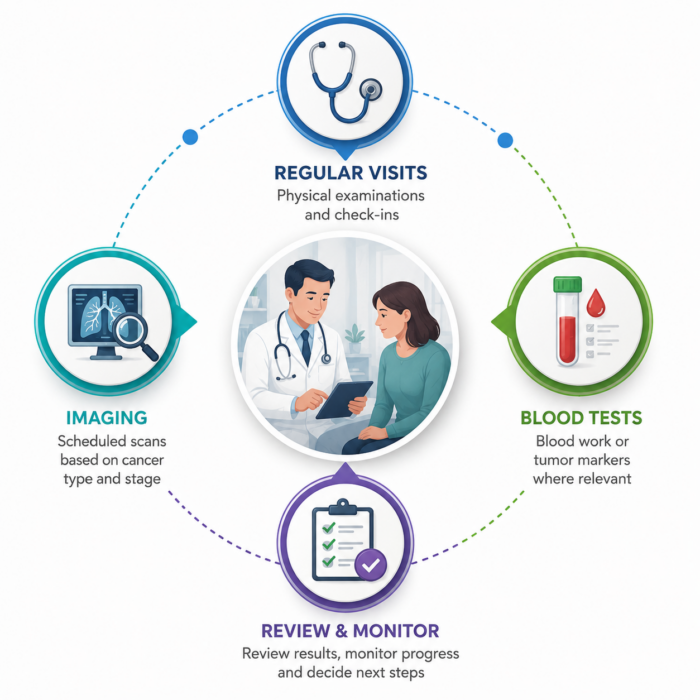
    What Should Follow-Up Look Like After Clear-Margin Surgery?

    Circular health infographWhat Should Follow Up Look Like After Clear Margin Surgeryic showing stages: regular visits, imaging, blood tests, and review & monitor around a doctor and patient center frame


    Getting clear margins is a good starting point, not a finish line. A sensible follow-up plan usually includes:

    • Scheduled imaging at intervals based on the specific cancer type and stage
    • Blood work or tumor marker tracking where relevant
    • Physical exams at each visit, not just when something feels wrong
    • A clear plan for what happens if something does show up later

    This same idea came up in our post on cervical cancer and why the earliest stage often shows no symptoms at all. A clean result at one point in time isn’t the same as being in the clear permanently, and that’s true whether we’re talking about a screening test or a surgical margin.

    Why Choose Dr. Sandeep Nayak for Kidney Cancer Care?

     Dr. Sandeep Nayak has done more than 10,200 cancer surgeries,Over 24 years, and a good chunk of that experience comes down to something patients rarely think to ask about: how carefully the margins are handled during the operation itself. His robotic and minimally invasive approach isn’t just about smaller cuts, it’s built around getting a clean, precise margin the first time around. He currently heads Surgical Oncology and Robotic Surgery at KIMS Hospital, Bangalore, and also chairs Oncology Services for the state, but honestly, what patients tend to notice more is that the follow-up conversation doesn’t stop the day surgery ends.

    Had surgery already and want to understand what your follow-up should actually look like from here? Call +91 9482202240 to set that up.

    Frequently Asked Questions

    My margins came back clear. Why does my doctor still want more scans down the line?

    Because a clean margin only tells us the tumor at that spot is gone. It doesn’t say anything about what might’ve already traveled somewhere else, which is what the scans are actually checking for.

    How is lung spread from kidney cancer often found?

    Sometimes incidentally on a chest X-ray done for unrelated reasons.

    If a margin comes back positive instead, does that mean it's definitely coming back?

    No, not automatically. It usually just means your doctor will talk through next steps like additional surgery or radiation to bring that risk down.

    Can any test tell me for sure whether cells already spread before surgery?

    Not with full certainty, no. Scans and tumor markers give a reasonable estimate, but nothing rules out microscopic spread completely.

    References

    1. National Cancer Institute — Surgery to Treat Cancer
    2. American Cancer Society — Cancer Surgery

    Disclaimer: This blog is for informational and educational purposes only and is not a substitute for professional medical advice or diagnosis.
    Diet After Colon or Rectal Cancer Surgery?

    Diet After Colon or Rectal Cancer Surgery?

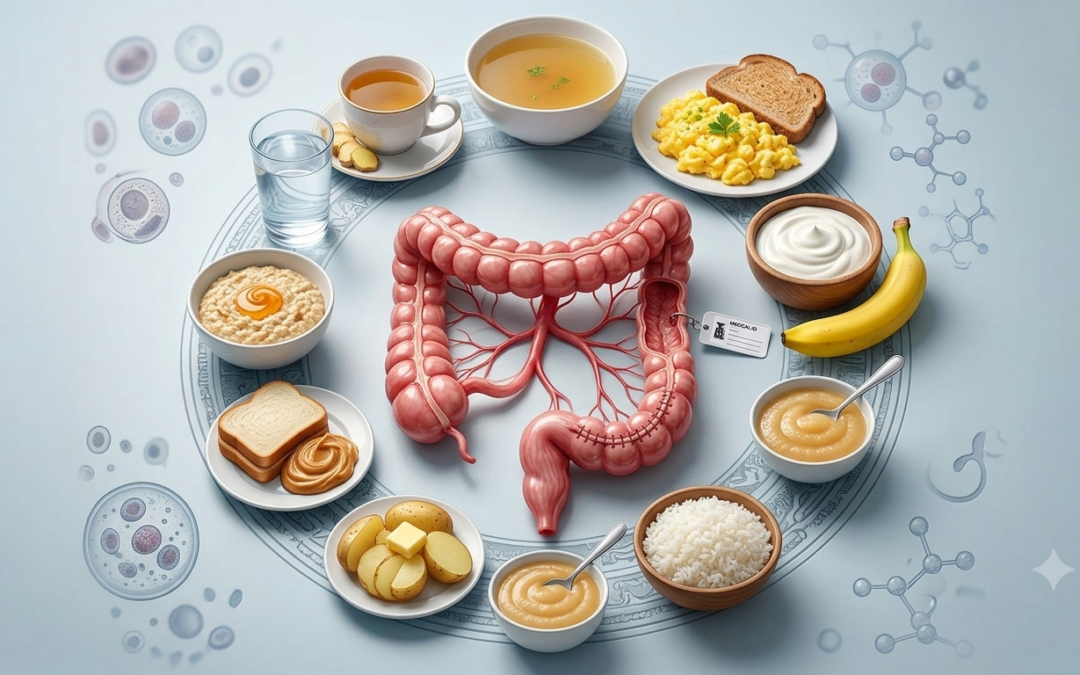
    Right after colon or rectal cancer surgery, your gut needs to ease back into working, not get thrown straight into a normal diet. Most patients move through stages, clear liquids first, then a low-fiber soft diet, small and frequent meals rather than three big ones. Hydration matters as much as the food itself in those first weeks, and things like raw vegetables, nuts, and anything high in fiber generally stay off the plate until your surgeon clears you for them.

    According to Dr. Sandeep Nayak, surgical oncologist in Bangalore with over 24 years of experience treating solid tumors, “Patients often want to rush back to eating normally, understandably, food feels like a sign of recovery. But the gut just had major surgery, and pushing it too fast with fiber or raw food usually backfires, more discomfort, not less. Slow and staged genuinely gets people back to normal eating faster in the end.”

     Recovering from colon or rectal surgery and unsure what to eat?

    How the Diet Progression Actually Works?

    • Clear liquids come first, usually for a day or two right after surgery, broths, clear juices, plain water.
    • Once your gut shows signs of activity, a low-fiber soft diet follows, think eggs, yogurt, white rice, well-cooked lean meats, foods that are gentle and easy to digest.
    • Small, frequent meals work better than large ones in these early weeks, easier on a gut that’s still healing.
    • Raw vegetables, nuts, seeds, and high-fiber foods generally get reintroduced slowly, and only once your surgeon gives the go-ahead.

    This progression applies specifically to the surgical recovery period, if you’re looking further ahead at colon cancer treatment more broadly, our Colon Cancer treatment page covers the fuller picture.

    What to Watch For While You Progress?

    • Staying hydrated matters more than people expect, dehydration slows healing and can make constipation or diarrhea worse.
    • Bloating, cramping, or nausea after introducing a new food usually means it’s too soon for that item, not that something’s gone wrong.
    • Weight loss in the first few weeks is common and usually expected, your surgical team will tell you if it’s more than it should be.
    • Once you’re past this initial staged phase and settling into longer-term recovery, we’ve covered that separately in Diet and Lifestyle Tips That Support Recovery in Rectal Cancer Patients, worth reading once you’re a few weeks out.

    Why Choose Dr. Sandeep Nayak ?

    Dr. Sandeep Nayak has spent more than two decades in surgical oncology, and colorectal recovery, diet included, has been part of that work throughout. He currently serves as Chairman of Oncology Services for Karnataka and heads Surgical Oncology and Robotic Surgery at KIMS Hospital, Bangalore. What tends to matter most to patients isn’t the title though, it’s that nutrition guidance gets built into the recovery plan from day one, not handed over as a generic printout on discharge day. That attention to the practical side of healing is often where things get missed elsewhere.

    Not sure what stage of the diet progression you should be on? Don’t guess your way through it. Call +91 9482202240 and get someone to actually walk you through it.

    Frequently Asked Questions

    How long does the low-fiber diet phase usually last?

    Honestly, it’s different for everyone. Some patients are past it in two weeks, others take longer, comes down to how the surgery went. Your surgical team’s the one who’ll actually track that timeline with you.

    Can I drink coffee or tea after surgery?

    Once you’re clear of the liquids-only stage, usually fine in small amounts. Caffeine does mess with digestion for some people during recovery though, so worth flagging to your team rather than just assuming it’s okay.

    What if I feel bloated after eating something on the approved list?

    Happens more than you’d think, even with foods that are technically fine. Usually just means cutting the portion down or slowing how fast you’re adding new things back in.

    When can I go back to a completely normal diet?

    No fixed answer here, really. Some people are back to eating normally within a few weeks. Others need more time, and that’s not a bad sign, just how their gut’s healing. Your surgeon will track this with you specifically.

    References


    Disclaimer: This blog is for informational and educational purposes only and is not a substitute for professional medical advice or diagnosis.
    Call Now Button